narrow-leaved poverty bush
Eremophila alternifolia · Accepted scientific name
Scientific literature: Very Sparse (9 studies) · ★☆☆☆☆
Narrow-leaved poverty bush, scientifically known as Eremophila alternifolia, is a resilient Australian shrub prized for its medicinal properties. Native to arid regions, it contains bioactive compounds traditionally used to treat skin ailments and respiratory issues. This hardy plant offers significant pharmacological potential for developing natural therapeutic treatments.
- Family
- Scrophulariaceae
- Native range
- Australasia
- Parts used
- Leaf
- Common names
- Narrow-Leaved Emu Bush · Narrow-Leaved Poverty Bush
- Scientific synonyms
- Pholidia Alternifolia · Bondtia Alternifolia · 2 more
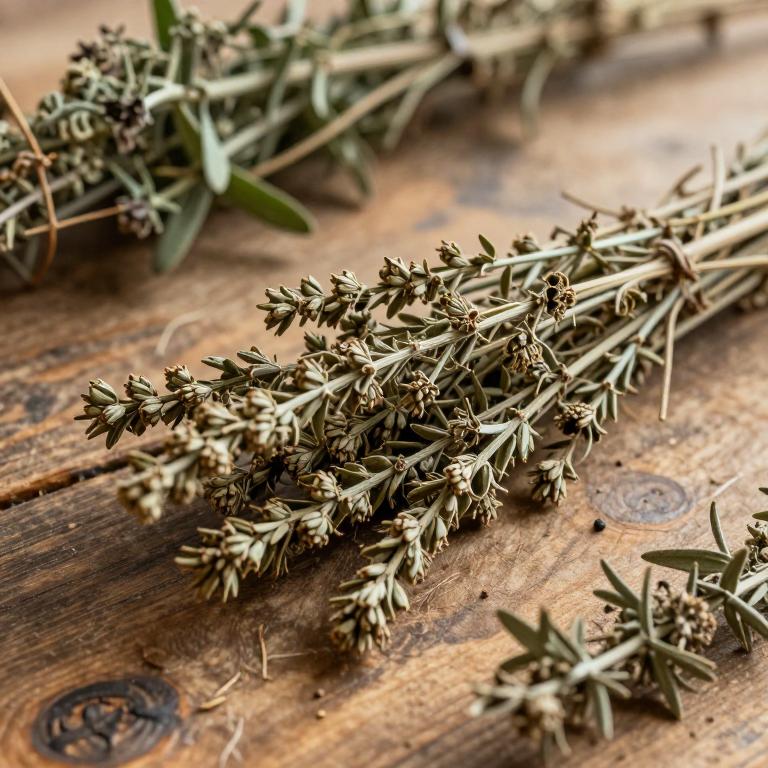
Names and Synonyms
Common Names
- Narrow-leaved Emu Bush
- Narrow-leaved Poverty Bush
Scientific Names
Accepted name
Eremophila alternifoliaSynonyms
- Pholidia alternifolia
- Bondtia alternifolia
- Stenochilus alternifolius
- Eremophila alternifolia var. latifolia
Sources: Wikidata, Catalogue of Life
Taxonomical Classification
This plant belongs to the kingdom Plantae and is classified under the phylum Streptophyta within the class Equisetopsida. It falls under the subclass Magnoliidae and the order Lamiales, specifically within the family Scrophulariaceae. Finally, it is identified by the genus Eremophila, with the species name alternifolia.
| Rank | Classification |
|---|---|
| Kingdom | Plantae |
| Phylum | Streptophyta |
| Class | Equisetopsida |
| Subclass | Magnoliidae |
| Order | Lamiales |
| Family | Scrophulariaceae |
| Genus | Eremophila |
Sources: The World Checklist of Vascular Plants (WCVP)
Distribution
This plant is native to various regions across the Australian continent. It can be found growing within the state of New South Wales. Its distribution also extends into the Northern Territory. Additionally, the species is present in South Australia. Finally, it is documented to occur in Western Australia.
| Region | Area |
|---|---|
| Australia | New South Wales |
| Australia | Northern Territory |
| Australia | South Australia |
| Australia | Western Australia |
Sources: The World Checklist of Vascular Plants (WCVP)
Botanical Identification
Morphology
The morphology of Eremophila alternifolia is characterized by a woody growth form, specifically manifesting as a shrub. This plant functions as an independent organism, neither acting as a parasite nor as an epiphyte, and it maintains a terrestrial habit despite its ability to inhabit aquatic and semiaquatic environments. As a self-supporting species, it does not exhibit climbing behavior. In terms of stature, the plant reaches a minimum height of 1 meter and can grow to a maximum height of 4 meters.
- Aquatic :
- terrestrial
- Climber :
- self-supporting
- Epiphyte :
- terrestrial
- Growth form :
- shrub
- Parasite :
- independent
- Plant height max:
- 4 m
- Plant height min:
- 1 m
- Woodiness :
- woody
Physiology
The physiology of Eremophila alternifolia is characterized by specific morphological dimensions of its foliage that reflect its structural development. The leaf length within this species exhibits significant variability, ranging from a minimum of 2 cm to a maximum of 5.5 cm. These measurements indicate a specialized growth pattern where leaf expansion is governed by specific environmental and developmental parameters, ensuring the plant maintains optimal surface area for its biological processes within its natural habitat.
- Leaf length max:
- 5.5 cm
- Leaf length min:
- 2 cm
Sources: Global Inventory of Floras and Traits (GIFT)
Plant Parts
Eremophila alternifolia has 1 reported plant parts identified across 2 scientific publications and several other databases that are studied for medicinal purposes. The most consistently reported plant part include leaf.
| Plant part | Supporting sources | Consensus |
|---|---|---|
| Leaf | 2 supporting sources | ★☆☆☆☆ |
Leaf
- Journal of ethnopharmacology
- Journal of basic microbiology
Chemicals
Eremophila alternifolia has 4 reported phytochemicals identified across 2 scientific publications and several other databases. The most consistently reported chemicals include 8,19-dihydroxyserrulat-14-ene, 8-hydroxyserrulat-14-en-19-oic acid, Pinobanksin, Pinobanksin 3-acetate.
| Chemical | Supporting sources | Consensus |
|---|---|---|
| 8,19-dihydroxyserrulat-14-ene | 1 supporting sources | ★☆☆☆☆ |
| 8-hydroxyserrulat-14-en-19-oic acid | 1 supporting sources | ★☆☆☆☆ |
| Pinobanksin | 1 supporting sources | ★☆☆☆☆ |
| Pinobanksin 3-acetate | 1 supporting sources | ★☆☆☆☆ |
8,19-dihydroxyserrulat-14-ene
- Antibiotics (Basel, Switzerland)
8-hydroxyserrulat-14-en-19-oic acid
- Journal of ethnopharmacology
Pinobanksin
- Journal of ethnopharmacology
Pinobanksin 3-acetate
- Journal of ethnopharmacology
Activities
Eremophila alternifolia has 2 reported activities identified across 2 scientific publications and several other databases. The most consistently reported activities include Antibacterial, Antifungal.
| Activity | Supporting sources | Consensus |
|---|---|---|
| Antibacterial | 1 supporting sources | ★☆☆☆☆ |
| Antifungal | 1 supporting sources | ★☆☆☆☆ |
Antibacterial
- Journal of ethnopharmacology
Antifungal
- Antibiotics (Basel, Switzerland)
Conditions
Eremophila alternifolia has 1 reported investigations on conditions identified across 2 scientific publications and several other databases. The most consistently reported conditions include bacteria.
| Condition | Supporting sources | Consensus |
|---|---|---|
| Bacteria | 1 supporting sources | ★☆☆☆☆ |
Bacteria
- Antibiotics (Basel, Switzerland)
Preparations
Eremophila alternifolia has 6 reported preparations identified across 2 scientific publications and several other databases. The most consistently reported preparations include aqueous extract, crude leaf-extract, extract, fresh leaves, handmade leaf-pastes.
| Preparation | Supporting sources | Consensus |
|---|---|---|
| Aqueous extract | 1 supporting sources | ★☆☆☆☆ |
| Crude leaf-extract | 1 supporting sources | ★☆☆☆☆ |
| Extract | 1 supporting sources | ★☆☆☆☆ |
| Fresh leaves | 1 supporting sources | ★☆☆☆☆ |
| Handmade leaf-pastes | 1 supporting sources | ★☆☆☆☆ |
| Leaf-infusions | 1 supporting sources | ★☆☆☆☆ |
Aqueous extract
- Journal of ethnopharmacology
Crude leaf-extract
- Journal of ethnopharmacology
Extract
- Journal of ethnopharmacology
Fresh leaves
- Journal of ethnopharmacology
Handmade leaf-pastes
- Journal of ethnopharmacology
Leaf-infusions
- Journal of ethnopharmacology