Eremanthus crotonoides
Eremanthus crotonoides · Accepted scientific name
Scientific literature: Very Sparse (5 studies) · ★☆☆☆☆
, scientifically known as Eremanthus crotonoides, is a remarkable medicinal plant valued for its therapeutic properties. Often utilized in traditional healing practices, this species contains unique bioactive compounds believed to offer various health benefits. Understanding its botanical characteristics and medicinal potential is essential for exploring its role in natural pharmacology.
- Family
- Asteraceae
- Native range
- Southern America
- Parts used
- Leaf
- Common names
- Not available
- Scientific synonyms
- Albertinia Crotonoides · Albertinia Verbascifolia · 3 more
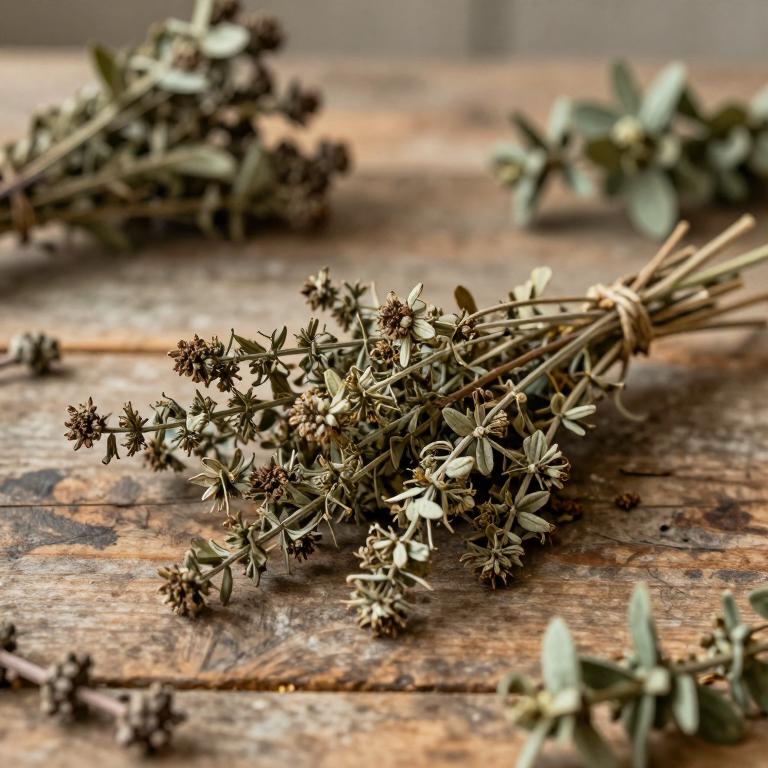
Names and Synonyms
Scientific Names
Accepted name
Eremanthus crotonoidesSynonyms
- Albertinia crotonoides
- Albertinia verbascifolia
- Cacalia crotonoides
- Eremanthus verbascifolius
- Vernonia crotonoides
Sources: Wikidata
Taxonomical Classification
This plant belongs to the kingdom Plantae within the phylum Streptophyta and is classified under the class Equisetopsida. As a member of the subclass Magnoliidae and the order Asterales, it is further categorized into the family Asteraceae. Its specific taxonomic identity is defined by its placement within the genus Eremanthus.
| Rank | Classification |
|---|---|
| Kingdom | Plantae |
| Phylum | Streptophyta |
| Class | Equisetopsida |
| Subclass | Magnoliidae |
| Order | Asterales |
| Family | Asteraceae |
| Genus | Eremanthus |
Sources: The World Checklist of Vascular Plants (WCVP)
Distribution
This plant exhibits a specific distribution pattern within the South American continent. Its presence is notably documented across the vast territory of Brazil. Within this country, the species can be found inhabiting the Northeast region. Additionally, its range extends into the diverse landscapes of the Brazilian Southeast. Consequently, these two distinct areas define its primary geographical footprint.
| Region | Area |
|---|---|
| Brazil | Brazil Northeast |
| Brazil | Brazil Southeast |
Sources: The World Checklist of Vascular Plants (WCVP)
Botanical Identification
Ecology
The ecology of Eremanthus crotonoides is characterized by its adaptability to diverse Brazilian ecosystems, ranging from high-altitude rocky fields to dense forest environments. It is frequently found inhabiting the specialized landscapes of Campo Rupestre, where it must contend with nutrient-poor soils and intense solar radiation, as well as within the Cerrado (latu sensu), where it thrives amidst seasonal moisture fluctuations and fire-adapted vegetation. Additionally, the species occupies more humid and sheltered niches, including Floresta Ciliar or Galeria, where it benefits from the proximity of riparian corridors, and Floresta Estacional Semidecidual, where its presence is integrated into the seasonal patterns of leaf shedding and distinct wet and dry cycles.
- Habitat :
- Campo Rupestre, Cerrado (lato sensu), Floresta Ciliar ou Galeria, Floresta Estacional Semidecidual
Life history
The life history of Eremanthus crotonoides is characterized by its classification as a phanerophyte, specifically exhibiting growth strategies that align with both the phanerophyte and nanophanerophyte life forms. As a phanerophyte, the plant maintains its perennating buds above the soil surface, typically on woody stems or branches, which allows it to endure seasonal environmental fluctuations. Within this classification, its habit as a nanophanerophyte suggests a relatively low-growing woody structure, where the regenerative organs are held just above the ground level, bridging the functional gap between larger shrubs and more compact chamaephytes. This life history strategy enables the species to persist through unfavorable periods by protecting its primary growing points, ensuring its continued presence within its specific ecological niche.
- Life form :
- phanerophyte
Morphology
The morphology of Eremanthus crotonoides is characterized by its growth form as a woody tree that reaches a maximum plant height of approximately 3 meters. As a terrestrial species, it does not exhibit aquatic or semiaquatic tendencies, nor does it function as an epiphyte, whether in a holoepiphytic, hemiepiphytic, or facultative capacity. The plant is a self-supporting structure, meaning it is not a climber, and it maintains an independent existence rather than acting as an obligatory or facultative parasite. Its structural integrity is defined by its woody nature, supporting its stature within its terrestrial habitat.
- Aquatic :
- terrestrial
- Climber :
- self-supporting
- Epiphyte :
- terrestrial
- Growth form :
- tree
- Parasite :
- independent
- Plant height max:
- 3 m
- Woodiness :
- woody
Sources: Global Inventory of Floras and Traits (GIFT)
Plant Parts
Eremanthus crotonoides has 1 reported plant parts identified across 1 scientific publications and several other databases that are studied for medicinal purposes. The most consistently reported plant part include leaf.
| Plant part | Supporting sources | Consensus |
|---|---|---|
| Leaf | 1 supporting sources | ★☆☆☆☆ |
Leaf
- Natural product research
Chemicals
Eremanthus crotonoides has 1 reported phytochemicals identified across 1 scientific publications and several other databases. The most consistently reported chemicals include centratherin.
| Chemical | Supporting sources | Consensus |
|---|---|---|
| centratherin | 1 supporting sources | ★☆☆☆☆ |
centratherin
- Natural product research
Conditions
Eremanthus crotonoides has 3 reported investigations on conditions identified across 1 scientific publications and several other databases. The most consistently reported conditions include Cancer, colon cancer, colorectal cancer.
| Condition | Supporting sources | Consensus |
|---|---|---|
| Cancer | 1 supporting sources | ★☆☆☆☆ |
| Colon cancer | 1 supporting sources | ★☆☆☆☆ |
| Colorectal cancer | 1 supporting sources | ★☆☆☆☆ |
Cancer
- Natural product research
Colon cancer
- Natural product research
Colorectal cancer
- Natural product research