Teff
Eragrostis tef · Accepted scientific name
Scientific literature: Very Sparse (1 studies) · ★☆☆☆☆
Teff, scientifically known as Eragrostis tef, is a highly nutritious cereal grain native to Ethiopia. Beyond its role as a dietary staple, it possesses significant medicinal potential. Rich in essential minerals and antioxidants, teff is traditionally utilized to support digestive health, boost energy levels, and manage various inflammatory conditions.
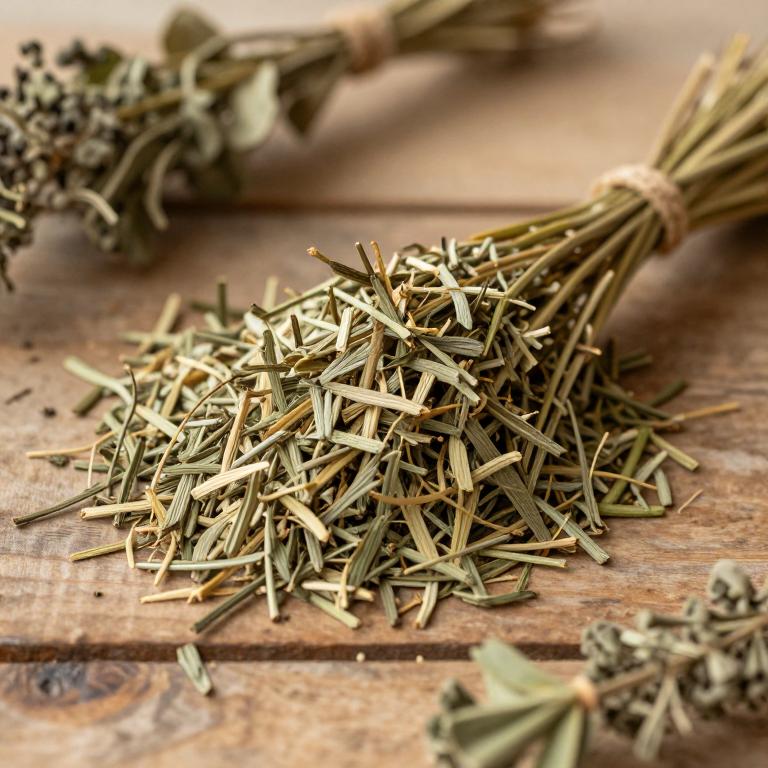
Names and Synonyms
Common Names
- Teff
- Abyssinian love grass
- teff grass
Scientific Names
Accepted name
Eragrostis tefSynonyms
- Cynodon abyssinicus
- Poa tef
- Poa abyssinica
- Poa radicans
- Eragrostis tef f. spiciformis
- Eragrostis tef subsp. spiciformis
- Eragrostis pilosa var. tef
- Eragrostis pilosa subsp. abyssinica
- Eragrostis abyssinica
- Eragrostis abyssinica var. alba
- Eragrostis abyssinica var. viriidis
Regional and Traditional Names
Spanish:
- Teff
German:
- Teff
- Zwerghirse
- Äthiopisches Liebesgras
French:
- Teff
- mil éthiopien
Sources: Wikidata, Catalogue of Life
Taxonomical Classification
This plant, known scientifically as Eragrostis tef, belongs to the kingdom Plantae within the phylum Streptophyta. It is classified under the class Equisetopsida and subclass Magnoliidae, falling under the order Poales. Finally, it is a member of the family Poaceae and the genus Eragrostis.
| Rank | Classification |
|---|---|
| Kingdom | Plantae |
| Phylum | Streptophyta |
| Class | Equisetopsida |
| Subclass | Magnoliidae |
| Order | Poales |
| Family | Poaceae |
| Genus | Eragrostis |
Sources: The World Checklist of Vascular Plants (WCVP)
Distribution
This plant exhibits a wide-ranging presence across several regions of the European continent. In Northern Europe, its distribution includes the territories of Denmark and Great Britain. Moving toward the center of the continent, the species can be found within the borders of Belgium. It also maintains a steady presence throughout Middle Europe, specifically in Germany. Furthermore, its geographical reach extends into the region of Czechia-Slovakia.
| Region | Area |
|---|---|
| Northern Europe | Denmark |
| Northern Europe | Great Britain |
| Middle Europe | Belgium |
| Middle Europe | Czechia-Slovakia |
| Middle Europe | Germany |
| Middle Europe | Netherlands |
| Middle Europe | Switzerland |
| Southwestern Europe | France |
| Southeastern Europe | Italy |
| Eastern Europe | Krym |
Sources: The World Checklist of Vascular Plants (WCVP)
Botanical Identification
Ecology
The ecology of Eragrostis tef is characterized by its ability to thrive across a vast altitudinal gradient, ranging from low-lying areas at 5 m AMSL to higher elevations reaching a maximum of 1900 m AMSL. Its distribution is closely linked to anthropogenic environments, as it is frequently found within "Área Antrópica," indicating a strong association with human-modified landscapes and agricultural settings. This adaptability to varying elevations and human-disturbed habitats allows the species to colonize diverse ecological niches within its geographic range.
- Elevational range max:
- 1900 m AMSL
- Elevational range min:
- 5 m AMSL
- Habitat :
- Área Antrópica
Life history
The life history of Eragrostis tef is characterized by an annual lifecycle, meaning it completes its entire biological development—from germination to seed production—within a single growing season. As a therophyte, its life form is defined by its strategy of surviving unfavorable environmental conditions through the production of seeds, which remain dormant until conditions become favorable for the next generation. This life form allows the plant to rapidly exploit seasonal moisture and nutrients, ensuring its survival in various ecological niches by bypassing stressful periods in its seed state.
- Life form :
- therophyte
- Lifecycle :
- annual
Morphology
The morphology of Eragrostis tef is characterized by its growth form as a non-woody, graminoid herb. It is a terrestrial and independent plant that does not function as an epiphyte or a parasite, maintaining a self-supporting structure rather than acting as a climber, liana, or vine. In terms of stature, the plant exhibits significant variability in height, with measurements ranging from a minimum of 0.07 m to a maximum of 0.6 m, though it reaches a mean height of approximately 1 m.
- Aquatic :
- terrestrial
- Climber :
- self-supporting
- Epiphyte :
- terrestrial
- Growth form :
- herb
- Growth form :
- graminoid
- Parasite :
- independent
- Plant height max:
- 0.6 m
- Plant height mean:
- 1 m
- Plant height min:
- 0.07 m
- Woodiness :
- non-woody
Physiology
The physiology of Eragrostis tef is characterized by a specific carbon assimilation strategy and nutrient acquisition profile. This plant utilizes a C4 photosynthetic pathway, which allows for enhanced efficiency in carbon fixation and water-use effectiveness, particularly under high light intensities and elevated temperatures, compared to C3 or CAM plants. Regarding its nutritional interaction with the soil, Eragrostis tef is not a nitrogen fixer, meaning it relies on the availability of inorganic nitrogen sources in the soil rather than establishing symbiotic relationships with diazotrophic bacteria to convert atmospheric nitrogen into bioavailable forms.
- Nitrogen fixer :
- no
- Photosynthetic pathway :
- C4
Reproduction
The reproduction of Eragrostis tef is characterized by an abiotic pollination syndrome, specifically relying on wind for the transfer of pollen. This reliance on wind as a primary mechanism is consistent across its pollination profiles. The plant is capable of successful reproduction through self-fertilization, which is present within its biological processes. Regarding its reproductive output, the seeds produced are remarkably uniform in size; the seed mass is highly consistent, with a minimum, mean, and maximum mass all recorded at 3e-04 g.
- Pollination syndrome :
- wind
- Pollination syndrome :
- abiotic
- Seed mass mean:
- 3e-04 g
- Self fertilization :
- present
Sources: Global Inventory of Floras and Traits (GIFT)
Activities
Eragrostis tef has 1 reported activities identified across 0 scientific publications and several other databases. The most consistently reported activities include Antidiabetic.
| Activity | Supporting sources | Consensus |
|---|---|---|
| Antidiabetic | 1 supporting sources | ★☆☆☆☆ |
Antidiabetic
- Omics : a journal of integrative biology