Mexican Giant Horsetail
Equisetum myriochaetum · Accepted scientific name
Scientific literature: Very Sparse (5 studies) · ★☆☆☆☆
Mexican Giant Horsetail, scientifically known as Equisetum myriochaetum, is a vigorous perennial celebrated for its unique, segmented structure. Rich in silica, this botanical wonder has been traditionally utilized in herbal medicine to support bone health, skin integrity, and kidney function, offering a potent natural remedy within diverse ecosystems.
- Family
- Equisetaceae
- Native range
- Northern America
- Parts used
- Not available
- Common names
- Mexican Giant Horsetail
- Scientific synonyms
- Equisetum Elongatum Var. Muelleri · Equisetum Ramosissimum Var. Sprucei · 5 more
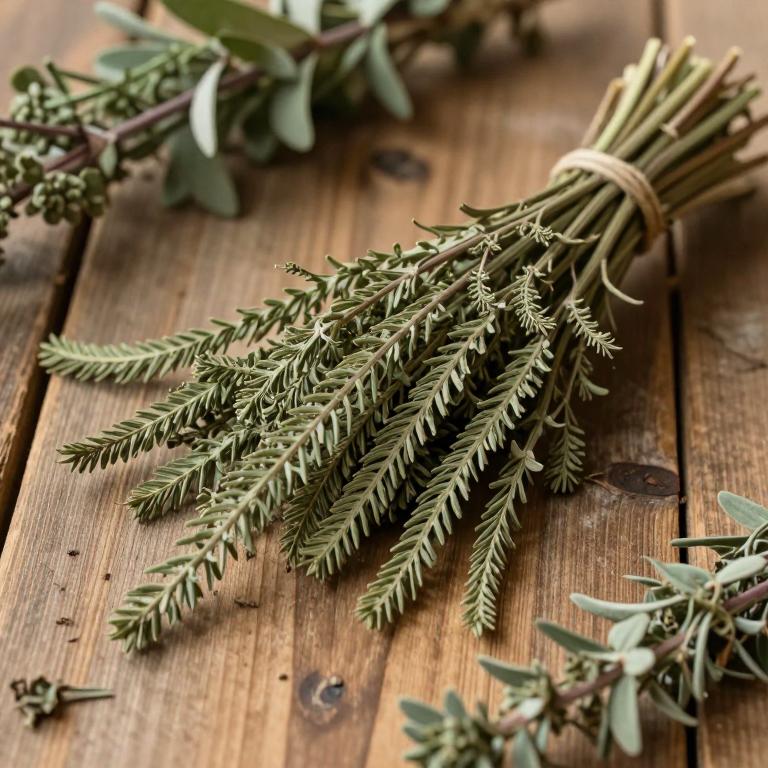
Names and Synonyms
Common Names
- Mexican Giant Horsetail
Scientific Names
Accepted name
Equisetum myriochaetumSynonyms
- Equisetum elongatum var. muelleri
- Equisetum ramosissimum var. sprucei
- Hippochaete myriochaeta
- Equisetum ramosissimum var. muelleri
- Equisetum mexicanum
- Equisetum myriochaetum var. densum
- Equisetum myriochaetum var. laxum
Regional and Traditional Names
Spanish:
- cola de caballo gigante mexicana
French:
- Prêle géante mexicaine
Sources: Wikidata, Catalogue of Life
Taxonomical Classification
This plant belongs to the kingdom Plantae and is classified within the phylum Streptophyta and the class Equisetopsida. As a member of the subclass Equisetidae and the order Equisetales, it falls under the family Equisetaceae. Finally, it is categorized under the genus Equisetum as the species Equisetum myriochaetum.
| Rank | Classification |
|---|---|
| Kingdom | Plantae |
| Phylum | Streptophyta |
| Class | Equisetopsida |
| Subclass | Equisetidae |
| Order | Equisetales |
| Family | Equisetaceae |
| Genus | Equisetum |
Sources: The World Checklist of Vascular Plants (WCVP)
Distribution
This plant exhibits a widespread presence across various regions within the nation of Mexico. Its distribution begins in the central part of the country, covering Mexico Central. Moving toward the coastal and border areas, it can be found throughout Mexico Northeast and Mexico Gulf. The species also extends into the western territories, specifically inhabiting Mexico Northwest. Finally, its geographical range reaches the southern reaches of the country in Mexico Southwest.
| Region | Area |
|---|---|
| Mexico | Mexico Central |
| Mexico | Mexico Northeast |
| Mexico | Mexico Gulf |
| Mexico | Mexico Northwest |
| Mexico | Mexico Southwest |
| Mexico | Mexico Southeast |
| Central America | Costa Rica |
| Central America | El Salvador |
| Central America | Guatemala |
| Central America | Honduras |
Sources: The World Checklist of Vascular Plants (WCVP)
Botanical Identification
Ecology
The ecology of Equisetum myriochaeum is characterized by its specific distribution across montane landscapes, where it thrives within a defined altitudinal belt. This species is primarily found in high-altitude environments, occupying an elevational range that begins at 1400 m AMSL and extends up to a maximum of 2200 m AMSL. Within this vertical niche, the plant's survival and growth are closely tied to the unique microclimates and soil moisture levels found in these mid-to-high elevation zones.
- Elevational range max:
- 2200 m AMSL
- Elevational range min:
- 1400 m AMSL
Life history
The life history of Equisetum myriochaetum is characterized by a perennial lifecycle, allowing the plant to persist through multiple growing seasons. As a member of the horsetail family, its development follows an alternation of generations involving a dominant sporophyte stage and a microscopic gametophyte stage. The perennial nature of the plant is supported by an extensive underground rhizome system, which serves as a storage organ for nutrients and allows the plant to regrow from existing structures each year. During the reproductive phase, the sporophyte produces specialized fertile stems that bear sporangia, which release spores into the environment. Once these spores land in suitable moist habitats, they germinate into tiny, independent gametophytes that produce sperm and eggs, eventually leading to fertilization and the emergence of new sporophyte individuals, thereby ensuring the continued survival and expansion of the species over many years.
- Lifecycle :
- perennial
Morphology
The morphology of Equisetum myriochaeum is characterized by a non-woody, herbaceous growth form that functions as a self-supporting forb. This plant is primarily terrestrial in its habitat, though it can exhibit tendencies across aquatic, semiaquatic, and terrestrial environments. It does not exhibit climbing behavior, functioning instead as a self-supporting organism rather than a liana or vine. Furthermore, it is an independent species that does not act as a parasite, and it maintains a strictly terrestrial existence rather than serving as an epiphyte.
- Aquatic :
- terrestrial
- Climber :
- self-supporting
- Epiphyte :
- terrestrial
- Growth form :
- herb
- Growth form :
- forb
- Parasite :
- independent
- Woodiness :
- non-woody
Sources: Global Inventory of Floras and Traits (GIFT)
Chemicals
Equisetum myriochaetum has 1 reported phytochemicals identified across 0 scientific publications and several other databases. The most consistently reported chemicals include Caffeoyl glucoside.
| Chemical | Supporting sources | Consensus |
|---|---|---|
| Caffeoyl glucoside | 1 supporting sources | ★☆☆☆☆ |
Caffeoyl glucoside
- Journal of ethnopharmacology
Conditions
Equisetum myriochaetum has 3 reported investigations on conditions identified across 0 scientific publications and several other databases. The most consistently reported conditions include hypertension, type 2 diabetes, type 2 diabetes mellitus.
| Condition | Supporting sources | Consensus |
|---|---|---|
| Hypertension | 1 supporting sources | ★☆☆☆☆ |
| Type 2 diabetes | 1 supporting sources | ★☆☆☆☆ |
| Type 2 diabetes mellitus | 1 supporting sources | ★☆☆☆☆ |
Hypertension
- Journal of ethnopharmacology
Type 2 diabetes
- Frontiers in pharmacology
Type 2 diabetes mellitus
- Pharmaceutical biology
Preparations
Equisetum myriochaetum has 4 reported preparations identified across 0 scientific publications and several other databases. The most consistently reported preparations include butanol extract, butanolic extracts, extracts, water extract.
| Preparation | Supporting sources | Consensus |
|---|---|---|
| Butanol extract | 1 supporting sources | ★☆☆☆☆ |
| Butanolic extracts | 1 supporting sources | ★☆☆☆☆ |
| Extracts | 1 supporting sources | ★☆☆☆☆ |
| Water extract | 1 supporting sources | ★☆☆☆☆ |
Butanol extract
- Journal of ethnopharmacology
Butanolic extracts
- Journal of ethnopharmacology
Extracts
- Frontiers in pharmacology
Water extract
- Journal of ethnopharmacology