Equilabium caespitosum
Equilabium caespitosum · Accepted scientific name
Scientific literature: Very Sparse (2 studies) · ★☆☆☆☆
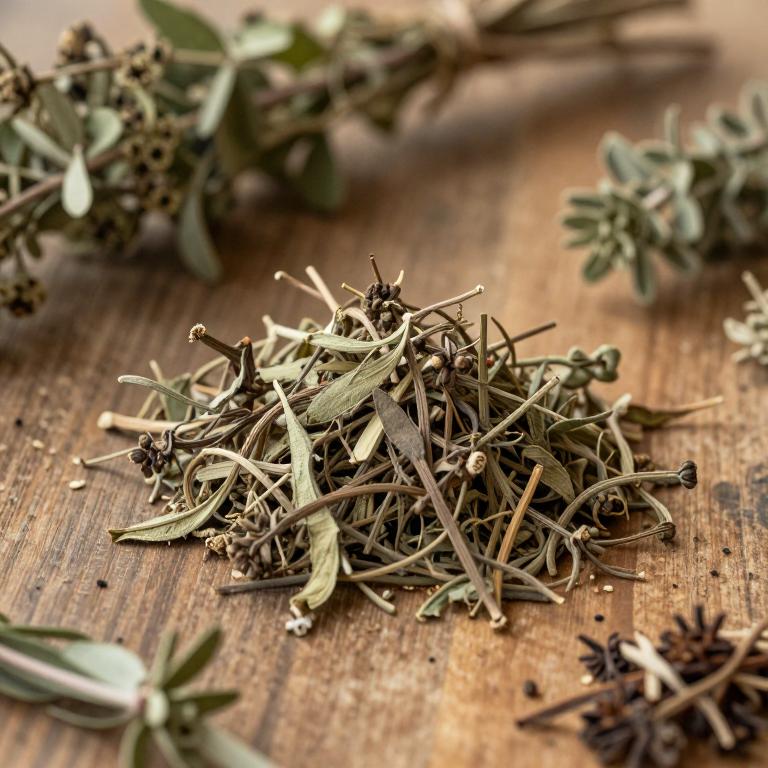
, scientifically known as Equilabium caespitosum, is a significant medicinal plant native to various tropical regions. Renowned for its diverse pharmacological properties, this species is frequently utilized in traditional medicine to treat various ailments. Its unique phytochemical profile offers promising potential for developing new therapeutic treatments in modern pharmacology.
- Family
- Lamiaceae
- Native range
- Africa
- Parts used
- Not available
- Common names
- Not available
- Scientific synonyms
- Plectranthus Caespitosus
Names and Synonyms
Scientific Names
Accepted name
Equilabium caespitosumSynonyms
- Plectranthus caespitosus
Sources: Wikidata
Taxonomical Classification
This plant, Equilabium caespitosum, belongs to the kingdom Plantae and the phylum Streptophyta. Within the class Equisetopsida and subclass Magnoliidae, it is categorized under the order Lamiales and the family Lamiaceae. It is further classified under the genus Equilabium.
| Rank | Classification |
|---|---|
| Kingdom | Plantae |
| Phylum | Streptophyta |
| Class | Equisetopsida |
| Subclass | Magnoliidae |
| Order | Lamiales |
| Family | Lamiaceae |
| Genus | Equilabium |
Sources: The World Checklist of Vascular Plants (WCVP)
Distribution
This plant is found within the specific ecological zones of East Tropical Africa. Its documented range is concentrated in the nation of Kenya. Additionally, the species extends its presence into the neighboring territory of Tanzania. These two countries represent the primary geographical locations where the plant occurs naturally. Consequently, its distribution is closely tied to the environmental conditions of this East African region.
| Region | Area |
|---|---|
| East Tropical Africa | Kenya |
| East Tropical Africa | Tanzania |
Sources: The World Checklist of Vascular Plants (WCVP)
Botanical Identification
Life history
The life history of Equilabium caespitosum is characterized by its specific growth habit and survival strategy, classified under the life form of a chamaephyte. As a chamaephyte, its perennating buds are located close to the soil surface, often just above it, which allows the plant to persist through unfavorable seasonal conditions by utilizing a relatively low-growing structure. This life form integrates elements of both nanophanerophyte and chamaephyte characteristics, positioning its vegetative parts near the ground level to optimize resource acquisition and protection against environmental stressors. This strategic positioning of buds ensures a resilient life cycle, enabling the plant to regenerate effectively each growing season from a protected basal or near-surface position.
- Life form :
- chamaephyte
Morphology
The morphology of Equilibium caespitosum is characterized by a woody growth form that manifests as a shrub. It functions as a self-supporting climber, utilizing its structure to ascend without requiring external hosts for support. As an independent organism, it does not exhibit parasitic behavior, maintaining its own nutritional processes rather than relying on a host plant. Furthermore, it is a terrestrial species, establishing its root system and growth within the soil rather than living as an epiphyte.
- Climber :
- self-supporting
- Epiphyte :
- terrestrial
- Growth form :
- shrub
- Parasite :
- independent
- Woodiness :
- woody
Sources: Global Inventory of Floras and Traits (GIFT)
Activities
Equilabium caespitosum has 2 reported activities identified across 0 scientific publications and several other databases. The most consistently reported activities include Antibacterial, Antioxidant.
| Activity | Supporting sources | Consensus |
|---|---|---|
| Antibacterial | 1 supporting sources | ★☆☆☆☆ |
| Antioxidant | 1 supporting sources | ★☆☆☆☆ |
Antibacterial
- Tropical medicine and health
Antioxidant
- Tropical medicine and health
Preparations
Equilabium caespitosum has 5 reported preparations identified across 0 scientific publications and several other databases. The most consistently reported preparations include dichloromethane extract, distilled water extract, ethyl acetate extract, hexane extract, methanol extract.
| Preparation | Supporting sources | Consensus |
|---|---|---|
| Dichloromethane extract | 1 supporting sources | ★☆☆☆☆ |
| Distilled water extract | 1 supporting sources | ★☆☆☆☆ |
| Ethyl acetate extract | 1 supporting sources | ★☆☆☆☆ |
| Hexane extract | 1 supporting sources | ★☆☆☆☆ |
| Methanol extract | 1 supporting sources | ★☆☆☆☆ |
Dichloromethane extract
- Tropical medicine and health
Distilled water extract
- Tropical medicine and health
Ethyl acetate extract
- Tropical medicine and health
Hexane extract
- Tropical medicine and health
Methanol extract
- Tropical medicine and health