Eplingiella fruticosa
Eplingiella fruticosa · Accepted scientific name
Scientific literature: Very Sparse (11 studies) · ★☆☆☆☆
Eplingiella fruticosa, scientifically known as Eplingiella fruticosa, is a remarkable medicinal shrub prized for its diverse therapeutic properties. Deeply rooted in traditional ethnobotanical practices, this plant is frequently utilized to treat various ailments, offering a rich source of bioactive compounds that hold significant potential for modern pharmacological research.
- Family
- Lamiaceae
- Native range
- Southern America
- Parts used
- Not available
- Common names
- Not available
- Scientific synonyms
- Mesosphaerum Fruticosum · Hyptis Fruticosa
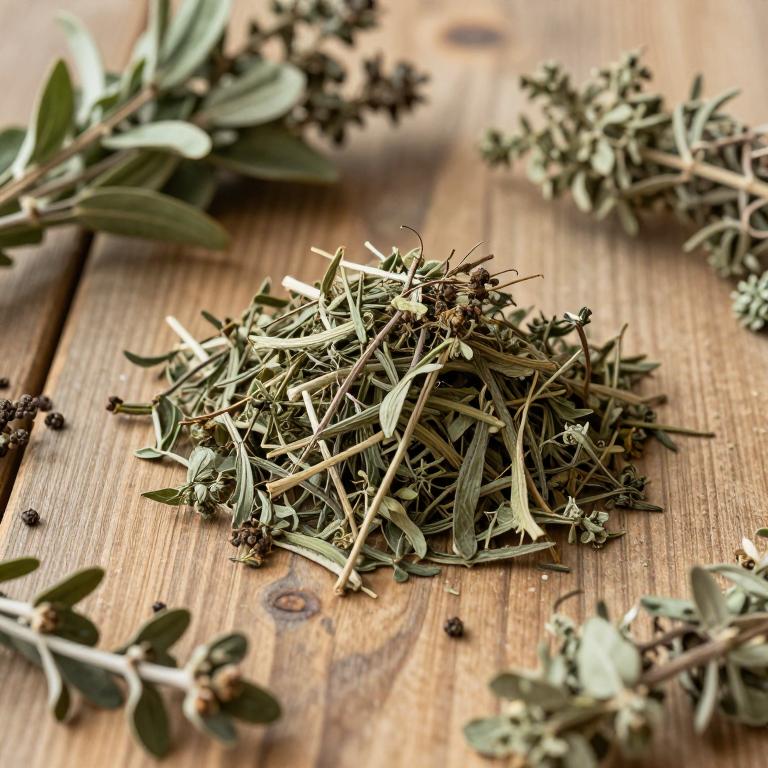
Names and Synonyms
Scientific Names
Accepted name
Eplingiella fruticosaSynonyms
- Mesosphaerum fruticosum
- Hyptis fruticosa
Sources: Wikidata, Catalogue of Life
Taxonomical Classification
This plant belongs to the kingdom Plantae and is classified under the phylum Streptophyta and the class Equisetopsida. Within the subclass Magnoliidae, it is organized under the order Lamiales and the family Lamiaceae. Finally, it is identified by its specific genus, Eplingiella.
| Rank | Classification |
|---|---|
| Kingdom | Plantae |
| Phylum | Streptophyta |
| Class | Equisetopsida |
| Subclass | Magnoliidae |
| Order | Lamiales |
| Family | Lamiaceae |
| Genus | Eplingiella |
Sources: The World Checklist of Vascular Plants (WCVP)
Distribution
This plant is found within specific regions of South America. Its natural habitat includes the diverse landscapes of Brazil. Specifically, its distribution spans across the Northeast region of the country. Additionally, the species can be located throughout the Southeast portion of Brazil. These two areas represent the primary geographical range for Eplingiella fruticosa.
| Region | Area |
|---|---|
| Brazil | Brazil Northeast |
| Brazil | Brazil Southeast |
Sources: The World Checklist of Vascular Plants (WCVP)
Botanical Identification
Ecology
The ecology of Eplingiella fruticosa is characterized by its ability to inhabit diverse and specialized ecosystems across Brazilian biomes, demonstrating significant adaptability to varying soil compositions and moisture regimes. It is frequently found within the Caatinga (strictu sensu), where it must contend with semi-arid conditions and seasonal water scarcity, as well as in the nutrient-poor, rocky environments of the Campo Rupestre. Furthermore, the species thrives in the seasonal dynamics of the Floresta Estacional Semidecidual, where vegetation undergoes periodic leaf loss, and in the sandy, coastal environments of the Restinga. This broad distribution across such distinct habitats indicates a resilient ecological strategy capable of navigating both xeric shrublands and more humid, transitional forest systems.
- Habitat :
- Caatinga (stricto sensu), Campo Rupestre, Floresta Estacional Semidecidual, Restinga
Life history
The life history of Eplingiella fruticosa is characterized by its specific growth strategies and structural adaptations to its environment, categorized primarily by its life forms. As a plant that exhibits distinct developmental stages, it can manifest as a phanerophyte, where its perennating buds are located well above the ground on aerial shoots, allowing it to maintain a more robust and visible stature. Additionally, the species can express a nanophanerophyte life form, a specialized state where the reproductive and vegetative buds are positioned at a relatively low height, typically just above the soil surface. These varying life forms allow the plant to navigate different ecological niches and seasonal changes, utilizing its perennial nature to persist through varying environmental conditions.
- Life form :
- nanophanerophyte
- Life form :
- phanerophyte
Morphology
The morphology of Eplingiella fruticosa is characterized by a woody structure, manifesting primarily as a shrub or subshrub. It is a self-supporting plant, functioning as an independent organism rather than acting as a parasite or an obligatory climber such as a liana or vine. While its habitat can vary, its growth habit is fundamentally terrestrial rather than aquatic or semiaquatic, and it does not exhibit epiphytic tendencies like holoepiphytes or hemiepiphytes, remaining firmly rooted in the soil.
- Aquatic :
- terrestrial
- Climber :
- self-supporting
- Epiphyte :
- terrestrial
- Growth form :
- shrub
- Growth form :
- subshrub
- Parasite :
- independent
- Woodiness :
- woody
Sources: Global Inventory of Floras and Traits (GIFT)
Chemicals
Eplingiella fruticosa has 3 reported phytochemicals identified across 0 scientific publications and several other databases. The most consistently reported chemicals include (E)-Caryophyllene, 1,8-Cineole, Bicyclogermacrene.
| Chemical | Supporting sources | Consensus |
|---|---|---|
| (E)-Caryophyllene | 1 supporting sources | ★☆☆☆☆ |
| 1,8-Cineole | 1 supporting sources | ★☆☆☆☆ |
| Bicyclogermacrene | 1 supporting sources | ★☆☆☆☆ |
(E)-Caryophyllene
- Food and chemical toxicology : an international journal published for the British Industrial Biological Research Association
1,8-Cineole
- Food and chemical toxicology : an international journal published for the British Industrial Biological Research Association
Bicyclogermacrene
- Food and chemical toxicology : an international journal published for the British Industrial Biological Research Association
Activities
Eplingiella fruticosa has 1 reported activities identified across 0 scientific publications and several other databases. The most consistently reported activities include Antioxidant.
| Activity | Supporting sources | Consensus |
|---|---|---|
| Antioxidant | 1 supporting sources | ★☆☆☆☆ |
Antioxidant
- Food and chemical toxicology : an international journal published for the British Industrial Biological Research Association
Conditions
Eplingiella fruticosa has 4 reported investigations on conditions identified across 0 scientific publications and several other databases. The most consistently reported conditions include Parkinson's disease, catalepsy, chronic pain, memory deficit.
| Condition | Supporting sources | Consensus |
|---|---|---|
| Parkinson's disease | 1 supporting sources | ★☆☆☆☆ |
| Catalepsy | 1 supporting sources | ★☆☆☆☆ |
| Chronic pain | 1 supporting sources | ★☆☆☆☆ |
| Memory deficit | 1 supporting sources | ★☆☆☆☆ |
Parkinson's disease
- Food and chemical toxicology : an international journal published for the British Industrial Biological Research Association
Catalepsy
- Food and chemical toxicology : an international journal published for the British Industrial Biological Research Association
Chronic pain
- Food and chemical toxicology : an international journal published for the British Industrial Biological Research Association
Memory deficit
- Food and chemical toxicology : an international journal published for the British Industrial Biological Research Association
Preparations
Eplingiella fruticosa has 4 reported preparations identified across 0 scientific publications and several other databases. The most consistently reported preparations include EPL, EPL-βCD, essential oil, leaf essential oil.
| Preparation | Supporting sources | Consensus |
|---|---|---|
| Epl | 1 supporting sources | ★☆☆☆☆ |
| Epl-βcd | 1 supporting sources | ★☆☆☆☆ |
| Essential oil | 1 supporting sources | ★☆☆☆☆ |
| Leaf essential oil | 1 supporting sources | ★☆☆☆☆ |
Epl
- Food and chemical toxicology : an international journal published for the British Industrial Biological Research Association
Epl-βcd
- Food and chemical toxicology : an international journal published for the British Industrial Biological Research Association
Essential oil
- Food and chemical toxicology : an international journal published for the British Industrial Biological Research Association
Leaf essential oil
- Food and chemical toxicology : an international journal published for the British Industrial Biological Research Association