Ephedras
Ephedra · Accepted scientific name
Scientific literature: Sparse (69 studies) · ★★☆☆☆
Ephidras, scientifically known as Ephedra, is a diverse genus of gymnosperm shrubs found in arid regions worldwide. Renowned for its historical use in traditional medicine, it contains alkaloids like ephedrine. These compounds are widely utilized in modern pharmacology for treating respiratory ailments, stimulating alertness, and managing blood pressure.
- Family
- Ephedraceae
- Native range
- Europe
- Parts used
- Root · Stem
- Common names
- Ephedras · Joint-Firs · 3 more
- Scientific synonyms
- Chaetocladus
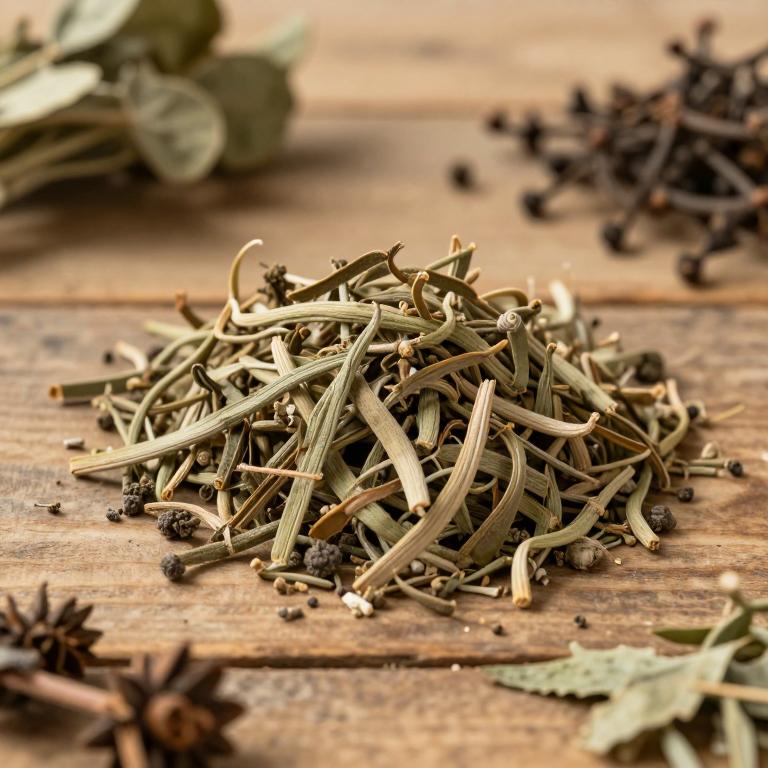
Names and Synonyms
Common Names
- Ephedras
- Joint-firs
- Jointfirs
- Mormon Tea
- Mormon's Teas
Scientific Names
Accepted name
EphedraSynonyms
- Chaetocladus
Regional and Traditional Names
Spanish:
- Efedra
- Efedráceas
- Efedraceas
- Canutillos
German:
- Meerträubel
- Meerträubchen
- Meerträubel
Sources: Wikidata, Catalogue of Life
Taxonomical Classification
This plant belongs to the kingdom Plantae and is classified under the phylum Streptophyta within the class Equisetopsida. It is further categorized under the subclass Gnetidae and the order Ephedrales. Finally, it is a member of the family Ephedraceae and is represented by the genus Ephedra.
| Rank | Classification |
|---|---|
| Kingdom | Plantae |
| Phylum | Streptophyta |
| Class | Equisetopsida |
| Subclass | Gnetidae |
| Order | Ephedrales |
| Family | Ephedraceae |
| Genus | Ephedra |
Sources: The World Checklist of Vascular Plants (WCVP)
Distribution
This plant exhibits a specific range of locations across the European continent. In Middle Europe, it can be found growing in the landscapes of Austria and Switzerland. The species also inhabits the regions of Czechia-Slovakia and Hungary within the same central zone. Moving toward the Mediterranean, its presence extends into Southwestern Europe. Specifically, it is documented to grow within the Balearic Islands.
| Region | Area |
|---|---|
| Middle Europe | Austria |
| Middle Europe | Czechia-Slovakia |
| Middle Europe | Hungary |
| Middle Europe | Switzerland |
| Southwestern Europe | Baleares |
| Southwestern Europe | Corse |
| Southwestern Europe | France |
| Southwestern Europe | Portugal |
| Southwestern Europe | Sardegna |
| Southwestern Europe | Spain |
Sources: The World Checklist of Vascular Plants (WCVP)
Plant Parts
Ephedra has 2 reported plant parts identified across 3 scientific publications and several other databases that are studied for medicinal purposes. The most consistently reported plant part include root, stem.
| Plant part | Supporting sources | Consensus |
|---|---|---|
| Root | 2 supporting sources | ★☆☆☆☆ |
| Stem | 1 supporting sources | ★☆☆☆☆ |
Root
- International immunopharmacology
- Frontiers in plant science
Stem
- Frontiers in plant science
Chemicals
Ephedra has 11 reported phytochemicals identified across 3 scientific publications and several other databases. The most consistently reported chemicals include Ephedrine, PSEUDOEPHEDRINE, 4-(2-docosyloxycarbonyl-vinyl)-benzoic acid, 4-(2-eicosyloxycarbonyl-vinyl)-benzoic acid, Delphinidin.
| Chemical | Supporting sources | Consensus |
|---|---|---|
| Ephedrine | 6 supporting sources | ★★★☆☆ |
| PSEUDOEPHEDRINE | 2 supporting sources | ★☆☆☆☆ |
| 4-(2-docosyloxycarbonyl-vinyl)-benzoic acid | 1 supporting sources | ★☆☆☆☆ |
| 4-(2-eicosyloxycarbonyl-vinyl)-benzoic acid | 1 supporting sources | ★☆☆☆☆ |
| Delphinidin | 1 supporting sources | ★☆☆☆☆ |
| Norpseudoephedrine | 1 supporting sources | ★☆☆☆☆ |
| Sudafed | 1 supporting sources | ★☆☆☆☆ |
| benzaldehyde | 1 supporting sources | ★☆☆☆☆ |
| caffeine | 1 supporting sources | ★☆☆☆☆ |
| phenmetrazine | 1 supporting sources | ★☆☆☆☆ |
Ephedrine
- Journal of cellular and molecular medicine
- Journal of ethnopharmacology
- Zhonghua yi shi za zhi (Beijing, China : 1980)
- Journal of natural medicines
- BioMed research international
View 1 additional sources
- Scientific reports
PSEUDOEPHEDRINE
- Journal of natural medicines
- Scientific reports
4-(2-docosyloxycarbonyl-vinyl)-benzoic acid
- Phytochemistry
4-(2-eicosyloxycarbonyl-vinyl)-benzoic acid
- Phytochemistry
Delphinidin
- Natural products and bioprospecting
Norpseudoephedrine
- Journal of ethnopharmacology
Sudafed
- International dental journal
benzaldehyde
- Microscopy research and technique
caffeine
- World journal of gastroenterology
phenmetrazine
- Microscopy research and technique
Activities
Ephedra has 11 reported activities identified across 3 scientific publications and several other databases. The most consistently reported activities include Antioxidant, Antibacterial, Anticancer, Antifungal, Antitumor.
| Activity | Supporting sources | Consensus |
|---|---|---|
| Antioxidant | 3 supporting sources | ★★☆☆☆ |
| Antibacterial | 2 supporting sources | ★☆☆☆☆ |
| Anticancer | 1 supporting sources | ★☆☆☆☆ |
| Antifungal | 1 supporting sources | ★☆☆☆☆ |
| Antitumor | 1 supporting sources | ★☆☆☆☆ |
| Antiviral | 1 supporting sources | ★☆☆☆☆ |
| Diuretic | 1 supporting sources | ★☆☆☆☆ |
| Hepatoprotective | 1 supporting sources | ★☆☆☆☆ |
| Hyperglycemic | 1 supporting sources | ★☆☆☆☆ |
| Pressor | 1 supporting sources | ★☆☆☆☆ |
Antioxidant
- Scientific reports
- Natural product research
- Chinese journal of natural medicines
Antibacterial
- Scientific reports
- Chinese journal of natural medicines
Anticancer
- Chinese journal of natural medicines
Antifungal
- Chinese journal of natural medicines
Antitumor
- Chinese journal of natural medicines
Antiviral
- Chinese journal of natural medicines
Diuretic
- Chinese journal of natural medicines
Hepatoprotective
- Chinese journal of natural medicines
Hyperglycemic
- Journal of pharmacobio-dynamics
Pressor
- Journal of pharmacobio-dynamics
Conditions
Ephedra has 13 reported investigations on conditions identified across 3 scientific publications and several other databases. The most consistently reported conditions include asthma, blood pressure, Acute lung injury, anti-asthmatic, body weight.
| Condition | Supporting sources | Consensus |
|---|---|---|
| Asthma | 3 supporting sources | ★★☆☆☆ |
| Blood pressure | 2 supporting sources | ★☆☆☆☆ |
| Acute lung injury | 1 supporting sources | ★☆☆☆☆ |
| Anti-asthmatic | 1 supporting sources | ★☆☆☆☆ |
| Body weight | 1 supporting sources | ★☆☆☆☆ |
| Cold | 1 supporting sources | ★☆☆☆☆ |
| Coughs | 1 supporting sources | ★☆☆☆☆ |
| Fever | 1 supporting sources | ★☆☆☆☆ |
| Obesity | 1 supporting sources | ★☆☆☆☆ |
| Respiratory diseases | 1 supporting sources | ★☆☆☆☆ |
Asthma
- Biological & pharmaceutical bulletin
- Microscopy research and technique
- Zhongguo Zhong yao za zhi = Zhongguo zhongyao zazhi = China journal of Chinese materia medica
Blood pressure
- The Annals of pharmacotherapy
- Journal of pharmacobio-dynamics
Acute lung injury
- Journal of cellular and molecular medicine
Anti-asthmatic
- Journal of ethnopharmacology
Body weight
- World journal of gastroenterology
Cold
- Microscopy research and technique
Coughs
- Biological & pharmaceutical bulletin
Fever
- Microscopy research and technique
Obesity
- World journal of gastroenterology
Respiratory diseases
- Zhonghua yi shi za zhi (Beijing, China : 1980)
Preparations
Ephedra has 12 reported preparations identified across 3 scientific publications and several other databases. The most consistently reported preparations include Ephedra aqueous extract, Kechuanning tablets, Ma Huang, QFPDD, TrimSpa.
| Preparation | Supporting sources | Consensus |
|---|---|---|
| Ephedra aqueous extract | 1 supporting sources | ★☆☆☆☆ |
| Kechuanning tablets | 1 supporting sources | ★☆☆☆☆ |
| Ma huang | 1 supporting sources | ★☆☆☆☆ |
| Qfpdd | 1 supporting sources | ★☆☆☆☆ |
| Trimspa | 1 supporting sources | ★☆☆☆☆ |
| Alkaloid fraction | 1 supporting sources | ★☆☆☆☆ |
| Alkaloid-free extract | 1 supporting sources | ★☆☆☆☆ |
| Anti-fatigue drink | 1 supporting sources | ★☆☆☆☆ |
| Drink of immortality and longevity | 1 supporting sources | ★☆☆☆☆ |
| Fleshy cones | 1 supporting sources | ★☆☆☆☆ |
Ephedra aqueous extract
- Journal of pharmacobio-dynamics
Kechuanning tablets
- Yao xue xue bao = Acta pharmaceutica Sinica
Ma huang
- Journal of toxicology. Clinical toxicology
Qfpdd
- Natural products and bioprospecting
Trimspa
- Pharmacotherapy
Alkaloid fraction
- Journal of pharmacobio-dynamics
Alkaloid-free extract
- Journal of pharmacobio-dynamics
Anti-fatigue drink
- Ancient science of life
Drink of immortality and longevity
- Ancient science of life
Fleshy cones
- Scientific reports