Ephedra pachyclada
Ephedra pachyclada · Accepted scientific name
Scientific literature: Very Sparse (5 studies) · ★☆☆☆☆
Scientifically known as Ephedra pachyclada, is a distinctive shrub native to the arid regions of North Africa. Belonging to the Ephedraceae family, this resilient plant is prized in traditional medicine for its bioactive alkaloids, which possess significant stimulant and bronchodilatory properties used to treat various respiratory ailments.
- Family
- Not available
- Native range
- Asia-Temperate
- Parts used
- Leaf
- Common names
- Not available
- Scientific synonyms
- Not available
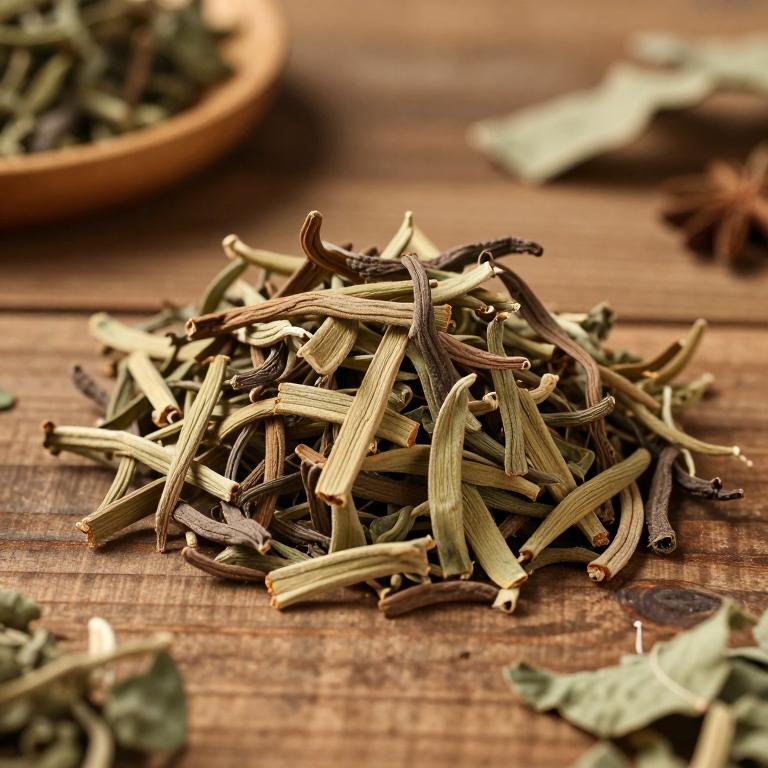
Names and Synonyms
Scientific Names
Accepted name
Ephedra pachycladaSources: Wikidata
Distribution
This plant is primarily distributed across the arid regions of Western Asia. Within this territory, it can be found growing in the landscapes of Afghanistan and Iran. Its range also extends into the Levant, specifically within Palestine. Additionally, the species inhabits the rugged terrain of the Sinai Peninsula. Finally, its geographical footprint reaches into the Gulf States located on the Arabian Peninsula.
| Region | Area |
|---|---|
| Western Asia | Afghanistan |
| Western Asia | Iran |
| Western Asia | Palestine |
| Western Asia | Sinai |
| Arabian Peninsula | Gulf States |
| Arabian Peninsula | Oman |
| Arabian Peninsula | Saudi Arabia |
| Arabian Peninsula | Yemen |
| Indian Subcontinent | Pakistan |
Sources: The World Checklist of Vascular Plants (WCVP)
Botanical Identification
Ecology
The ecology of Ephedra pachyclada is characterized by its adaptation to specific altitudinal zones within its native montane or arid environments. This species typically thrives within a distinct elevational range, establishing itself at altitudes starting from a minimum of 800 m AMSL and extending up to a maximum of 2400 m AMSL. This vertical distribution suggests a capacity to tolerate varying atmospheric pressures and temperature gradients associated with mid-to-high altitude terrain. Its presence within these specific elevations often dictates its interaction with local microclimates, soil compositions, and moisture availability found across these mountainous gradients.
- Elevational range max:
- 2400 m AMSL
- Elevational range min:
- 800 m AMSL
Life history
The life history of Ephedra pachyclada is characterized by its classification as a chamaephyte, a growth form that allows it to thrive in challenging arid environments by keeping its reproductive and photosynthetic structures close to the substrate. This life strategy enables the plant to withstand high levels of solar radiation and potential desiccation by minimizing exposure to harsh winds. As a perennial species, it undergoes seasonal cycles of growth and dormancy, utilizing its specialized, woody, jointed stems to facilitate survival in rocky or sandy habitats. The reproductive cycle typically involves the production of cones, which are essential for its propagation and genetic dispersal within its specific ecological niche. Through its chamaephytic habit, Ephedra pachyclada maintains a resilient life cycle that balances resource conservation with the ability to exploit brief periods of favorable moisture and temperature.
- Life form :
- chamaephyte
Morphology
The morphology of Ephedra pachyclada is characterized by a woody growth form, specifically categorized as a shrub. As a terrestrial plant, it does not exhibit aquatic or semiaquatic tendencies, nor does it function as an epiphyte. The species is entirely independent, lacking any parasitic lifestyle, and is classified as a self-supporting organism rather than a climber, liana, or vine.
- Aquatic :
- terrestrial
- Climber :
- self-supporting
- Epiphyte :
- terrestrial
- Growth form :
- shrub
- Parasite :
- independent
- Woodiness :
- woody
Reproduction
The reproduction of Ephedra pachyclada is centered around the production of specialized seeds that exhibit a highly consistent physical profile. Based on empirical data, the reproductive output of this species is characterized by a uniform seed mass, with the mean, maximum, and minimum values all converging at exactly 0.02019 g. This lack of variance in seed mass suggests a highly stabilized reproductive strategy, ensuring that each individual seed produced carries a standardized nutrient load and physical dimension. This consistency in seed mass is a critical aspect of its life cycle, influencing how the seeds are dispersed and their subsequent ability to establish new growth in its natural habitat.
- Seed mass mean:
- 0.02019 g
Sources: Global Inventory of Floras and Traits (GIFT)
Plant Parts
Ephedra pachyclada has 1 reported plant parts identified across 2 scientific publications and several other databases that are studied for medicinal purposes. The most consistently reported plant part include leaf.
| Plant part | Supporting sources | Consensus |
|---|---|---|
| Leaf | 2 supporting sources | ★☆☆☆☆ |
Leaf
- International journal of reproductive biomedicine
- Biomolecules
Conditions
Ephedra pachyclada has 3 reported investigations on conditions identified across 2 scientific publications and several other databases. The most consistently reported conditions include gastric ulcers, gastrointestinal disorders, infertility.
| Condition | Supporting sources | Consensus |
|---|---|---|
| Gastric ulcers | 1 supporting sources | ★☆☆☆☆ |
| Gastrointestinal disorders | 1 supporting sources | ★☆☆☆☆ |
| Infertility | 1 supporting sources | ★☆☆☆☆ |
Gastric ulcers
- Acta poloniae pharmaceutica
Gastrointestinal disorders
- Acta poloniae pharmaceutica
Infertility
- International journal of reproductive biomedicine
Preparations
Ephedra pachyclada has 1 reported preparations identified across 2 scientific publications and several other databases. The most consistently reported preparations include hydroalcoholic extract.
| Preparation | Supporting sources | Consensus |
|---|---|---|
| Hydroalcoholic extract | 1 supporting sources | ★☆☆☆☆ |
Hydroalcoholic extract
- International journal of reproductive biomedicine