Ephedra nevadensis
Ephedra nevadensis · Accepted scientific name
Scientific literature: Moderate (126 studies) · ★★★☆☆
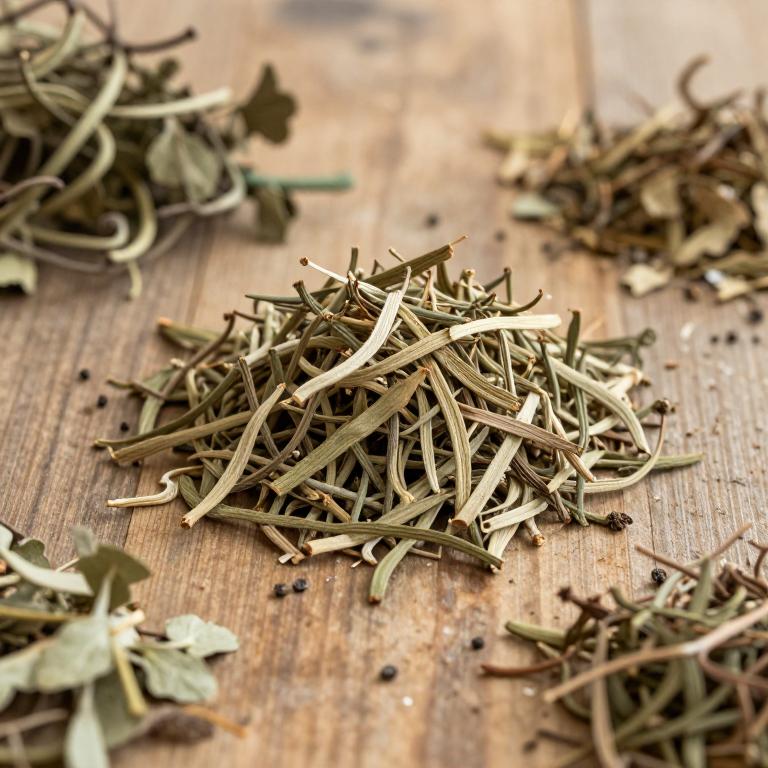
, scientifically known as Ephedra nevadenis, is a resilient desert shrub native to the arid regions of the southwestern United States. Belonging to the Ephedraceae family, this plant is historically significant for its alkaloid content, which has been studied extensively for its potential pharmacological properties and medicinal applications.
- Family
- Not available
- Native range
- Northern America
- Parts used
- Not available
- Common names
- Not available
- Scientific synonyms
- Not available
Names and Synonyms
Scientific Names
Accepted name
Ephedra nevadensisDistribution
This plant is primarily located within the western regions of the United States. In the northwestern portion of its range, it can be found specifically in Oregon. Its distribution extends significantly into the southwestern United States across several states. It grows within the borders of Arizona, California, and Nevada. Finally, the species is also documented as occurring throughout Utah.
| Region | Area |
|---|---|
| Northwestern U.S.A. | Oregon |
| Southwestern U.S.A. | Arizona |
| Southwestern U.S.A. | California |
| Southwestern U.S.A. | Nevada |
| Southwestern U.S.A. | Utah |
| Mexico | Mexico Northwest |
Sources: The World Checklist of Vascular Plants (WCVP)
Botanical Identification
Life history
The life history of Ephedra nevadenis is characterized by a perennial lifecycle, allowing the plant to persist in its environment over multiple growing seasons. Functionally, it exhibits a chamaphyte life form, meaning its photosynthetic buds are situated close to the soil surface, a structural adaptation that aids in survival within its specific ecological niche.
- Life form :
- chamaephyte
- Lifecycle :
- perennial
Morphology
The morphology of Ephedra nevadensis is characterized by a woody growth form, functioning as a self-supporting shrub. It typically reaches an average plant height of 0.91 m, maintaining a structural independence as a non-parasitic, independent organism. This species is strictly terrestrial in its habitat, rather than aquatic or epiphytic, and does not exhibit climbing tendencies such as a liana or vine, instead relying on its own woody framework for support.
- Aquatic :
- terrestrial
- Climber :
- self-supporting
- Epiphyte :
- terrestrial
- Growth form :
- shrub
- Parasite :
- independent
- Plant height mean:
- 0.91 m
- Woodiness :
- woody
Reproduction
Reproduction in Ephedra nevadensis is characterized by specific morphological investment in its progeny, as evidenced by the quantitative metrics of its seed development. The seeds produced by this species exhibit a highly consistent mass profile, with a recorded mean seed mass of 0.025136 g. The data indicates an extremely narrow range of variation among the seeds, with both the maximum and minimum recorded seed mass values converging at 0.026402 g. This lack of variance suggests a highly standardized reproductive output, where each seed is produced with a uniform level of resource allocation, ensuring a predictable physical dimension for the dispersal and germination phases of its life cycle.
- Seed mass max:
- 0.026402 g
- Seed mass mean:
- 0.025136 g
Sources: Global Inventory of Floras and Traits (GIFT)
Chemicals
Ephedra nevadensis has 7 reported phytochemicals identified across 0 scientific publications and several other databases. The most consistently reported chemicals include CALCIUM, Ephedrine, Lucenin-2, PHOSPHORUS, Tannin.
| Chemical | Supporting sources | Consensus |
|---|---|---|
| CALCIUM | 1 supporting sources | ★☆☆☆☆ |
| Ephedrine | 1 supporting sources | ★☆☆☆☆ |
| Lucenin-2 | 1 supporting sources | ★☆☆☆☆ |
| PHOSPHORUS | 1 supporting sources | ★☆☆☆☆ |
| Tannin | 1 supporting sources | ★☆☆☆☆ |
| Vicenin 2 | 1 supporting sources | ★☆☆☆☆ |
| resin | 1 supporting sources | ★☆☆☆☆ |
CALCIUM
- Dr. Duke
Ephedrine
- Dr. Duke
Lucenin-2
- Dr. Duke
PHOSPHORUS
- Dr. Duke
Tannin
- Dr. Duke
Vicenin 2
- Dr. Duke
resin
- Dr. Duke
Activities
Ephedra nevadensis has 116 reported activities identified across 0 scientific publications and several other databases. The most consistently reported activities include ACE-Inhibitor, Adrenergic, Allergenic, Anesthetic, Anthelmintic.
| Activity | Supporting sources | Consensus |
|---|---|---|
| ACE-Inhibitor | 1 supporting sources | ★☆☆☆☆ |
| Adrenergic | 1 supporting sources | ★☆☆☆☆ |
| Allergenic | 1 supporting sources | ★☆☆☆☆ |
| Anesthetic | 1 supporting sources | ★☆☆☆☆ |
| Anthelmintic | 1 supporting sources | ★☆☆☆☆ |
| AntiHIV | 1 supporting sources | ★☆☆☆☆ |
| AntiPMS | 1 supporting sources | ★☆☆☆☆ |
| Antiallergic | 1 supporting sources | ★☆☆☆☆ |
| Antianaphylactic | 1 supporting sources | ★☆☆☆☆ |
| Antiangiogenic | 1 supporting sources | ★☆☆☆☆ |
ACE-Inhibitor
- Dr. Duke
Adrenergic
- Dr. Duke
Allergenic
- Dr. Duke
Anesthetic
- Dr. Duke
Anthelmintic
- Dr. Duke
AntiHIV
- Dr. Duke
AntiPMS
- Dr. Duke
Antiallergic
- Dr. Duke
Antianaphylactic
- Dr. Duke
Antiangiogenic
- Dr. Duke