large ephedra
Ephedra nebrodensis · Accepted scientific name
Scientific literature: Very Sparse (9 studies) · ★☆☆☆☆
Large ephedra, scientifically known as Ephedra nebrodensis, is a resilient shrub native to specific arid regions. Renowned for its unique medicinal properties, this plant contains alkaloids that have been traditionally utilized for their stimulating and respiratory benefits. Understanding its botanical characteristics is essential for exploring its potential pharmacological applications.
- Family
- Ephedraceae
- Native range
- Europe
- Parts used
- Not available
- Common names
- Large Ephedra
- Scientific synonyms
- Ephedra Major Var. Nebrodensis · Ephedra Nebrodensis Var. Scoparia · 11 more
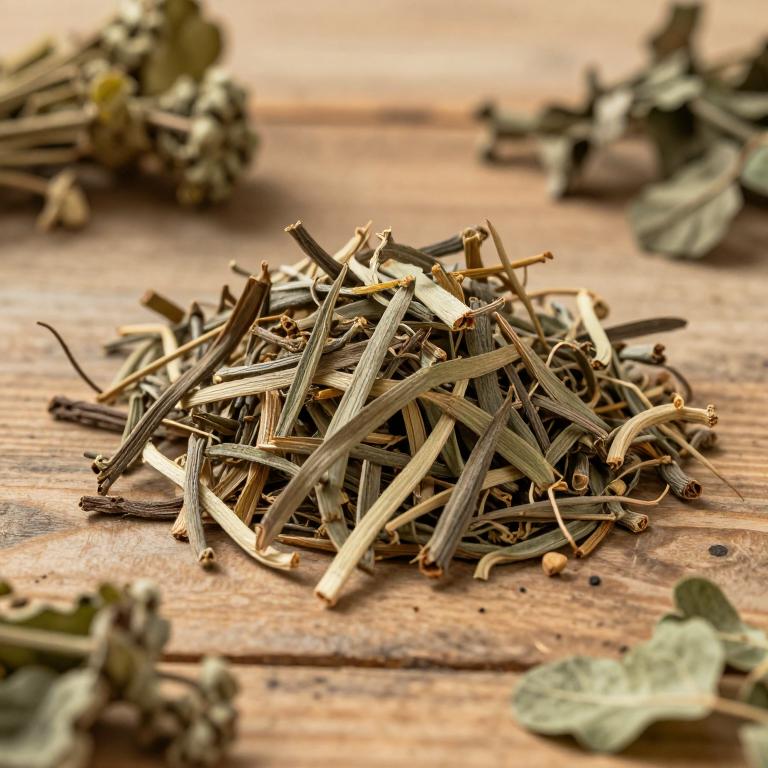
Names and Synonyms
Common Names
- large ephedra
Scientific Names
Accepted name
Ephedra nebrodensisSynonyms
- Ephedra major var. nebrodensis
- Ephedra nebrodensis var. scoparia
- Ephedra major var. atlantica
- Ephedra equisetiformis subsp. nebrodensis
- Ephedra nebrodensis subsp. suggarica
- Ephedra villarsii
- Ephedra scoparia
- Ephedra major var. suggarica
- Ephedra major subsp. villarsii
- Ephedra equisetiformis
- Ephedra graeca
- Ephedra atlantica
- Chaetocladus monostachys
Regional and Traditional Names
German:
- Nebroden-Meerträubel
French:
- Grand Éphédra commun
- Éphèdre des monts Nébrodes
Sources: Wikidata, Catalogue of Life
Taxonomical Classification
This plant belongs to the kingdom Plantae and the phylum Streptophyta, falling under the class Equisetopsida and subclass Gnetidae. Within the order Ephedrales, it is classified under the family Ephedraceae. Finally, it is specifically identified by the genus Ephedra as Ephedra nebrodensis.
| Rank | Classification |
|---|---|
| Kingdom | Plantae |
| Phylum | Streptophyta |
| Class | Equisetopsida |
| Subclass | Gnetidae |
| Order | Ephedrales |
| Family | Ephedraceae |
| Genus | Ephedra |
Sources: The World Checklist of Vascular Plants (WCVP)
Distribution
This plant exhibits a specific distribution pattern across the Mediterranean region. In Southwestern Europe, its presence is documented in France, Spain, and the island of Sardegna. Moving toward the eastern part of the continent, it can also be found in Southeastern Europe. Specifically, its range extends into the territories of Albania and Greece. Consequently, its habitat spans several distinct coastal and inland areas within these southern European nations.
| Region | Area |
|---|---|
| Southwestern Europe | France |
| Southwestern Europe | Sardegna |
| Southwestern Europe | Spain |
| Southeastern Europe | Albania |
| Southeastern Europe | Greece |
| Southeastern Europe | Italy |
| Southeastern Europe | Sicilia |
| Southeastern Europe | Türkiye-in-Europe |
| Southeastern Europe | NW. Balkan Pen. |
| Northern Africa | Algeria |
Sources: The World Checklist of Vascular Plants (WCVP)
Botanical Identification
Life history
The life history of Ephedra nebrodensis is characterized by its classification as a phanerophyte, a growth form where the perennating buds are located on aerial shoots well above the soil surface. Within this category, its specific life strategy is defined by its status as a nanophanerophyte, indicating that while it maintains woody, aerial structures, these remains relatively low in stature. This life form allows the plant to endure environmental pressures by keeping its vital buds elevated, though typically within a reduced height range compared to larger woody shrubs. As a phanerophyte, it avoids the seasonal destruction of its primary regenerative organs, ensuring long-term survival through its perennial structural framework.
- Life form :
- phanerophyte
Morphology
The morphology of Ephedra nebrodensis is characterized by its growth form as a shrub, exhibiting a distinctly woody structure throughout its development. While the species can be found across various environmental gradients, its habitat profile encompasses aquatic, semiaquatic, and terrestrial niches, reflecting its adaptability to different moisture levels. As a woody shrub, it maintains a persistent, lignified framework that defines its physical stature and structural integrity within its ecosystem.
- Aquatic :
- terrestrial
- Growth form :
- shrub
- Woodiness :
- woody
Reproduction
The reproduction of Ephedra nebrodensis involves complex mechanisms of seed production and distribution characterized by a diverse set of dispersal syndromes. While the species can exhibit various modes of movement, its primary reproductive strategy is notably zoochorous, relying on animals to facilitate the spread of its seeds. However, the dispersal profile of this plant is multifaceted, encompassing anemochoary (wind dispersal), autochory (self-dispersal), and hydrochory (water dispersal), as well as exhibiting an unspecialized approach to seed movement. This combination of traits ensures that the seeds can navigate different environmental conditions and vectors to colonize new habitats effectively.
- Dispersal syndrome :
- zoochorous
Sources: Global Inventory of Floras and Traits (GIFT)
Chemicals
Ephedra nebrodensis has 2 reported phytochemicals identified across 0 scientific publications and several other databases. The most consistently reported chemicals include Ephedrine, Flavonoids.
| Chemical | Supporting sources | Consensus |
|---|---|---|
| Ephedrine | 1 supporting sources | ★☆☆☆☆ |
| Flavonoids | 1 supporting sources | ★☆☆☆☆ |
Ephedrine
- Combinatorial chemistry & high throughput screening
Flavonoids
- Combinatorial chemistry & high throughput screening
Activities
Ephedra nebrodensis has 5 reported activities identified across 0 scientific publications and several other databases. The most consistently reported activities include Adaptogenic, Antihistaminic, Antinociceptive, Antioxidant, Hypotensive.
| Activity | Supporting sources | Consensus |
|---|---|---|
| Adaptogenic | 1 supporting sources | ★☆☆☆☆ |
| Antihistaminic | 1 supporting sources | ★☆☆☆☆ |
| Antinociceptive | 1 supporting sources | ★☆☆☆☆ |
| Antioxidant | 1 supporting sources | ★☆☆☆☆ |
| Hypotensive | 1 supporting sources | ★☆☆☆☆ |
Adaptogenic
- Natural product research
Antihistaminic
- Natural product research
Antinociceptive
- Natural product research
Antioxidant
- Natural product research
Hypotensive
- Natural product research
Conditions
Ephedra nebrodensis has 1 reported investigations on conditions identified across 0 scientific publications and several other databases. The most consistently reported conditions include antioxidant.
| Condition | Supporting sources | Consensus |
|---|---|---|
| Antioxidant | 1 supporting sources | ★☆☆☆☆ |
Antioxidant
- Natural product research
Preparations
Ephedra nebrodensis has 3 reported preparations identified across 0 scientific publications and several other databases. The most consistently reported preparations include Ethanol-acetone extract, Ethyl acetate extract, ethanol : acetone (1 : 1) extract.
| Preparation | Supporting sources | Consensus |
|---|---|---|
| Ethanol-acetone extract | 1 supporting sources | ★☆☆☆☆ |
| Ethyl acetate extract | 1 supporting sources | ★☆☆☆☆ |
| Ethanol : acetone (1 : 1) extract | 1 supporting sources | ★☆☆☆☆ |
Ethanol-acetone extract
- Combinatorial chemistry & high throughput screening
Ethyl acetate extract
- Combinatorial chemistry & high throughput screening
Ethanol : acetone (1 : 1) extract
- Natural product research