Joint Pine
Ephedra fragilis · Accepted scientific name
Scientific literature: Very Sparse (8 studies) · ★☆☆☆☆
Joint Pine, scientifically known as Ephedra fragilis, is a resilient, shrub-like plant native to various arid regions. Renowned for its medicinal properties, it contains bioactive alkaloids used traditionally to treat respiratory issues and fatigue. This unique species serves as a vital subject for pharmacological studies and ethnobotanical research worldwide.
- Family
- Ephedraceae
- Native range
- Europe
- Parts used
- Not available
- Common names
- Joint Pine
- Scientific synonyms
- Not available
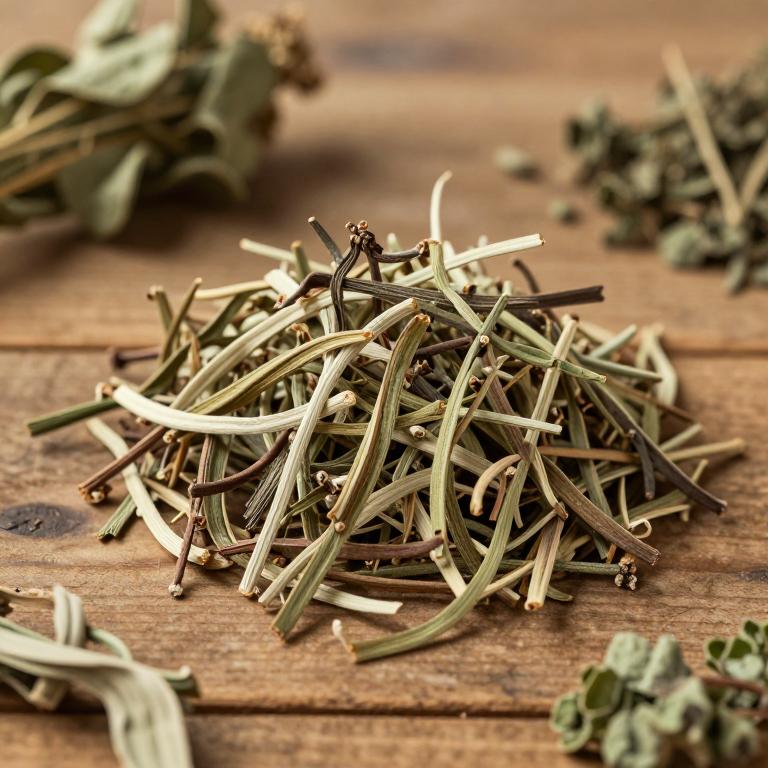
Names and Synonyms
Common Names
- Joint Pine
Scientific Names
Accepted name
Ephedra fragilisRegional and Traditional Names
Spanish:
- Cañadillo
- Uva marina
- Agraz marino
- Canadillo
- Yerba de las coyunturas
- Uvas de mar
- Granos de helecho
- Ephedra fragilis var gibraltarica
- Ephedra gibraltarica
- Ceñudo
- Cenudo
- Belcho
- Ephedra altissima
- Ephedra arborea
- Ephedra fragilis var. gibraltarica
French:
- Éphédra fragile
Sources: Wikidata, Catalogue of Life
Taxonomical Classification
This plant belongs to the kingdom Plantae and is classified under the phylum Streptophyta within the class Equisetopsida. It falls into the subclass Gnetidae and the order Ephedrales, specifically being a member of the family Ephedraceae. Within this taxonomic hierarchy, it is categorized under the genus Ephedra as the species Ephedra fragilis.
| Rank | Classification |
|---|---|
| Kingdom | Plantae |
| Phylum | Streptophyta |
| Class | Equisetopsida |
| Subclass | Gnetidae |
| Order | Ephedrales |
| Family | Ephedraceae |
| Genus | Ephedra |
Sources: The World Checklist of Vascular Plants (WCVP)
Distribution
This plant is primarily distributed across various regions within Southwestern Europe. Specifically, it can be found growing in the Baleares islands, Portugal, and Spain. Its range also extends into Southeastern Europe, where it inhabits certain territories. Within this southeastern region, the species is notably present in Italy. Finally, it is also documented growing on the island of Sicilia.
| Region | Area |
|---|---|
| Southwestern Europe | Baleares |
| Southwestern Europe | Portugal |
| Southwestern Europe | Spain |
| Southeastern Europe | Italy |
| Southeastern Europe | Sicilia |
| Northern Africa | Algeria |
| Northern Africa | Libya |
| Northern Africa | Morocco |
| Northern Africa | Tunisia |
| Northern Africa | Western Sahara |
Sources: The World Checklist of Vascular Plants (WCVP)
Botanical Identification
Ecology
The ecology of Ephedra fragilis is characterized by its ability to thrive across a broad altitudinal gradient, spanning from sea level up to a maximum elevation of 1100 m AMSL. This wide elevational range suggests a high degree of adaptability to varying atmospheric pressures and temperature fluctuations found in coastal and lowland habitats. Typically found in arid or semi-arid environments, the plant is well-suited to sandy soils and saline conditions, often colonizing dunes or rocky substrates where moisture levels may be inconsistent. Its distribution within this 0 to 1100 m AMSL range indicates an ecological niche that bridges maritime influences with inland desert or scrubland ecosystems, allowing it to withstand significant shifts in microclimates.
- Elevational range max:
- 1100 m AMSL
- Elevational range min:
- 0 m AMSL
Life history
The life history of Ephedra fragilis is characterized by its specific growth habit and survival strategies within its ecological niche, classified primarily as a nanophanerophyte. This life form indicates that the plant maintains its photosynthetic shoots at a very low height, typically just above the ground level, which helps it withstand harsh environmental conditions such as wind or temperature fluctuations. While it exhibits traits consistent with a nanophanerophyte, its structural development also relates to the broader classification of phanerophyte, as it possesses visible aerial shoots that facilitate reproduction and energy production. This growth pattern allows the species to navigate its specific habitat by keeping its vital organs close to the substrate while maintaining the necessary physiological functions for long-term survival.
- Life form :
- nanophanerophyte
- Life form :
- phanerophyte
Morphology
The morphology of Ephedra fragilis is characterized by its growth form as a woody shrub, reaching a maximum plant height of approximately 2 meters. It functions as an independent organism, neither acting as a parasite nor as an epiphyte, as it maintains a primarily terrestrial existence. While it is categorized within a range of habitats including aquatic and semiaquatic environments, its fundamental habit is terrestrial. The plant exhibits a facultative climbing tendency, behaving similarly to a liana or vine in certain contexts, though it remains a distinct shrubby structure.
- Aquatic :
- terrestrial
- Climber :
- liana
- Climber :
- facultative
- Epiphyte :
- terrestrial
- Growth form :
- shrub
- Parasite :
- independent
- Plant height max:
- 2 m
- Woodiness :
- woody
Physiology
The physiology of Ephedra fragilis is characterized by specialized adaptations to arid environments, primarily through its highly reduced vegetative structures. A defining physiological trait is the extreme minimization of surface area to reduce transpiration, manifested in its diminutive leaves. The leaf length is remarkably small, with a maximum leaf length of approximately 0.2 cm, which functions more as protective sheaths for the nodes rather than primary photosynthetic organs. Consequently, the plant relies heavily on its green, photosynthetic stems to facilitate carbon fixation and nutrient transport. This stem-based photosynthesis allows the plant to maintain metabolic processes while minimizing water loss through stomatal activity. The vascular system is optimized to support these succulent-like stems, ensuring efficient movement of water and solutes across the plant's structure despite the minimal presence of traditional foliage.
- Leaf length max:
- 0.2 cm
Reproduction
The reproduction of Ephedra fragilis is characterized by a dioecious sexual system, meaning individual plants are either male or female. The flowering period typically commences in March and concludes in May, though the timing can be variable. Following pollination, the plant produces fleshy fruit in the form of a cone. These cones are distinctively orange in color and possess dimensions ranging from a minimum length of 0.7 cm to a maximum of 0.9 cm, with a width varying between 0.25 cm and 0.3 cm. The seeds contained within these fruits have a mean mass of approximately 0.02043 g, with values ranging from 0.01586 g to 0.025 g, and a consistent seed volume of 15 mm³. Dispersal of the seeds follows a zoochorous syndrome, relying on animals for the spread of the species.
- Dispersal syndrome :
- zoochorous
- Flowering time :
- Mar
- Flowering time :
- May
- Fruit colour :
- orange
- Fruit dryness :
- fleshy
- Fruit length max:
- 0.9 cm
- Fruit length min:
- 0.7 cm
- Fruit type :
- cone
- Fruit width max:
- 0.3 cm
- Fruit width min:
- 0.25 cm
- Reproduction sexual :
- dioecious
- Seed mass max:
- 0.025 g
- Seed mass mean:
- 0.02043 g
- Seed mass min:
- 0.01586 g
- Seed volume max:
- 15 mm³
Sources: Global Inventory of Floras and Traits (GIFT)
Chemicals
Ephedra fragilis has 8 reported phytochemicals identified across 0 scientific publications and several other databases. The most consistently reported chemicals include CATECHIN, Flavonoids, Hydroxycinnamic Acids, RUTIN, Tannins.
| Chemical | Supporting sources | Consensus |
|---|---|---|
| CATECHIN | 1 supporting sources | ★☆☆☆☆ |
| Flavonoids | 1 supporting sources | ★☆☆☆☆ |
| Hydroxycinnamic Acids | 1 supporting sources | ★☆☆☆☆ |
| RUTIN | 1 supporting sources | ★☆☆☆☆ |
| Tannins | 1 supporting sources | ★☆☆☆☆ |
| caffeic acid | 1 supporting sources | ★☆☆☆☆ |
| flavonols | 1 supporting sources | ★☆☆☆☆ |
| polyphenols | 1 supporting sources | ★☆☆☆☆ |
CATECHIN
- Natural product research
Flavonoids
- Natural product research
Hydroxycinnamic Acids
- Natural product research
RUTIN
- Natural product research
Tannins
- Natural product research
caffeic acid
- Natural product research
flavonols
- Natural product research
polyphenols
- Natural product research
Preparations
Ephedra fragilis has 2 reported preparations identified across 0 scientific publications and several other databases. The most consistently reported preparations include decoction, infusion.
| Preparation | Supporting sources | Consensus |
|---|---|---|
| Decoction | 1 supporting sources | ★☆☆☆☆ |
| Infusion | 1 supporting sources | ★☆☆☆☆ |
Decoction
- Natural product research
Infusion
- Natural product research