Leafless Ephedra
Ephedra foeminea · Accepted scientific name
Scientific literature: Very Sparse (40 studies) · ★☆☆☆☆
Leafless Ephedra, scientifically known as Ephedra foeminea, is a resilient, drought-tolerant shrub native to arid regions. Renowned for its unique medicinal properties, it contains bioactive alkaloids used traditionally to treat respiratory ailments and enhance vitality. This hardy plant serves as a vital resource in ethnobotanical studies and pharmacology.
- Family
- Ephedraceae
- Native range
- Europe
- Parts used
- Leaf
- Common names
- Leafless Ephedra
- Scientific synonyms
- Ephedra Fragilis Var. Campylopoda · Ephedra Fragilis Subsp. Campylopoda · 3 more
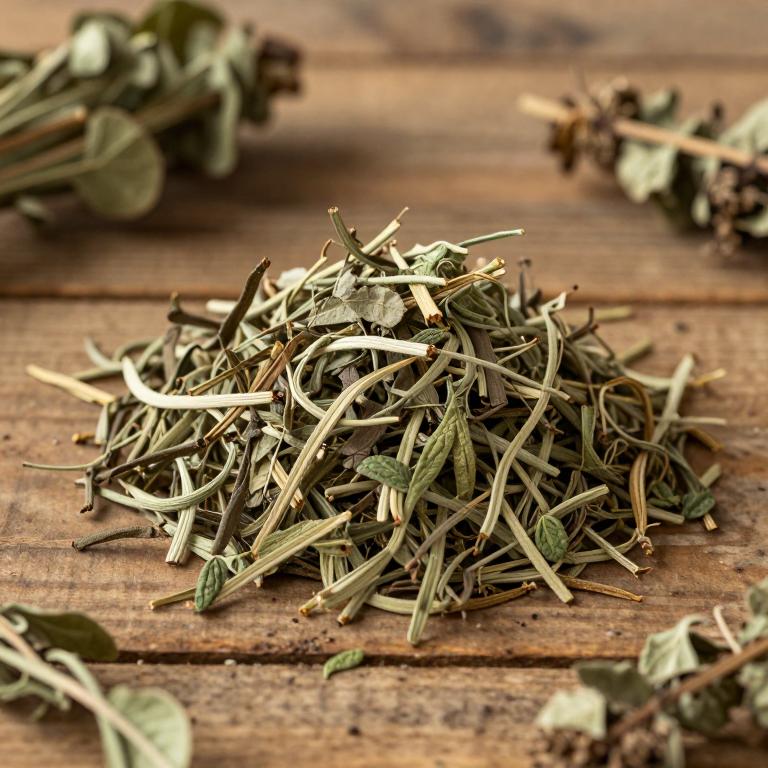
Names and Synonyms
Common Names
- Leafless Ephedra
Scientific Names
Accepted name
Ephedra foemineaSynonyms
- Ephedra fragilis var. campylopoda
- Ephedra fragilis subsp. campylopoda
- Ephedra macedonica
- Ephedra major
- Ephedra campylopoda
Sources: Wikidata, Catalogue of Life
Taxonomical Classification
This plant, Ephedra foeminea, belongs to the kingdom Plantae and the phylum Streptophyta. Within the class Equisetopsida and subclass Gnetidae, it is classified under the order Ephedrales and the family Ephedraceae. Finally, it is placed within the genus Ephedra.
| Rank | Classification |
|---|---|
| Kingdom | Plantae |
| Phylum | Streptophyta |
| Class | Equisetopsida |
| Subclass | Gnetidae |
| Order | Ephedrales |
| Family | Ephedraceae |
| Genus | Ephedra |
Sources: The World Checklist of Vascular Plants (WCVP)
Distribution
This plant, Ephedra foeminea, exhibits a specific geographical distribution across several regions of Southeastern Europe. It can be found growing within the borders of Albania and Bulgaria. Additionally, its presence extends into the territory of Greece. The species is also documented to inhabit the island of Kriti. Finally, its range includes parts of Italy, completing its Mediterranean footprint.
| Region | Area |
|---|---|
| Southeastern Europe | Albania |
| Southeastern Europe | Bulgaria |
| Southeastern Europe | Greece |
| Southeastern Europe | Italy |
| Southeastern Europe | Kriti |
| Southeastern Europe | Türkiye-in-Europe |
| Southeastern Europe | NW. Balkan Pen. |
| Northern Africa | Libya |
| Northeast Tropical Africa | Djibouti |
| Northeast Tropical Africa | Eritrea |
Sources: The World Checklist of Vascular Plants (WCVP)
Botanical Identification
Life history
The life history of Ephedra foeminea is characterized by its specialized growth strategies adapted to Mediterranean environments, primarily exhibiting a life form categorized as a phanerophyte, which allows it to maintain its photosynthetic structures above the ground. Depending on the specific ecological niche and environmental stressors it encounters, it can also manifest as a nanophanerophyte, reflecting its relatively diminutive, shrubby stature. This plant typically follows a perennial life cycle, developing woody, jointed stems that facilitate survival through seasonal variations. Its development involves a complex reproductive phase where it functions as a dioecious species, requiring both male and female individuals for successful pollination. The life history is marked by its ability to thrive in rocky or sandy soils, where its structural adaptations as a phanerophyte enable it to endure varying degrees of exposure while maintaining its perennial presence in the landscape.
- Life form :
- nanophanerophyte
- Life form :
- phanerophyte
Morphology
The morphology of Ephedra foeminea is characterized by a woody growth form, specifically classified as a subshrub. It is a terrestrial species that exists as an independent organism, rather than acting as a parasite or an epiphyte. While it possesses a structural habit that can be described as a facultative climber, it primarily maintains its form through its woody architecture.
- Aquatic :
- terrestrial
- Climber :
- facultative
- Epiphyte :
- terrestrial
- Growth form :
- subshrub
- Parasite :
- independent
- Woodiness :
- woody
Sources: Global Inventory of Floras and Traits (GIFT)
Plant Parts
Ephedra foeminea has 1 reported plant parts identified across 1 scientific publications and several other databases that are studied for medicinal purposes. The most consistently reported plant part include leaf.
| Plant part | Supporting sources | Consensus |
|---|---|---|
| Leaf | 1 supporting sources | ★☆☆☆☆ |
Leaf
- Recent patents on biotechnology
Chemicals
Ephedra foeminea has 18 reported phytochemicals identified across 1 scientific publications and several other databases. The most consistently reported chemicals include 7-Octen-2-ol, CATECHIN, Citronellol, DOCOSANE, ETHYL ACETATE.
| Chemical | Supporting sources | Consensus |
|---|---|---|
| 7-Octen-2-ol | 1 supporting sources | ★☆☆☆☆ |
| CATECHIN | 1 supporting sources | ★☆☆☆☆ |
| Citronellol | 1 supporting sources | ★☆☆☆☆ |
| DOCOSANE | 1 supporting sources | ★☆☆☆☆ |
| ETHYL ACETATE | 1 supporting sources | ★☆☆☆☆ |
| Epicatechin | 1 supporting sources | ★☆☆☆☆ |
| Fatty acids | 1 supporting sources | ★☆☆☆☆ |
| Guajavarin | 1 supporting sources | ★☆☆☆☆ |
| Henryoside | 1 supporting sources | ★☆☆☆☆ |
| PENTACOSANE | 1 supporting sources | ★☆☆☆☆ |
7-Octen-2-ol
- Mycopathologia
CATECHIN
- Natural product research
Citronellol
- Mycopathologia
DOCOSANE
- Mycopathologia
ETHYL ACETATE
- BioMed research international
Epicatechin
- Natural product research
Fatty acids
- Metabolites
Guajavarin
- PloS one
Henryoside
- PloS one
PENTACOSANE
- Mycopathologia
Activities
Ephedra foeminea has 4 reported activities identified across 1 scientific publications and several other databases. The most consistently reported activities include Anticancer, Antioxidant, Antitumor, Antiviral.
| Activity | Supporting sources | Consensus |
|---|---|---|
| Anticancer | 1 supporting sources | ★☆☆☆☆ |
| Antioxidant | 1 supporting sources | ★☆☆☆☆ |
| Antitumor | 1 supporting sources | ★☆☆☆☆ |
| Antiviral | 1 supporting sources | ★☆☆☆☆ |
Anticancer
- PloS one
Antioxidant
- PloS one
Antitumor
- Molecules (Basel, Switzerland)
Antiviral
- PloS one
Conditions
Ephedra foeminea has 6 reported investigations on conditions identified across 1 scientific publications and several other databases. The most consistently reported conditions include cancer, breast cancer, cervical cancer, headaches, respiratory diseases.
| Condition | Supporting sources | Consensus |
|---|---|---|
| Cancer | 3 supporting sources | ★★☆☆☆ |
| Breast cancer | 2 supporting sources | ★☆☆☆☆ |
| Cervical cancer | 1 supporting sources | ★☆☆☆☆ |
| Headaches | 1 supporting sources | ★☆☆☆☆ |
| Respiratory diseases | 1 supporting sources | ★☆☆☆☆ |
| Tumor | 1 supporting sources | ★☆☆☆☆ |
Cancer
- BioMed research international
- Molecules (Basel, Switzerland)
- Journal of cancer research and clinical oncology
Breast cancer
- PloS one
- Journal of cancer research and clinical oncology
Cervical cancer
- PloS one
Headaches
- PloS one
Respiratory diseases
- PloS one
Tumor
- Molecules (Basel, Switzerland)
Preparations
Ephedra foeminea has 12 reported preparations identified across 1 scientific publications and several other databases. The most consistently reported preparations include acetone, aqueous extract, aqueous extract of the leaves, dichloromethane/methanol, ethanol.
| Preparation | Supporting sources | Consensus |
|---|---|---|
| Acetone | 1 supporting sources | ★☆☆☆☆ |
| Aqueous extract | 1 supporting sources | ★☆☆☆☆ |
| Aqueous extract of the leaves | 1 supporting sources | ★☆☆☆☆ |
| Dichloromethane/methanol | 1 supporting sources | ★☆☆☆☆ |
| Ethanol | 1 supporting sources | ★☆☆☆☆ |
| Ethanol crude extracts | 1 supporting sources | ★☆☆☆☆ |
| Ethyl acetate | 1 supporting sources | ★☆☆☆☆ |
| Ethyl acetate (etoac) | 1 supporting sources | ★☆☆☆☆ |
| Ethyl acetate crude extracts | 1 supporting sources | ★☆☆☆☆ |
| Herb extracts | 1 supporting sources | ★☆☆☆☆ |
Acetone
- Metabolites
Aqueous extract
- Recent patents on biotechnology
Aqueous extract of the leaves
- Recent patents on biotechnology
Dichloromethane/methanol
- Metabolites
Ethanol
- Metabolites
Ethanol crude extracts
- BioMed research international
Ethyl acetate
- Metabolites
Ethyl acetate (etoac)
- Molecules (Basel, Switzerland)
Ethyl acetate crude extracts
- BioMed research international
Herb extracts
- Natural product research