Ephedra aphylla
Ephedra aphylla · Accepted scientific name
Scientific literature: Very Sparse (15 studies) · ★☆☆☆☆
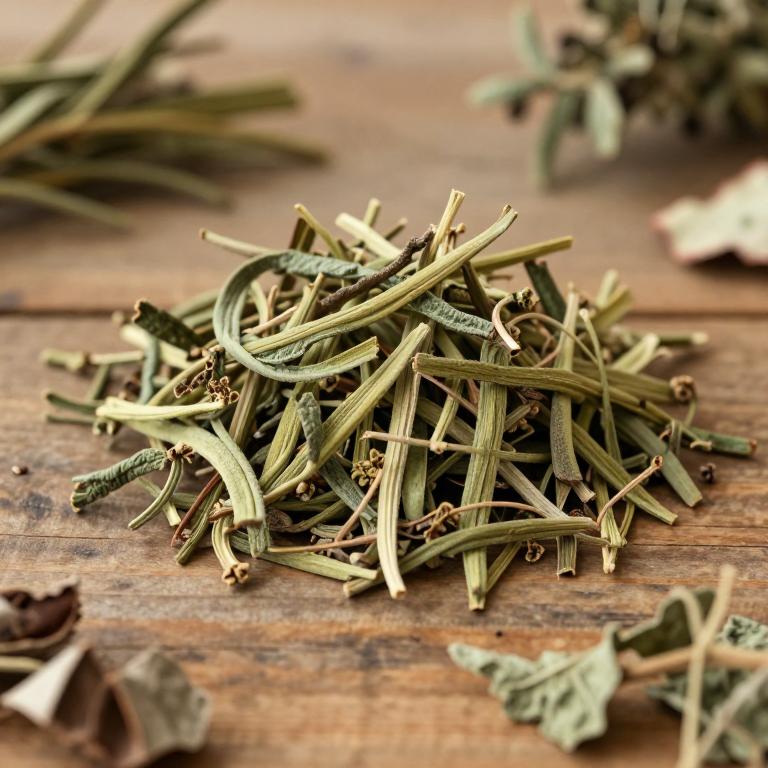
, scientifically known as Ephedra aphylla, is a resilient, leafless shrub native to the arid regions of the Middle East and Central Asia. Renowned for its unique chemical profile, this medicinal plant has historically been utilized in traditional healing practices for its stimulating properties and potential therapeutic applications.
- Family
- Ephedraceae
- Native range
- Africa
- Parts used
- Not available
- Common names
- Not available
- Scientific synonyms
- Not available
Names and Synonyms
Scientific Names
Accepted name
Ephedra aphyllaSources: Wikidata, Catalogue of Life
Taxonomical Classification
This plant belongs to the kingdom Plantae and is classified within the phylum Streptophyta and class Equisetopsida. It is further categorized under the subclass Gnetidae and order Ephedrales, falling into the family Ephedraceae. Finally, it is identified by the genus Ephedra, specifically as the species Ephedra aphylla.
| Rank | Classification |
|---|---|
| Kingdom | Plantae |
| Phylum | Streptophyta |
| Class | Equisetopsida |
| Subclass | Gnetidae |
| Order | Ephedrales |
| Family | Ephedraceae |
| Genus | Ephedra |
Sources: The World Checklist of Vascular Plants (WCVP)
Distribution
This plant exhibits a specific distribution pattern across parts of Northern Africa and Western Asia. In the North African region, it can be found growing within the territories of Egypt and Libya. Moving into Western Asia, its presence extends to the island of Cyprus. It is also documented across the Levant region, specifically within Lebanon and Syria. Finally, its geographical range includes the area of Palestine.
| Region | Area |
|---|---|
| Northern Africa | Egypt |
| Northern Africa | Libya |
| Western Asia | Cyprus |
| Western Asia | Lebanon-Syria |
| Western Asia | Palestine |
| Western Asia | Sinai |
| Arabian Peninsula | Gulf States |
| Arabian Peninsula | Saudi Arabia |
Sources: The World Checklist of Vascular Plants (WCVP)
Botanical Identification
Life history
The life history of Ephedra aphylla is characterized by its status as a perennial species, allowing it to persist in its environment over many growing seasons. As a plant adapted to specific ecological niches, its life form is classified as a chamaephyte, meaning its buds are located close to the soil surface, which provides a level of protection against environmental stressors. This combination of a long-lived lifecycle and a low-growing structure enables the species to maintain stability and reproductive capacity within its natural habitat over time.
- Life form :
- chamaephyte
- Lifecycle :
- perennial
Morphology
The morphology of Ephedra aphylla is characterized by a woody growth form, specifically functioning as a self-supporting shrub. As a terrestrial species, it does not exhibit aquatic or semiaquatic tendencies, nor does it function as an epiphyte. The plant is entirely independent, showing no parasitic behavior, and relies on its structural woodiness to maintain its upright, shrubby habit.
- Aquatic :
- terrestrial
- Climber :
- self-supporting
- Epiphyte :
- terrestrial
- Growth form :
- shrub
- Parasite :
- independent
- Woodiness :
- woody
Reproduction
The reproduction of Ephedra aphylla involves a complex botanical process centered on the production of specialized seeds. The reproductive cycle culminates in the development of seeds that exhibit a highly consistent physical profile, characterized by a uniform seed mass. Quantitative analysis of its reproductive output reveals a precise seed mass mean of 0.02355 g, a value that is mirrored by both the maximum and minimum recorded seed mass measurements of 0.02355 g. This lack of variance in seed mass indicates a highly standardized energetic investment per seed, ensuring that each unit of progeny maintains an identical mass of 0.02355 g to support early developmental stages.
- Seed mass mean:
- 0.02355 g
Sources: Global Inventory of Floras and Traits (GIFT)
Chemicals
Ephedra aphylla has 2 reported phytochemicals identified across 0 scientific publications and several other databases. The most consistently reported chemicals include Flavonoid, Tannin.
| Chemical | Supporting sources | Consensus |
|---|---|---|
| Flavonoid | 1 supporting sources | ★☆☆☆☆ |
| Tannin | 1 supporting sources | ★☆☆☆☆ |
Flavonoid
- Biomolecules
Tannin
- Biomolecules
Activities
Ephedra aphylla has 2 reported activities identified across 0 scientific publications and several other databases. The most consistently reported activities include Antimicrobial, Antioxidant.
| Activity | Supporting sources | Consensus |
|---|---|---|
| Antimicrobial | 1 supporting sources | ★☆☆☆☆ |
| Antioxidant | 1 supporting sources | ★☆☆☆☆ |
Antimicrobial
- Biomolecules
Antioxidant
- Biomolecules
Conditions
Ephedra aphylla has 11 reported investigations on conditions identified across 0 scientific publications and several other databases. The most consistently reported conditions include Bacillus cereus, Candida albicans, Escherichia coli, HCT-116 cells, HeLa cells.
| Condition | Supporting sources | Consensus |
|---|---|---|
| Bacillus cereus | 1 supporting sources | ★☆☆☆☆ |
| Candida albicans | 1 supporting sources | ★☆☆☆☆ |
| Escherichia coli | 1 supporting sources | ★☆☆☆☆ |
| Hct-116 cells | 1 supporting sources | ★☆☆☆☆ |
| Hela cells | 1 supporting sources | ★☆☆☆☆ |
| Klebsiella pneumoniae | 1 supporting sources | ★☆☆☆☆ |
| Listeria monocytogenes | 1 supporting sources | ★☆☆☆☆ |
| Pseudomonas aeruginosa | 1 supporting sources | ★☆☆☆☆ |
| Salmonella typhimurium | 1 supporting sources | ★☆☆☆☆ |
| Staphylococcus aureus | 1 supporting sources | ★☆☆☆☆ |
Bacillus cereus
- Biomolecules
Candida albicans
- Biomolecules
Escherichia coli
- Biomolecules
Hct-116 cells
- Biomolecules
Hela cells
- Biomolecules
Klebsiella pneumoniae
- Biomolecules
Listeria monocytogenes
- Biomolecules
Pseudomonas aeruginosa
- Biomolecules
Salmonella typhimurium
- Biomolecules
Staphylococcus aureus
- Biomolecules
Preparations
Ephedra aphylla has 1 reported preparations identified across 0 scientific publications and several other databases. The most consistently reported preparations include aqueous extract.
| Preparation | Supporting sources | Consensus |
|---|---|---|
| Aqueous extract | 1 supporting sources | ★☆☆☆☆ |
Aqueous extract
- Biomolecules