Ephedra altissima
Ephedra altissima · Accepted scientific name
Scientific literature: Very Sparse (7 studies) · ★☆☆☆☆
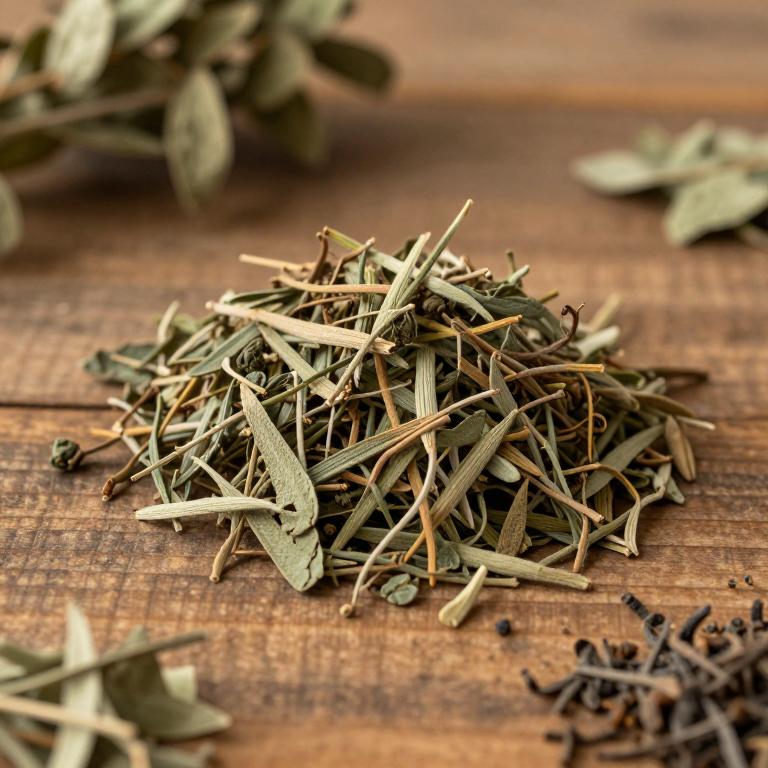
, scientifically known as Ephedra altissima, is a resilient shrub native to high-altitude regions. Renowned for its medicinal properties, it contains bioactive alkaloids used in traditional pharmacology to treat respiratory ailments and boost energy. This hardy plant plays a vital role in studying natural compounds for modern therapeutic applications.
- Family
- Ephedraceae
- Native range
- Africa
- Parts used
- Flower
- Common names
- Not available
- Scientific synonyms
- Chaetocladus Altissima
Names and Synonyms
Scientific Names
Accepted name
Ephedra altissimaSynonyms
- Chaetocladus altissima
Sources: Wikidata
Taxonomical Classification
This plant belongs to the kingdom Plantae and is classified under the phylum Streptophyta and the class Equisetopsida. Within the subclass Gnetidae, it is situated in the order Ephedrales and the family Ephedraceae. Finally, Ephedra altissima is categorized under the genus Ephedra.
| Rank | Classification |
|---|---|
| Kingdom | Plantae |
| Phylum | Streptophyta |
| Class | Equisetopsida |
| Subclass | Gnetidae |
| Order | Ephedrales |
| Family | Ephedraceae |
| Genus | Ephedra |
Sources: The World Checklist of Vascular Plants (WCVP)
Distribution
This plant, known as Ephedra altissima, exhibits a specific geographical distribution across the northern portion of the African continent. Its presence is documented within the diverse landscapes of Morocco and Algeria. Additionally, the species can be found spanning across the territories of Tunisia and Libya. The range of this medicinal plant also extends into the region of Western Sahara. Together, these locations define its primary habitat within the North African region.
| Region | Area |
|---|---|
| Northern Africa | Algeria |
| Northern Africa | Libya |
| Northern Africa | Morocco |
| Northern Africa | Tunisia |
| Northern Africa | Western Sahara |
| Macaronesia | Canary Is. |
| West Tropical Africa | Mauritania |
| Northeast Tropical Africa | Chad |
Sources: The World Checklist of Vascular Plants (WCVP)
Botanical Identification
Life history
The life history of Ephedra altiissima is characterized by its status as a perennial organism, allowing it to persist in its environment over multiple growing seasons. In terms of its structural growth strategy and positioning relative to the ground surface, the plant is classified as a chamaephyte, a life form where the permanent buds are located close to the soil surface, often protected by leaf litter or substrate. This chamaephyte designation applies to both its primary and secondary morphological classifications, defining its ability to survive environmental fluctuations through its specialized low-growing architecture.
- Life form :
- chamaephyte
- Lifecycle :
- perennial
Morphology
The morphology of Ephedra altissima is characterized by a woody growth form, specifically manifesting as a shrub or subshrub. As an independent organism, it does not function as a parasite or an epiphyte, maintaining a strictly terrestrial existence rather than occupying aquatic or semiaquatic habitats. Structurally, the plant is self-supporting, lacking the climbing or liana-like habits found in vine species, and relies on its woody architecture to maintain its upright stature.
- Aquatic :
- terrestrial
- Climber :
- liana
- Climber :
- self-supporting
- Epiphyte :
- terrestrial
- Growth form :
- shrub
- Parasite :
- independent
- Woodiness :
- woody
Reproduction
The reproduction of Ephedra altissima is characterized by a diverse range of dispersal syndromes, demonstrating a multi-modal strategy to ensure species propagation across its habitat. The plant utilizes a combination of anemochorous, zoochorous, autochorous, and hydrochorous mechanisms, often functioning through an unspecialized dispersal approach. While the primary mode is identified as zoochorous, meaning seeds are transported by animals, the species also relies on wind (anemochory), self-dispersal (autochory), and water movement (hydrochory) to colonize new areas. This versatile dispersal repertoire allows the plant to navigate varying environmental conditions and maximize its reproductive success.
- Dispersal syndrome :
- zoochorous
Sources: Global Inventory of Floras and Traits (GIFT)
Plant Parts
Ephedra altissima has 1 reported plant parts identified across 1 scientific publications and several other databases that are studied for medicinal purposes. The most consistently reported plant part include flower.
| Plant part | Supporting sources | Consensus |
|---|---|---|
| Flower | 1 supporting sources | ★☆☆☆☆ |
Flower
- Journal of ethnopharmacology
Chemicals
Ephedra altissima has 5 reported phytochemicals identified across 1 scientific publications and several other databases. The most consistently reported chemicals include 2-(N-Nitroso-N-methylamino)propiophenone, N-Nitrosoephedrine, N-Nitrosomethylbenzylamine, N-nitrosopseudoephedrine, n-Nitrosoproline.
| Chemical | Supporting sources | Consensus |
|---|---|---|
| 2-(N-Nitroso-N-methylamino)propiophenone | 1 supporting sources | ★☆☆☆☆ |
| N-Nitrosoephedrine | 1 supporting sources | ★☆☆☆☆ |
| N-Nitrosomethylbenzylamine | 1 supporting sources | ★☆☆☆☆ |
| N-nitrosopseudoephedrine | 1 supporting sources | ★☆☆☆☆ |
| n-Nitrosoproline | 1 supporting sources | ★☆☆☆☆ |
2-(N-Nitroso-N-methylamino)propiophenone
- Cancer letters
N-Nitrosoephedrine
- Cancer letters
N-Nitrosomethylbenzylamine
- Cancer letters
N-nitrosopseudoephedrine
- Cancer letters
n-Nitrosoproline
- Cancer letters
Conditions
Ephedra altissima has 1 reported investigations on conditions identified across 1 scientific publications and several other databases. The most consistently reported conditions include Dermatitis.
| Condition | Supporting sources | Consensus |
|---|---|---|
| Dermatitis | 1 supporting sources | ★☆☆☆☆ |
Dermatitis
- International journal of microbiology
Preparations
Ephedra altissima has 3 reported preparations identified across 1 scientific publications and several other databases. The most consistently reported preparations include aqueous extracts, methanolic extracts, tea.
| Preparation | Supporting sources | Consensus |
|---|---|---|
| Aqueous extracts | 1 supporting sources | ★☆☆☆☆ |
| Methanolic extracts | 1 supporting sources | ★☆☆☆☆ |
| Tea | 1 supporting sources | ★☆☆☆☆ |
Aqueous extracts
- International journal of microbiology
Methanolic extracts
- International journal of microbiology
Tea
- Cancer letters