Dwarf Elephantroot
Entada elephantina · Accepted scientific name
Scientific literature: Sparse (86 studies) · ★★☆☆☆
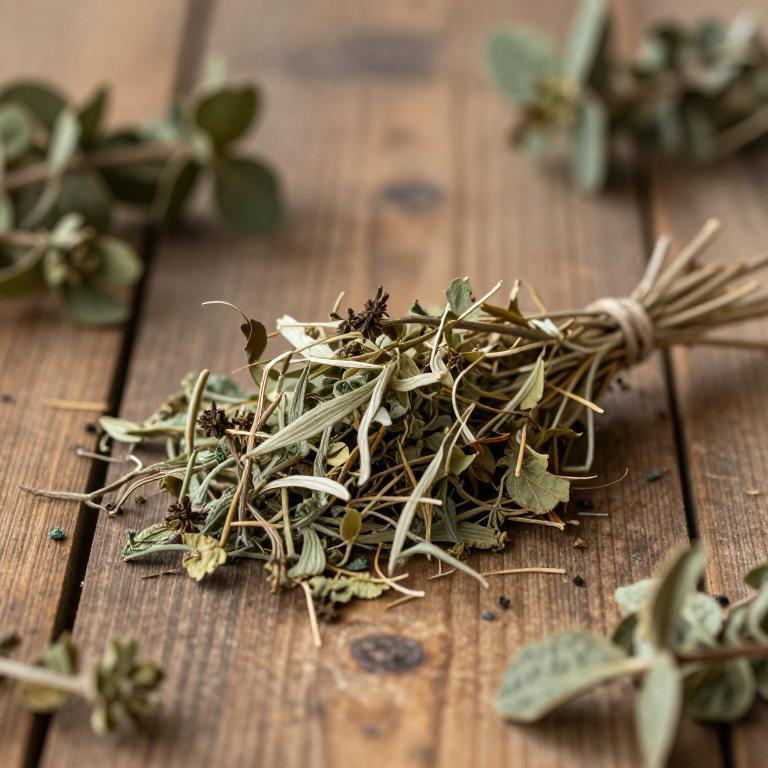
Dwarf Elephantroot, scientifically known as Entada elephantina, is a versatile medicinal climber native to tropical regions. Renowned for its potent therapeutic properties, this plant is traditionally utilized in herbal medicine to treat various ailments. Its unique bioactive compounds offer significant potential for pharmacological research and holistic healing practices.
Names and Synonyms
Common Names
- Dwarf Elephantroot
- Eland Wattle
- Eland's Bean
- Eland's Bean / Eland Wattle
- Eland's Wattle
- Elands' Bean
- Elandsbean
- Elephant's Root
Scientific Names
Accepted name
Entada elephantinaSynonyms
- Elephantorrhiza elephantina
- Prosopis elephantina
- Acacia elephantina
- Acacia elephantorrhiza
- Prosopis elephantorrhiza
Sources: Catalogue of Life
Taxonomical Classification
This plant belongs to the kingdom Plantae and the phylum Streptophyta, falling under the class Equisetopsida and subclass Magnoliidae. It is classified within the order Fabales and the family Fabaceae, specifically placed in the genus Entada. As a member of the Entada genus, Entada elephantina represents a specialized lineage of medicinal legumes.
| Rank | Classification |
|---|---|
| Kingdom | Plantae |
| Phylum | Streptophyta |
| Class | Equisetopsida |
| Subclass | Magnoliidae |
| Order | Fabales |
| Family | Fabaceae |
| Genus | Entada |
Sources: The World Checklist of Vascular Plants (WCVP)
Distribution
This plant is widely distributed across several distinct regions within the southern portion of the continent. In South Tropical Africa, its presence is documented in both Mozambique and Zimbabwe. Moving toward the southern reaches, it can be found throughout Botswana. The species also extends into the Cape Provinces of Southern Africa. Finally, its geographical range includes the mountainous terrain of Lesotho.
| Region | Area |
|---|---|
| South Tropical Africa | Mozambique |
| South Tropical Africa | Zimbabwe |
| Southern Africa | Botswana |
| Southern Africa | Cape Provinces |
| Southern Africa | Lesotho |
| Southern Africa | Namibia |
| Southern Africa | KwaZulu-Natal |
| Southern Africa | Free State |
| Southern Africa | Eswatini |
| Southern Africa | Northern Provinces |
Sources: The World Checklist of Vascular Plants (WCVP)
Plant Parts
Entada elephantina has 3 reported plant parts identified across 17 scientific publications and several other databases that are studied for medicinal purposes. The most consistently reported plant part include rhizome, root, leaf.
| Plant part | Supporting sources | Consensus |
|---|---|---|
| Rhizome | 6 supporting sources | ★★★☆☆ |
| Root | 6 supporting sources | ★★★☆☆ |
| Leaf | 5 supporting sources | ★★★☆☆ |
Rhizome
- Frontiers in microbiology
- African journal of traditional, complementary, and alternative medicines : AJTCAM
- Evidence-based complementary and alternative medicine : eCAM
- Food and chemical toxicology : an international journal published for the British Industrial Biological Research Association
- Veterinary parasitology
View 1 additional sources
- Journal of ethnopharmacology
Root
- Frontiers in microbiology
- Parasite epidemiology and control
- Food and chemical toxicology : an international journal published for the British Industrial Biological Research Association
- Tropical animal health and production
- Journal of ethnopharmacology
View 1 additional sources
- African journal of traditional, complementary, and alternative medicines : AJTCAM
Leaf
- Frontiers in microbiology
- Journal of evidence-based integrative medicine
- Journal of ethnopharmacology
- African journal of traditional, complementary, and alternative medicines : AJTCAM
- The Onderstepoort journal of veterinary research
Chemicals
Entada elephantina has 29 reported phytochemicals identified across 17 scientific publications and several other databases. The most consistently reported chemicals include Flavonoids, Saponins, Tannins, Anthocyanidins, Anthraquinones.
| Chemical | Supporting sources | Consensus |
|---|---|---|
| Flavonoids | 4 supporting sources | ★★☆☆☆ |
| Saponins | 3 supporting sources | ★★☆☆☆ |
| Tannins | 3 supporting sources | ★★☆☆☆ |
| Anthocyanidins | 2 supporting sources | ★☆☆☆☆ |
| Anthraquinones | 2 supporting sources | ★☆☆☆☆ |
| Sugars | 2 supporting sources | ★☆☆☆☆ |
| triterpenoids | 2 supporting sources | ★☆☆☆☆ |
| (-)-Epicatechin | 1 supporting sources | ★☆☆☆☆ |
| BENZOTHIAZOLE | 1 supporting sources | ★☆☆☆☆ |
| BUMETRIZOLE | 1 supporting sources | ★☆☆☆☆ |
Flavonoids
- African journal of traditional, complementary, and alternative medicines : AJTCAM
- Evidence-based complementary and alternative medicine : eCAM
- Parasite epidemiology and control
- Journal of evidence-based integrative medicine
Saponins
- Evidence-based complementary and alternative medicine : eCAM
- Parasite epidemiology and control
- Journal of evidence-based integrative medicine
Tannins
- African journal of traditional, complementary, and alternative medicines : AJTCAM
- Evidence-based complementary and alternative medicine : eCAM
- Journal of evidence-based integrative medicine
Anthocyanidins
- African journal of traditional, complementary, and alternative medicines : AJTCAM
- Evidence-based complementary and alternative medicine : eCAM
Anthraquinones
- African journal of traditional, complementary, and alternative medicines : AJTCAM
- Evidence-based complementary and alternative medicine : eCAM
Sugars
- African journal of traditional, complementary, and alternative medicines : AJTCAM
- Evidence-based complementary and alternative medicine : eCAM
triterpenoids
- African journal of traditional, complementary, and alternative medicines : AJTCAM
- Evidence-based complementary and alternative medicine : eCAM
(-)-Epicatechin
- Natural product communications
BENZOTHIAZOLE
- Plants (Basel, Switzerland)
BUMETRIZOLE
- Plants (Basel, Switzerland)
Activities
Entada elephantina has 8 reported activities identified across 17 scientific publications and several other databases. The most consistently reported activities include Antibacterial, Anthelmintic, Antifungal, Antioxidant, Antimicrobial.
| Activity | Supporting sources | Consensus |
|---|---|---|
| Antibacterial | 4 supporting sources | ★★☆☆☆ |
| Anthelmintic | 2 supporting sources | ★☆☆☆☆ |
| Antifungal | 2 supporting sources | ★☆☆☆☆ |
| Antioxidant | 2 supporting sources | ★☆☆☆☆ |
| Antimicrobial | 1 supporting sources | ★☆☆☆☆ |
| Antiplasmodial | 1 supporting sources | ★☆☆☆☆ |
| Antirickettsial | 1 supporting sources | ★☆☆☆☆ |
| Cytotoxic | 1 supporting sources | ★☆☆☆☆ |
Antibacterial
- BMC complementary medicine and therapies
- Evidence-based complementary and alternative medicine : eCAM
- Journal of evidence-based integrative medicine
- BMC complementary and alternative medicine
Anthelmintic
- BMC complementary medicine and therapies
- Evidence-based complementary and alternative medicine : eCAM
Antifungal
- BMC complementary medicine and therapies
- Evidence-based complementary and alternative medicine : eCAM
Antioxidant
- Evidence-based complementary and alternative medicine : eCAM
- Frontiers in veterinary science
Antimicrobial
- BMC complementary medicine and therapies
Antiplasmodial
- Evidence-based complementary and alternative medicine : eCAM
Antirickettsial
- Evidence-based complementary and alternative medicine : eCAM
Cytotoxic
- BMC complementary medicine and therapies
Preparations
Entada elephantina has 12 reported preparations identified across 17 scientific publications and several other databases. The most consistently reported preparations include root extract, 50% methanol extract, Petroleum ether extract, aqueous and methanol extracts, aqueous extracts.
| Preparation | Supporting sources | Consensus |
|---|---|---|
| Root extract | 2 supporting sources | ★☆☆☆☆ |
| 50% methanol extract | 1 supporting sources | ★☆☆☆☆ |
| Petroleum ether extract | 1 supporting sources | ★☆☆☆☆ |
| Aqueous and methanol extracts | 1 supporting sources | ★☆☆☆☆ |
| Aqueous extracts | 1 supporting sources | ★☆☆☆☆ |
| Aqueous root extracts | 1 supporting sources | ★☆☆☆☆ |
| Crude extracts | 1 supporting sources | ★☆☆☆☆ |
| Extracts | 1 supporting sources | ★☆☆☆☆ |
| Leaves | 1 supporting sources | ★☆☆☆☆ |
| Methanol extracts | 1 supporting sources | ★☆☆☆☆ |
Root extract
- Food and chemical toxicology : an international journal published for the British Industrial Biological Research Association
- Tropical animal health and production
50% methanol extract
- Plants (Basel, Switzerland)
Petroleum ether extract
- Plants (Basel, Switzerland)
Aqueous and methanol extracts
- African journal of traditional, complementary, and alternative medicines : AJTCAM
Aqueous extracts
- Natural product communications
Aqueous root extracts
- Journal of ethnopharmacology
Crude extracts
- African journal of traditional, complementary, and alternative medicines : AJTCAM
Extracts
- Journal of ethnopharmacology
Leaves
- Journal of evidence-based integrative medicine
Methanol extracts
- Natural product communications