Bushveld Milkplum
Englerophytum magalismontanum · Accepted scientific name
Scientific literature: Very Sparse (3 studies) · ★☆☆☆☆
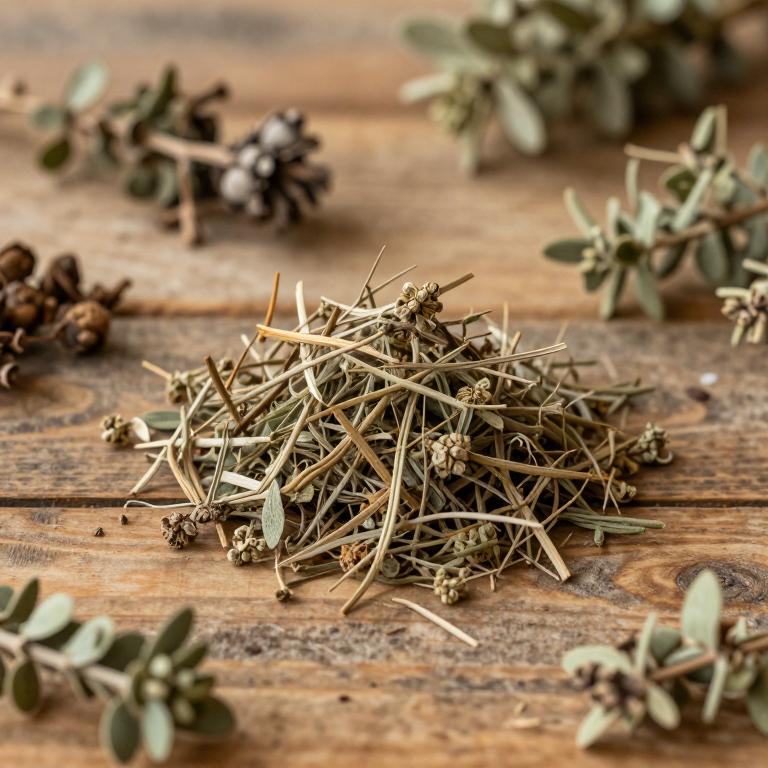
Bushveld Milkplum, scientifically known as Englerophytum magaulismontanum, is a resilient deciduous shrub native to Southern Africa. Renowned for its edible fruit and medicinal versatility, this plant is traditionally utilized to treat ailments ranging from digestive issues to skin inflammations, serving as a vital resource in indigenous healing practices.
Names and Synonyms
Common Names
- Bushveld Milkplum
- Milk Plum
- Stamvrug Milkplum
- Stem Fruit
- Stemfruit-Tree
- Wild-Plum
- red milkwood
Scientific Names
Accepted name
Englerophytum magalismontanumSynonyms
- Bequaertiodendron magalismontanum
- Boivinella argyrophylla
- Zeyherella magalismontana
- Sideroxylon randii
- Chrysophyllum antunesii
- Chrysophyllum argyrophyllum
- Chrysophyllum carvalhoi
- Chrysophyllum gossweileri
- Chrysophyllum lujae
- Chrysophyllum magalismontanum
- Chrysophyllum wilmsii
- Pachystela magalismontana
- Zeyherella gossweileri
- Pouteria magalismontana
- Pachystela antunesii
- Pouteria antunesii
- Boivinella wilmsii
- Pachystela argyrophylla
- Neoboivinella argyrophylla
- Neoboivinella gossweileri
- Chrysophyllum mohorense
- Neoboivinella wilmsii
Regional and Traditional Names
Spanish:
- Chrysophyllum mohorense
- Neoboivinella gossweileri
- Boivinella argyrophylla
- Zeyherella gossweileri
- Chrysophyllum gossweileri
- Chrysophyllum magalismontanum
- Chrysophyllum antunesii
- Pouteria magalismontana
- Chrysophyllum lujae
- Sideroxylon randii
- Pachystela antunesii
- Chrysophyllum argyrophyllum
- Chrysophyllum wilmsii
- Pouteria antunesii
- Zeyherella magalismontana
- Neoboivinella wilmsii
German:
- Stammfruchtbaum
Sources: Wikidata, Catalogue of Life
Taxonomical Classification
This plant belongs to the kingdom Plantae and the phylum Streptophyta, falling under the class Equisetopsida and subclass Magnoliidae. Within the order Ericales, it is classified under the family Sapotaceae. Finally, it is identified by the genus Englerophytum and the specific species Englerophytum magaalismontanum.
| Rank | Classification |
|---|---|
| Kingdom | Plantae |
| Phylum | Streptophyta |
| Class | Equisetopsida |
| Subclass | Magnoliidae |
| Order | Ericales |
| Family | Sapotaceae |
| Genus | Englerophytum |
Sources: The World Checklist of Vascular Plants (WCVP)
Distribution
This plant exhibits a wide geographical distribution across several regions of the African continent. In West-Central Tropical Africa, it can be found within the Democratic Republic of the Congo. Its presence extends into East Tropical Africa, specifically located in Tanzania. Moving toward the southern regions, the species is distributed throughout South Tropical Africa in Angola and Malawi. Finally, its range continues through South Tropical Africa to include Mozambique.
| Region | Area |
|---|---|
| West-Central Tropical Africa | DR Congo |
| East Tropical Africa | Tanzania |
| South Tropical Africa | Angola |
| South Tropical Africa | Malawi |
| South Tropical Africa | Mozambique |
| South Tropical Africa | Zambia |
| South Tropical Africa | Zimbabwe |
| Southern Africa | Botswana |
| Southern Africa | KwaZulu-Natal |
| Southern Africa | Eswatini |
Sources: The World Checklist of Vascular Plants (WCVP)
Botanical Identification
Ecology
The ecology of Englerophytum magaolismontanum is characterized by its adaptability to diverse ecosystems and a specific altitudinal distribution. It thrives within a variety of niches, ranging from coastal and deciduous woodlands to riverine vegetation and specialized ant-hill thickets. This plant occupies a broad vertical gradient, establishing itself at elevations starting from a minimum of 550 m AMSL and extending up to a maximum of 1830 m AMSL.
- Elevational range max:
- 1830 m AMSL
- Elevational range min:
- 550 m AMSL
- Habitat :
- coastal and deciduous woodlands, riverine vegetation and ant-hill thickets
Life history
The life history of Englerophytum magalismontanum is characterized by its status as a perennial organism, allowing it to persist through multiple growing seasons. As a phanerophyte, the plant maintains its stem or buds well above the soil surface, a structural strategy that defines its primary life form. This botanical habit is further supported by its evergreen nature, ensuring that the plant retains its foliage throughout the year rather than undergoing a deciduous cycle. This combination of a long-term lifecycle, elevated growth form, and continuous leaf retention dictates its physiological resilience and ecological presence within its habitat.
- Deciduousness :
- evergreen
- Life form :
- phanerophyte
- Lifecycle :
- perennial
Morphology
The morphology of Englerophytum magalismontanum is characterized by its substantial stature and robust structural composition. This plant functions as a woody tree, exhibiting a growth form that is primarily terrestrial in nature rather than aquatic or epiphytic. As an independent organism, it does not rely on a host for survival, maintaining a self-supporting climbing habit that allows it to maintain its structure without the need for external assistance. In terms of dimension, the plant exhibits significant variation in size, with a minimum height of 1 meter and a maximum height reaching up to 17 meters, though it maintains an average plant height of approximately 5 meters.
- Aquatic :
- terrestrial
- Climber :
- self-supporting
- Epiphyte :
- terrestrial
- Growth form :
- tree
- Parasite :
- independent
- Plant height max:
- 17 m
- Plant height mean:
- 5 m
- Plant height min:
- 1 m
- Woodiness :
- woody
Physiology
The physiology of Englerophytum magalismontanum is characterized by distinct metabolic processes and nutrient acquisition strategies, most notably regarding its interaction with soil nitrogen. In terms of its symbiotic capabilities, the plant is not a nitrogen fixer; it lacks the specialized root nodules or the specific biological machinery required to facilitate a symbiotic relationship with nitrogen-fixing bacteria such as Rhizobia. Consequently, it relies entirely on the uptake of inorganic nitrogen sources, such as nitrates and ammonium, available within the soil substrate through its root system to support its protein synthesis and cellular development. This reliance on external nitrogen availability dictates its growth patterns and ecological distribution, as its physiological vigor is directly contingent upon the nitrogen mineralization processes within its immediate environment.
- Nitrogen fixer :
- no
Sources: Global Inventory of Floras and Traits (GIFT)
Plant Parts
Englerophytum magalismontanum has 1 reported plant parts identified across 1 scientific publications and several other databases that are studied for medicinal purposes. The most consistently reported plant part include leaf.
| Plant part | Supporting sources | Consensus |
|---|---|---|
| Leaf | 1 supporting sources | ★☆☆☆☆ |
Leaf
- Molecules (Basel, Switzerland)
Chemicals
Englerophytum magalismontanum has 1 reported phytochemicals identified across 1 scientific publications and several other databases. The most consistently reported chemicals include naringenin.
| Chemical | Supporting sources | Consensus |
|---|---|---|
| naringenin | 1 supporting sources | ★☆☆☆☆ |
naringenin
- Molecules (Basel, Switzerland)
Activities
Englerophytum magalismontanum has 1 reported activities identified across 1 scientific publications and several other databases. The most consistently reported activities include Antidiabetic.
| Activity | Supporting sources | Consensus |
|---|---|---|
| Antidiabetic | 1 supporting sources | ★☆☆☆☆ |
Antidiabetic
- Molecules (Basel, Switzerland)
Preparations
Englerophytum magalismontanum has 2 reported preparations identified across 1 scientific publications and several other databases. The most consistently reported preparations include Ethanol extracts, crude methanol leaf extract.
| Preparation | Supporting sources | Consensus |
|---|---|---|
| Ethanol extracts | 1 supporting sources | ★☆☆☆☆ |
| Crude methanol leaf extract | 1 supporting sources | ★☆☆☆☆ |
Ethanol extracts
- Journal of ethnopharmacology
Crude methanol leaf extract
- Molecules (Basel, Switzerland)