crowberry
Empetrum nigrum · Accepted scientific name
Scientific literature: Very Sparse (6 studies) · ★☆☆☆☆
Crowberry, scientifically known as Empetrum nigrum, is a resilient, low-growing evergreen shrub native to arctic and subarctic regions. Highly valued for its antioxidant-rich dark berries, this hardy plant has long been utilized in traditional medicine to support digestive health, combat inflammation, and provide essential nutrients in harsh climates.
- Family
- Ericaceae
- Native range
- Europe
- Parts used
- Not available
- Common names
- Black Crowberry · Crakeberry · 7 more
- Scientific synonyms
- Chamaetaxus Nigra
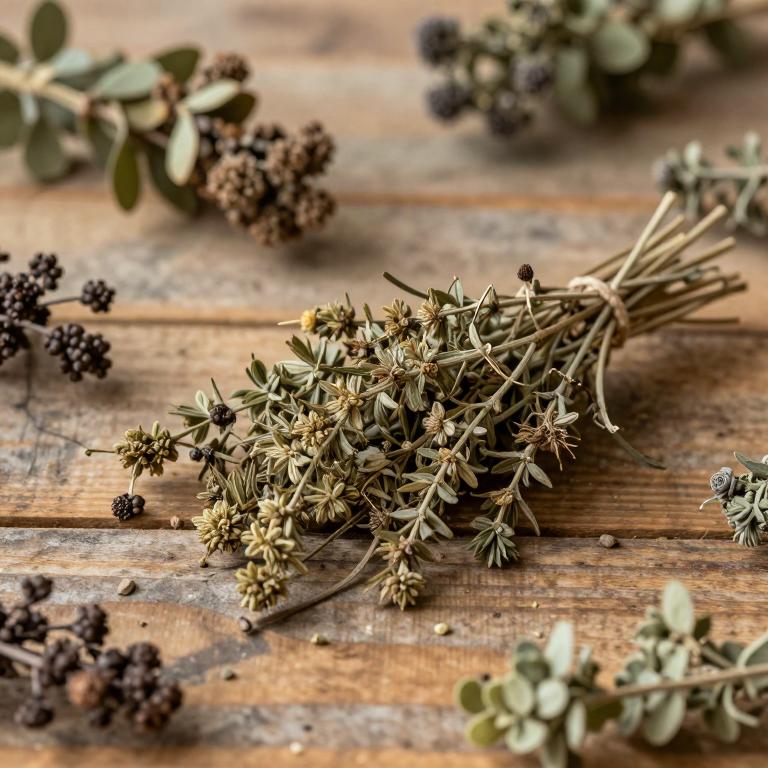
Names and Synonyms
Common Names
- black crowberry
- crakeberry
- curlewberry
- heathberry
- northern crowberry
- Crowberry agg.
- curlew-berry
- Blackberry
- Crowberry
Scientific Names
Accepted name
Empetrum nigrumSynonyms
- Chamaetaxus nigra
Regional and Traditional Names
German:
- Schwarze Krähenbeere
- Schwarze Krähenbeere
- Kraehenbeere
French:
- Camarine noire
- camarine noire
- camarine noire
- camarine à fruits noirs
- goules noires
- graines noires
- graines à corbigeaux
- Camarine
Sources: Wikidata, Catalogue of Life
Taxonomical Classification
This plant, known scientifically as Empetrum nigrum, belongs to the kingdom Plantae and the phylum Streptophyta. Within the class Equisetopsida and subclass Magnoliidae, it is classified under the order Ericales and the family Ericaceae. Finally, it is placed within the genus Empetrum.
| Rank | Classification |
|---|---|
| Kingdom | Plantae |
| Phylum | Streptophyta |
| Class | Equisetopsida |
| Subclass | Magnoliidae |
| Order | Ericales |
| Family | Ericaceae |
| Genus | Empetrum |
Sources: The World Checklist of Vascular Plants (WCVP)
Distribution
This plant exhibits a specific distribution across several northern regions of Europe. It can be found growing in the coastal and mountainous landscapes of Denmark. Its presence extends further north to the territories of Finland and Iceland. Additionally, this species is documented within the Faroe Islands, known locally as Føroyaar. Finally, its range reaches the shores of Great Britain, marking a significant presence in the North Atlantic area.
| Region | Area |
|---|---|
| Northern Europe | Denmark |
| Northern Europe | Finland |
| Northern Europe | Føroyar |
| Northern Europe | Great Britain |
| Northern Europe | Iceland |
| Northern Europe | Ireland |
| Northern Europe | Norway |
| Northern Europe | Svalbard |
| Northern Europe | Sweden |
| Middle Europe | Austria |
Sources: The World Checklist of Vascular Plants (WCVP)
Botanical Identification
Ecology
The ecology of Empetrum nigrum is characterized by its remarkable adaptability to a diverse range of environmental conditions and substrate types. This species thrives across varied landscapes, establishing itself in nutrient-poor or disturbed environments such as sand dunes, forest clearings, and open meadows. It is notably resilient in coastal and riparian settings, frequently found along shores and within the moisture-retentive margins of swamps. Furthermore, its physiological tolerance allows it to colonize harsh, high-latitude or high-altitude regions, specifically within the tundra biome. By occupying these distinct niches—from sandy coastal stretches to acidic forest soils and arctic heaths—the plant plays a vital role in stabilizing substrates and contributing to the complex biotic interactions of its specialized habitats.
- Habitat :
- dunes, forest, meadows, sand, shores, swamps, tundra
Genetics
The genetics of Empetrum nigrum are characterized by a specific chromosomal configuration, with the fundamental ploidy level identified as 2n. This diploid state indicates that the species possesses two complete sets of chromosomes, which serves as the basis for its genetic inheritance and evolutionary stability within the Ericaceae family. The genomic structure of this plant facilitates the transmission of hereditary traits through sexual reproduction, maintaining the genetic diversity necessary for its adaptation to various ecological niches. This diploid genomic framework is central to its reproductive biology and the expression of phenotypic characteristics inherent to the species.
- Ploidy :
- 2, n
Life history
The life history of Empetrum nigrum is characterized by its status as a perennial plant, allowing it to persist through multiple growing seasons within its specialized habitats. As a chamaephyte, its reproductive buds are located close to the soil surface, typically protected by a layer of leaf litter or snow, which is a structural adaptation common to many arctic and alpine species. Furthermore, the plant maintains an evergreen deciduousness, meaning it retains its foliage throughout the year, providing a continuous photosynthetic capacity that is vital for survival in short-season environments.
- Deciduousness :
- evergreen
- Life form :
- chamaephyte
- Lifecycle :
- perennial
Morphology
The morphology of Empetrum nigrum is characterized by its growth form as a woody shrub, exhibiting a self-supporting structure rather than acting as a climber or vine. This terrestrial plant maintains an independent existence, functioning as neither a parasite nor an epiphyte. In terms of stature, it is a relatively low-growing species with a plant height that ranges from a minimum of 0.05 m to a maximum of 1 m, resulting in an average plant height of approximately 0.258 m.
- Aquatic :
- terrestrial
- Climber :
- self-supporting
- Epiphyte :
- terrestrial
- Growth form :
- shrub
- Parasite :
- independent
- Plant height max:
- 1 m
- Plant height mean:
- 0.258333333333333 m
- Plant height min:
- 0.05 m
- Woodiness :
- woody
Physiology
The physiology of Empetrum nigrum is characterized by a C3 photosynthetic pathway, which dictates its carbon fixation processes and energy conversion efficiency. The plant exhibits a non-carnivorous nutritional strategy, relying on traditional soil-based nutrient uptake rather than the capture of prey. Its foliar morphology is defined by a mean leaf size of 0.04516 cm², reflecting its specialized structural adaptations. Furthermore, the plant maintains a mean Specific Leaf Area (SLA) of 90.16 cm²/g, a metric that provides insight into its leaf mass per area and its resource allocation strategies regarding light interception and metabolic capacity.
- Carnivory :
- non-carnivorous
- Leaf size mean:
- 0.04516 cm²
- Photosynthetic pathway :
- C3
- Specific Leaf Area (SLA) mean:
- 90.16 cm²/g
Reproduction
The reproduction of Empetrum nigrum is characterized by a bisexual sexual reproductive system, with asexual reproduction being absent. The flowering period typically begins in April and concludes in June. The plant utilizes a biotic pollination syndrome, specifically relying on insects such as bees to facilitate the transfer of pollen. Self-fertilization is present within the species, ensuring reproductive success. Following fertilization, the plant produces fleshy, indehiscent fruits classified as berries, which have a mean width of 0.78 cm. These fruits serve as the vessel for seed dispersal via a zoochorous syndrome, specifically through endozoochory, where seeds are dispersed after being ingested by animals. The seeds themselves are quite small, with a mean mass of approximately 0.0236 g (ranging from a minimum of 0.00075 g to a maximum of 0.001182 g) and a consistent seed volume of 1.4 mm³.
- Dehiscence :
- indehiscent
- Dispersal syndrome :
- zoochorous
- Dispersal syndrome :
- endozoochorous
- Flowering time :
- Apr
- Flowering time :
- Jun
- Fruit dryness :
- fleshy
- Fruit type :
- berry
- Fruit width mean:
- 0.78 cm
- Pollination syndrome :
- insect
- Pollination syndrome :
- bee
- Pollination syndrome :
- biotic
- Reproduction asexual :
- absent
- Reproduction sexual :
- bisexual
- Seed mass max:
- 0.001182 g
- Seed mass mean:
- 0.0236315833333333 g
- Seed mass min:
- 0.00075 g
- Seed volume max:
- 1.4 mm³
- Self fertilization :
- present
Sources: Global Inventory of Floras and Traits (GIFT)
Chemicals
Empetrum nigrum has 3 reported phytochemicals identified across 0 scientific publications and several other databases. The most consistently reported chemicals include Dibenz[b,f]oxepin, Epicatechin, polyphenols.
| Chemical | Supporting sources | Consensus |
|---|---|---|
| Dibenz[b,f]oxepin | 1 supporting sources | ★☆☆☆☆ |
| Epicatechin | 1 supporting sources | ★☆☆☆☆ |
| polyphenols | 1 supporting sources | ★☆☆☆☆ |
Dibenz[b,f]oxepin
- Journal of natural products
Epicatechin
- Frontiers in pharmacology
polyphenols
- Frontiers in pharmacology
Activities
Empetrum nigrum has 2 reported activities identified across 0 scientific publications and several other databases. The most consistently reported activities include Antimicrobial, Antioxidant.
| Activity | Supporting sources | Consensus |
|---|---|---|
| Antimicrobial | 1 supporting sources | ★☆☆☆☆ |
| Antioxidant | 1 supporting sources | ★☆☆☆☆ |
Antimicrobial
- Frontiers in pharmacology
Antioxidant
- Frontiers in pharmacology
Preparations
Empetrum nigrum has 2 reported preparations identified across 0 scientific publications and several other databases. The most consistently reported preparations include branches, extract.
| Preparation | Supporting sources | Consensus |
|---|---|---|
| Branches | 1 supporting sources | ★☆☆☆☆ |
| Extract | 1 supporting sources | ★☆☆☆☆ |
Branches
- Journal of ethnopharmacology
Extract
- Journal of natural products