River Dotleaf
Embelia schimperi · Accepted scientific name
Scientific literature: Very Sparse (25 studies) · ★☆☆☆☆
River Dotleaf, scientifically known as Embelia schimperi, is a resilient medicinal shrub native to East Africa. Renowned for its therapeutic properties, this plant is traditionally used in various herbal remedies to treat digestive ailments and respiratory issues. Its unique botanical characteristics make it a significant subject in ethnobotanical studies.
- Family
- Primulaceae
- Native range
- Africa
- Parts used
- Stem · Fruit
- Common names
- River Dotleaf · River Embelia
- Scientific synonyms
- Embelia Kilimandscharica · Embelia Erythrocarpa · 13 more
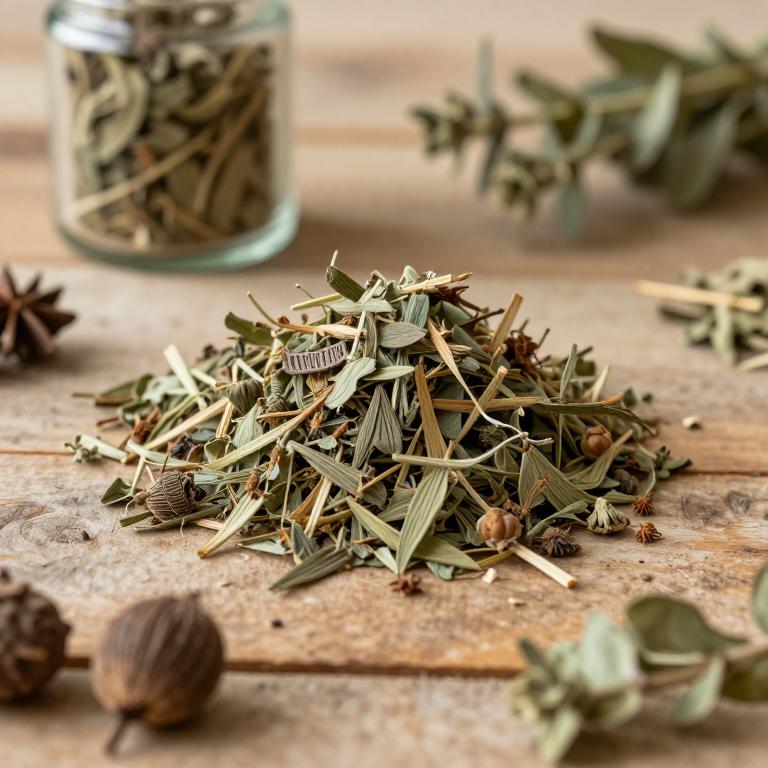
Names and Synonyms
Common Names
- River Dotleaf
- River Embelia
Scientific Names
Accepted name
Embelia schimperiSynonyms
- Embelia kilimandscharica
- Embelia erythrocarpa
- Pattara pellucida
- Pattara kilimandscharica
- Embelia guineensis
- Embelia gilgii
- Embelia dasyantha
- Embelia bambuseti
- Embelia batesii
- Embelia tibatiensis
- Embelia tessmannii
- Embelia nyassana
- Embelia mujenja
- Embelia pellucida
- Embelia retusa
Sources: Wikidata, Catalogue of Life
Taxonomical Classification
This plant belongs to the kingdom Plantae and the phylum Streptophyta, falling under the class Equisetopsida and subclass Magnoliidae. It is further classified within the order Ericales and the family Primulaceae. Finally, it is identified by the genus Embelia, with its specific species being Embelia schimperi.
| Rank | Classification |
|---|---|
| Kingdom | Plantae |
| Phylum | Streptophyta |
| Class | Equisetopsida |
| Subclass | Magnoliidae |
| Order | Ericales |
| Family | Primulaceae |
| Genus | Embelia |
Sources: The World Checklist of Vascular Plants (WCVP)
Distribution
This plant is widely distributed across several regions within West Tropical Africa. Specifically, its presence has been documented in the country of Benin. It can also be found growing in the territories of Burkina and Guinea. Furthermore, the species extends its range into Ivory Coast. Finally, its geographical footprint includes the nation of Liberia.
| Region | Area |
|---|---|
| West Tropical Africa | Benin |
| West Tropical Africa | Burkina |
| West Tropical Africa | Guinea |
| West Tropical Africa | Ivory Coast |
| West Tropical Africa | Liberia |
| West Tropical Africa | Mali |
| West Tropical Africa | Nigeria |
| West Tropical Africa | Sierra Leone |
| West Tropical Africa | Togo |
| West-Central Tropical Africa | Burundi |
Sources: The World Checklist of Vascular Plants (WCVP)
Botanical Identification
Ecology
The ecology of Embelia schimperi is defined by its specific distribution within montane and sub-montane ecosystems, where it occupies a niche characterized by particular altitudinal constraints. This species is primarily found within a distinct elevational range that allows it to thrive in specific climatic zones, reaching a maximum elevation of 910 m AMSL. Within these habitats, the plant's presence is closely tied to the availability of light, moisture, and soil composition typical of its native environmental settings. Its survival and growth patterns are intrinsically linked to these topographical parameters, which dictate the temperature and humidity levels of its immediate surroundings.
- Elevational range max:
- 910 m AMSL
Life history
The life history of Embelia schimperi is characterized by its status as a perennial plant, allowing it to persist in its environment through multiple growing seasons. In terms of its ecological growth strategy, the species is classified as a phanerophyte, a life form where the perennating buds are elevated above the ground level, typically on aerial stems or branches. This phanerophytic nature ensures its survival against various environmental pressures by protecting its vital regenerative structures, facilitating a robust and long-lasting developmental cycle.
- Life form :
- phanerophyte
- Lifecycle :
- perennial
Morphology
The morphology of Embelia schimperi is characterized by a woody growth form that primarily manifests as a shrub. It is a terrestrial plant that functions independently, exhibiting no parasitic or epiphytic behavior. In terms of its structural habit, the plant can act as a self-supporting organism or behave as a liana. The physical stature of the species varies significantly, with plant heights ranging from a minimum of 2 meters to a maximum of 5 meters, though the mean height is recorded at approximately 8.5 meters.
- Aquatic :
- terrestrial
- Climber :
- liana
- Climber :
- self-supporting
- Epiphyte :
- terrestrial
- Growth form :
- shrub
- Parasite :
- independent
- Plant height max:
- 5 m
- Plant height mean:
- 8.5 m
- Plant height min:
- 2 m
- Woodiness :
- woody
Physiology
The physiology of Embelia schimperi is characterized by its metabolic processes and nutrient acquisition strategies common to many woody species within its ecological niche. Regarding its nutrient cycling capabilities, the plant does not function as a nitrogen fixer; it lacks the specialized symbiotic relationships with nitrogen-fixing bacteria, such as rhizobia, required to convert atmospheric nitrogen into usable forms. Consequently, its physiological nitrogen economy relies entirely on the uptake of nitrates and ammonium from the soil through its root system. The plant manages its internal physiological balance through complex biochemical pathways that support growth and the synthesis of secondary metabolites, though it remains dependent on external soil nitrogen availability rather than biological fixation.
- Nitrogen fixer :
- no
Reproduction
The reproduction of Embelia schimperi is characterized by the development of specialized fruit structures that facilitate its life cycle. The plant produces fruit that exhibits a dual textural nature, being described as both dry and fleshy. Within these fruits, the seeds are produced with a highly consistent morphology; the seed volume is remarkably uniform, maintaining a minimum, maximum, and mean volume of exactly 36 mm³. This precise seed dimension suggests a stabilized reproductive strategy within the species, ensuring that each seed carries a standardized volume of resources for potential germination.
- Fruit dryness :
- fleshy
- Seed volume max:
- 36 mm³
Sources: Global Inventory of Floras and Traits (GIFT)
Plant Parts
Embelia schimperi has 3 reported plant parts identified across 4 scientific publications and several other databases that are studied for medicinal purposes. The most consistently reported plant part include stem, fruit, seed.
| Plant part | Supporting sources | Consensus |
|---|---|---|
| Stem | 2 supporting sources | ★☆☆☆☆ |
| Fruit | 1 supporting sources | ★☆☆☆☆ |
| Seed | 1 supporting sources | ★☆☆☆☆ |
Stem
- Advances in pharmacological sciences
- Phytochemistry
Fruit
- Journal of ethnopharmacology
Seed
- Journal of ethnopharmacology
Chemicals
Embelia schimperi has 7 reported phytochemicals identified across 4 scientific publications and several other databases. The most consistently reported chemicals include EMBELIN, Embelinone, Epicatechin, Flavonoids, Phenols.
| Chemical | Supporting sources | Consensus |
|---|---|---|
| EMBELIN | 2 supporting sources | ★☆☆☆☆ |
| Embelinone | 1 supporting sources | ★☆☆☆☆ |
| Epicatechin | 1 supporting sources | ★☆☆☆☆ |
| Flavonoids | 1 supporting sources | ★☆☆☆☆ |
| Phenols | 1 supporting sources | ★☆☆☆☆ |
| Schimperinone | 1 supporting sources | ★☆☆☆☆ |
| Tannins | 1 supporting sources | ★☆☆☆☆ |
EMBELIN
- BMC complementary and alternative medicine
- Evidence-based complementary and alternative medicine : eCAM
Embelinone
- Phytochemistry
Epicatechin
- Advances in pharmacological sciences
Flavonoids
- Advances in pharmacological sciences
Phenols
- Advances in pharmacological sciences
Schimperinone
- Phytochemistry
Tannins
- Advances in pharmacological sciences
Activities
Embelia schimperi has 3 reported activities identified across 4 scientific publications and several other databases. The most consistently reported activities include Antimicrobial, Disinfectant, Taenicide.
| Activity | Supporting sources | Consensus |
|---|---|---|
| Antimicrobial | 1 supporting sources | ★☆☆☆☆ |
| Disinfectant | 1 supporting sources | ★☆☆☆☆ |
| Taenicide | 1 supporting sources | ★☆☆☆☆ |
Antimicrobial
- Evidence-based complementary and alternative medicine : eCAM
Disinfectant
- Evidence-based complementary and alternative medicine : eCAM
Taenicide
- Evidence-based complementary and alternative medicine : eCAM
Conditions
Embelia schimperi has 8 reported investigations on conditions identified across 4 scientific publications and several other databases. The most consistently reported conditions include Heligmosomoides polygyrus, Hymenolepis diminuta, Taenia saginata, disinfectant, dwarf tapeworm.
| Condition | Supporting sources | Consensus |
|---|---|---|
| Heligmosomoides polygyrus | 1 supporting sources | ★☆☆☆☆ |
| Hymenolepis diminuta | 1 supporting sources | ★☆☆☆☆ |
| Taenia saginata | 1 supporting sources | ★☆☆☆☆ |
| Disinfectant | 1 supporting sources | ★☆☆☆☆ |
| Dwarf tapeworm | 1 supporting sources | ★☆☆☆☆ |
| Fungal infections | 1 supporting sources | ★☆☆☆☆ |
| Hookworm | 1 supporting sources | ★☆☆☆☆ |
| Tapeworm infections | 1 supporting sources | ★☆☆☆☆ |
Heligmosomoides polygyrus
- Journal of ethnopharmacology
Hymenolepis diminuta
- Journal of ethnopharmacology
Taenia saginata
- Journal of ethnopharmacology
Disinfectant
- Evidence-based complementary and alternative medicine : eCAM
Dwarf tapeworm
- BMC complementary and alternative medicine
Fungal infections
- Advances in pharmacological sciences
Hookworm
- BMC complementary and alternative medicine
Tapeworm infections
- Journal of experimental pharmacology
Preparations
Embelia schimperi has 6 reported preparations identified across 4 scientific publications and several other databases. The most consistently reported preparations include chloroform extract of the stem bark, crude hydroalcoholic extract, crushed seeds, dichloromethane/methanol (1 : 1) and methanol extracts, extract of the dried fruits.
| Preparation | Supporting sources | Consensus |
|---|---|---|
| Chloroform extract of the stem bark | 1 supporting sources | ★☆☆☆☆ |
| Crude hydroalcoholic extract | 1 supporting sources | ★☆☆☆☆ |
| Crushed seeds | 1 supporting sources | ★☆☆☆☆ |
| Dichloromethane/methanol (1 : 1) and methanol extracts | 1 supporting sources | ★☆☆☆☆ |
| Extract of the dried fruits | 1 supporting sources | ★☆☆☆☆ |
| Methanol extracts | 1 supporting sources | ★☆☆☆☆ |
Chloroform extract of the stem bark
- Phytochemistry
Crude hydroalcoholic extract
- BMC complementary and alternative medicine
Crushed seeds
- Journal of ethnopharmacology
Dichloromethane/methanol (1 : 1) and methanol extracts
- Advances in pharmacological sciences
Extract of the dried fruits
- Journal of ethnopharmacology
Methanol extracts
- Phytotherapy research : PTR