Elsholtzia pilosa
Elsholtzia pilosa · Accepted scientific name
Scientific literature: Extensive (174 studies) · ★★★★☆
Elsholtzia pilosa, scientifically known as Elsholtzia pilosa, is a remarkable medicinal plant valued in traditional healing practices. Often found in diverse ecosystems, this species is prized for its unique bioactive properties. Understanding its therapeutic potential offers exciting possibilities for natural remedies and advancing modern pharmacological research and development.
- Family
- Not available
- Native range
- Asia-Temperate
- Parts used
- Not available
- Common names
- Not available
- Scientific synonyms
- Not available
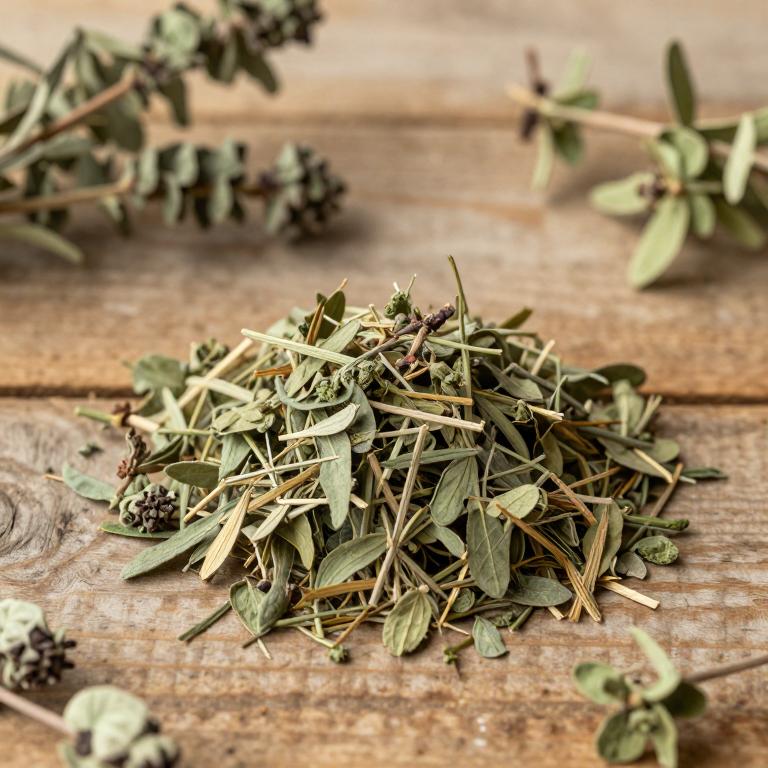
Names and Synonyms
Scientific Names
Accepted name
Elsholtzia pilosaDistribution
This plant exhibits a specific geographical distribution across several key regions in Asia. Within China, it is primarily located in the South-Central areas. Its presence extends into the Indian Subcontinent, where it can be found in the state of Assam. Furthermore, the species inhabits the East Himalaya and the West Himalaya regions. Finally, its range encompasses the mountainous terrain of Nepal.
| Region | Area |
|---|---|
| China | China South-Central |
| Indian Subcontinent | Assam |
| Indian Subcontinent | East Himalaya |
| Indian Subcontinent | Nepal |
| Indian Subcontinent | West Himalaya |
| Indo-China | Myanmar |
| Indo-China | Thailand |
| Indo-China | Vietnam |
Sources: The World Checklist of Vascular Plants (WCVP)
Botanical Identification
Ecology
The ecology of Elsholtzia pilosa is characterized by its ability to thrive across diverse montane landscapes, specifically occupying a vertical niche defined by a significant altitudinal gradient. This species is typically found within an elevational range that spans from a minimum of 1100 m AMSL to a maximum of 3200 m AMSL. Such a broad altitudinal distribution suggests a high degree of ecological plasticity, allowing the plant to adapt to varying temperature regimes, atmospheric pressures, and moisture availability associated with different mountain strata. By inhabiting these mid-to-high altitude zones, Elsholtzia pilosa plays a vital role in the structural complexity of its native ecosystems, contributing to the stability of montane forest or woodland environments across its wide environmental tolerance.
- Elevational range max:
- 3200 m AMSL
- Elevational range min:
- 1100 m AMSL
Life history
The life history of Elsholtzia pilosa is characterized by its classification within specific life form categories that dictate its growth patterns and survival strategies. Based on its botanical traits, the species exhibits a life form categorized as a chamaephyte, which suggests a growth habit where the reproductive buds are located near or just above the soil surface. Within the broader spectrum of plant life forms, it is further identified through its distinction as a chamaephyte, contrasting with other forms such as phanerophytes, hemicryptophytes, cryptophytes, or therophytes. This specific positioning in the life form hierarchy influences how the plant manages its seasonal cycles and structural development within its natural habitat.
- Life form :
- chamaephyte
Morphology
The morphology of Elsholtzia pilosa is characterized by a growth form classified as a tree, rather than a herb or shrub. It functions as an independent organism, meaning it is not a parasite, and it maintains a terrestrial lifestyle as an epiphyte is not present. Structurally, the plant exhibits woody characteristics, contrasting with non-woody profiles, and it does not possess a climbing habit, as it is neither an obligatory, facultative, nor self-supporting climber.
- Climber :
- self-supporting
- Epiphyte :
- terrestrial
- Growth form :
- herb
- Parasite :
- independent
- Woodiness :
- non-woody
Sources: Global Inventory of Floras and Traits (GIFT)
Chemicals
Elsholtzia pilosa has 30 reported phytochemicals identified across 0 scientific publications and several other databases. The most consistently reported chemicals include (E)-Ocimene, 1,8-Cineole, 4-phenylbut-3-en-2-ol, ALPHA-PINENE, ALPHA-TERPINYL ACETATE.
| Chemical | Supporting sources | Consensus |
|---|---|---|
| (E)-Ocimene | 1 supporting sources | ★☆☆☆☆ |
| 1,8-Cineole | 1 supporting sources | ★☆☆☆☆ |
| 4-phenylbut-3-en-2-ol | 1 supporting sources | ★☆☆☆☆ |
| ALPHA-PINENE | 1 supporting sources | ★☆☆☆☆ |
| ALPHA-TERPINYL ACETATE | 1 supporting sources | ★☆☆☆☆ |
| ALPHA-THUJENE | 1 supporting sources | ★☆☆☆☆ |
| Alpha terpinene | 1 supporting sources | ★☆☆☆☆ |
| Aromadendrene | 1 supporting sources | ★☆☆☆☆ |
| BETA-PINENE | 1 supporting sources | ★☆☆☆☆ |
| CAMPHENE | 1 supporting sources | ★☆☆☆☆ |
(E)-Ocimene
- Dr. Duke
1,8-Cineole
- Dr. Duke
4-phenylbut-3-en-2-ol
- Dr. Duke
ALPHA-PINENE
- Dr. Duke
ALPHA-TERPINYL ACETATE
- Dr. Duke
ALPHA-THUJENE
- Dr. Duke
Alpha terpinene
- Dr. Duke
Aromadendrene
- Dr. Duke
BETA-PINENE
- Dr. Duke
CAMPHENE
- Dr. Duke
Activities
Elsholtzia pilosa has 144 reported activities identified across 0 scientific publications and several other databases. The most consistently reported activities include (-)-Chronotropic, (-)-Inotropic, ACE-Inhibitor, Acaricide, Aldose-Reductase-Inhibitor.
| Activity | Supporting sources | Consensus |
|---|---|---|
| (-)-Chronotropic | 1 supporting sources | ★☆☆☆☆ |
| (-)-Inotropic | 1 supporting sources | ★☆☆☆☆ |
| ACE-Inhibitor | 1 supporting sources | ★☆☆☆☆ |
| Acaricide | 1 supporting sources | ★☆☆☆☆ |
| Aldose-Reductase-Inhibitor | 1 supporting sources | ★☆☆☆☆ |
| Allelochemic | 1 supporting sources | ★☆☆☆☆ |
| Allelopathic | 1 supporting sources | ★☆☆☆☆ |
| Allergenic | 1 supporting sources | ★☆☆☆☆ |
| Analgesic | 1 supporting sources | ★☆☆☆☆ |
| Ancylostomicide | 1 supporting sources | ★☆☆☆☆ |
(-)-Chronotropic
- Dr. Duke
(-)-Inotropic
- Dr. Duke
ACE-Inhibitor
- Dr. Duke
Acaricide
- Dr. Duke
Aldose-Reductase-Inhibitor
- Dr. Duke
Allelochemic
- Dr. Duke
Allelopathic
- Dr. Duke
Allergenic
- Dr. Duke
Analgesic
- Dr. Duke
Ancylostomicide
- Dr. Duke