Lemon Scented Grass
Elionurus muticus · Accepted scientific name
Scientific literature: Very Sparse (3 studies) · ★☆☆☆☆
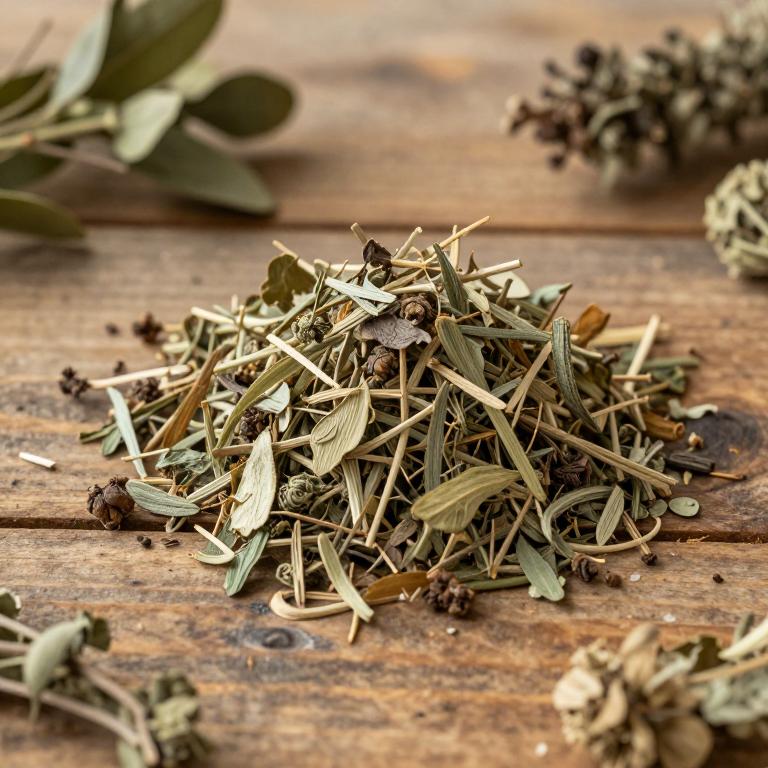
Lemon Scented Grass, scientifically known as Elionurus muticus, is a versatile perennial grass widely used in traditional medicine across Africa. Renowned for its distinct citrus aroma, this plant possesses significant antimicrobial, anti-inflammatory, and antioxidant properties, making it a valuable natural resource for treating various ailments and promoting wellness.
Names and Synonyms
Common Names
- Lemon Scented Grass
- Matrass Grass
- Silky Grass
- Simon Grass
- Sour Grass
- Wine Grass
- Wire Grass
Scientific Names
Accepted name
Elionurus muticusSynonyms
- Elionurus candidus var. latiflorus
- Elionurus candidus
- Elionurus argenteus var. thymiodorus
- Elionurus argenteus var. caespitosus
- Elionurus glaber
- Andropogon thymiodorus
- Andropogon latiflorus
- Andropogon rostratus
- Andropogon adustus
- Andropogon caespitosus
- Andropogon candidus
- Andropogon chlorostachys
- Anatherum megapotamicum
- Elionurus megapotamicus
- Elionurus glaber var. villosus
- Lycurus muticus
- Elionurus chevalieri
- Elionurus candidus var. bisetosus
- Elionurus argenteus
- Elionurus adustus
- Elionurus marunguensis
- Elionurus pretoriensis
- Elionurus rostratus
- Elionurus latiflorus
- Elionurus latiflorus var. adustus
- Elionurus latiflorus var. gracilescens
- Elionurus latiflorus var. pectinatus
- Elionurus gobariensis
- Elionurus muticus var. gracilescens
- Elionurus thymiodorus
- Elionurus tripsacoides subvar. rostratus
- Elionurus viridulus
Regional and Traditional Names
Spanish:
- aibe
- espartillo amargo
- zacate colorado
Sources: Wikidata, Catalogue of Life
Taxonomical Classification
This plant belongs to the kingdom Plantae and is classified under the phylum Streptophyta within the class Equisetopsida. As a member of the subclass Magnoliidae and the order Poales, it falls under the family Poaceae. Its taxonomic identity is further defined by its placement within the genus Elionurus.
| Rank | Classification |
|---|---|
| Kingdom | Plantae |
| Phylum | Streptophyta |
| Class | Equisetopsida |
| Subclass | Magnoliidae |
| Order | Poales |
| Family | Poaceae |
| Genus | Elionurus |
Sources: The World Checklist of Vascular Plants (WCVP)
Distribution
This plant, known as Elionurus muticus, exhibits a specific distribution across the West Tropical Africa region. Its presence has been documented in the country of Benin, where it thrives in local ecosystems. The species also extends its range into Burkina Faso, contributing to the region's biodiversity. Furthermore, it can be found within the borders of Guinea-Bissau and the nation of Guinea. Finally, the geographical reach of this medicinal plant includes the territory of Ivory Coast.
| Region | Area |
|---|---|
| West Tropical Africa | Benin |
| West Tropical Africa | Burkina |
| West Tropical Africa | Guinea-Bissau |
| West Tropical Africa | Guinea |
| West Tropical Africa | Ivory Coast |
| West Tropical Africa | Nigeria |
| West Tropical Africa | Sierra Leone |
| West-Central Tropical Africa | Burundi |
| West-Central Tropical Africa | Central African Republic |
| West-Central Tropical Africa | Cameroon |
Sources: The World Checklist of Vascular Plants (WCVP)
Botanical Identification
Ecology
The ecology of Elionurus muticus is characterized by a broad altitudinal distribution, spanning from sea level up to a maximum elevation of 2500 m AMSL, with a mean elevational range centered around 2000 m AMSL. This species demonstrates significant ecological plasticity, thriving in diverse environmental settings including anthropogenic areas (Área Antrópica), high-altitude grasslands (Campo de Altitude), floodplain grasslands (Campo de Várzea), and rocky field habitats (Campo Rupestre). Furthermore, it is well-adapted to the Cerrado biome (latu sensu), allowing it to occupy various niches within these complex Brazilian ecosystems.
- Elevational range max:
- 2500 m AMSL
- Elevational range mean:
- 2000 m AMSL
- Elevational range min:
- 0 m AMSL
- Habitat :
- Área Antrópica, Campo de Altitude, Campo de Várzea, Campo Rupestre, Cerrado (lato sensu)
Life history
The life history of Elionurus muticus is characterized by its classification as a perennial organism, allowing it to persist through multiple growing seasons. In terms of its structural growth strategy and survival mechanisms, the plant is categorized as a hemicryptophyte, a life form where the perennating buds are located at the soil surface, typically protected by leaf litter or organic matter during unfavorable conditions. This hemicryptophytic nature dictates its developmental pattern, ensuring long-term establishment within its ecological niche through sustained vegetative presence and cyclical regeneration.
- Life form :
- hemicryptophyte
- Lifecycle :
- perennial
Morphology
The morphology of Elionurus muticus is characterized by its growth form as a non-woody herb, typically exhibiting a self-supporting habit rather than acting as a climber, liana, or vine. This terrestrial plant maintains an independent lifestyle, functioning as a non-parasitic organism. In terms of stature, it is a relatively low-growing species with an average plant height of 0.7 m, though individuals can reach a maximum height of up to 1.2 m. As a terrestrial species, it does not exhibit epiphytic characteristics, such as being a holoepiphyte or hemiepiphyte, and grows strictly on land.
- Aquatic :
- terrestrial
- Climber :
- self-supporting
- Epiphyte :
- terrestrial
- Growth form :
- herb
- Parasite :
- independent
- Plant height max:
- 1.2 m
- Plant height mean:
- 0.7 m
- Woodiness :
- non-woody
Physiology
The physiology of Eliounurus muticus is characterized by its specialized metabolic processes and nutrient acquisition strategies. The plant utilizes a C4 photosynthetic pathway, a highly efficient mechanism that allows for concentrated carbon fixation and minimized photorespiration, particularly advantageous in environments with high light intensity and temperature. Furthermore, regarding its nutrient cycling capabilities, the species does not function as a nitrogen fixer, meaning it relies on the availability of soil-borne nitrogen rather than symbiotic nitrogen-fixing bacteria to meet its nutritional requirements.
- Nitrogen fixer :
- no
- Photosynthetic pathway :
- C4
Sources: Global Inventory of Floras and Traits (GIFT)
Chemicals
Elionurus muticus has 3 reported phytochemicals identified across 0 scientific publications and several other databases. The most consistently reported chemicals include Flavonoids, GERANIAL, NERAL.
| Chemical | Supporting sources | Consensus |
|---|---|---|
| Flavonoids | 1 supporting sources | ★☆☆☆☆ |
| GERANIAL | 1 supporting sources | ★☆☆☆☆ |
| NERAL | 1 supporting sources | ★☆☆☆☆ |
Flavonoids
- Plant foods for human nutrition (Dordrecht, Netherlands)
GERANIAL
- Plant foods for human nutrition (Dordrecht, Netherlands)
NERAL
- Plant foods for human nutrition (Dordrecht, Netherlands)