Eleutherococcus leucorrhizus
Eleutherococcus leucorrhizus · Accepted scientific name
Scientific literature: Very Sparse (7 studies) · ★☆☆☆☆
scientifically known as Eleutherococcus leucorrhizuus, is a powerful adaptogen native to East Asia. Commonly called Siberian ginseng, this woody shrub helps the body resist physical, chemical, and biological stressors. By supporting energy levels and immune function, it serves as a vital natural remedy for enhancing overall metabolic resilience.
- Family
- Araliaceae
- Native range
- Asia-Temperate
- Parts used
- Not available
- Common names
- Not available
- Scientific synonyms
- Acanthopanax Leucorrhizus
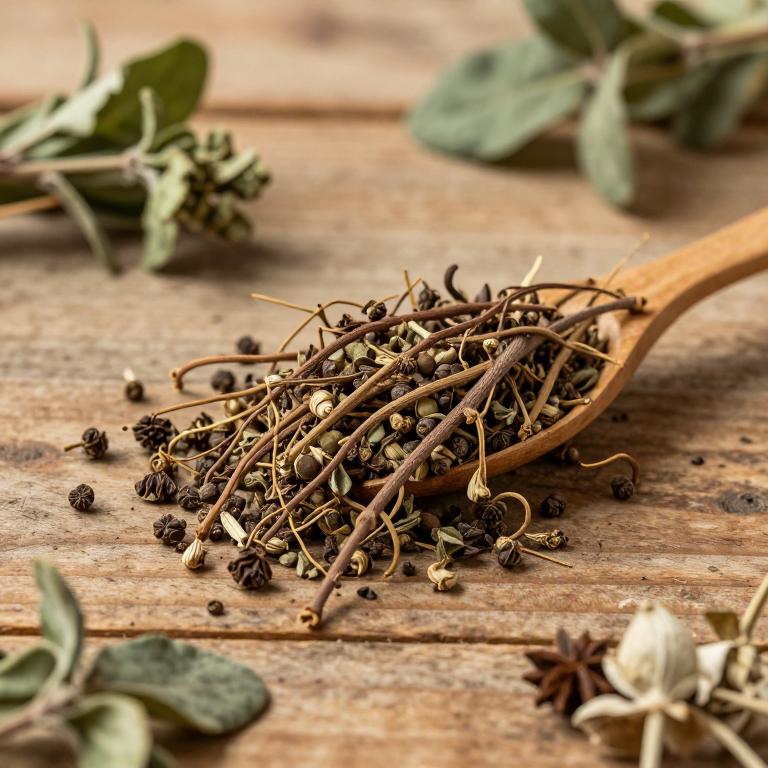
Names and Synonyms
Scientific Names
Accepted name
Eleutherococcus leucorrhizusSynonyms
- Acanthopanax leucorrhizus
Sources: Wikidata, Catalogue of Life
Taxonomical Classification
This plant belongs to the kingdom Plantae and the phylum Streptophyta within the class Equisetopsida. It is further classified under the subclass Magnoliidae and the order Apiales, falling into the family Araliaceae. Ultimately, the medicinal species is identified by the genus Eleutherococcus.
| Rank | Classification |
|---|---|
| Kingdom | Plantae |
| Phylum | Streptophyta |
| Class | Equisetopsida |
| Subclass | Magnoliidae |
| Order | Apiales |
| Family | Araliaceae |
| Genus | Eleutherococcus |
Sources: The World Checklist of Vascular Plants (WCVP)
Distribution
This plant exhibits a specific geographical distribution concentrated within several key regions of China. It can be found growing throughout the China South-Central area, where local climates support its development. Additionally, its range extends into the China North-Central territories. The species is also documented to inhabit parts of China Southeast. Consequently, these three distinct regions define the primary natural habitat for Eleutherococcus leucorrhizuus.
| Region | Area |
|---|---|
| China | China South-Central |
| China | China North-Central |
| China | China Southeast |
Sources: The World Checklist of Vascular Plants (WCVP)
Botanical Identification
Ecology
The ecology of Eleutherococcus leucorrhizus is characterized by its adaptation to specific montane and subalpine environments, where it occupies a distinct vertical niche within its native habitats. This species thrives across a significant altitudinal gradient, establishing itself in mountainous terrains at elevations ranging from a minimum of 1300 m AMSL to a maximum of 3700 m AMSL. Such a broad elevational range suggests a high degree of environmental plasticity, allowing the plant to endure varying climatic conditions, from the temperate influences of lower montane zones to the more extreme, harsh conditions found near the upper limits of its distribution. Its presence within these specific altitude brackets indicates a preference for well-drained slopes and forest margins where it can balance the requirements for light availability and moisture retention characteristic of these high-altitude ecosystems.
- Elevational range max:
- 3700 m AMSL
- Elevational range min:
- 1300 m AMSL
Life history
The life history of Eleutherococcus leucorrhizus is characterized by its classification as a phanerophyte, a growth form defined by the positioning of its perennating buds well above the soil surface on woody stems. Within the broader spectrum of plant life forms, it functions as a perennial woody shrub that establishes a robust structural presence in its natural habitat. While the species primarily exhibits a phanerophyte life strategy to survive seasonal environmental shifts, its developmental architecture can occasionally reflect variations in height and density, though it fundamentally lacks the characteristics of a nanophanerophyte, chamaephyte, hemicryptophyte, geophyte, hydrophyte, helophyte, therophyte, or lithophyte. Through its perennial cycle, the plant focuses on the maintenance of woody tissues and the seasonal development of foliage and reproductive structures, ensuring long-term survival through its elevated bud protection.
- Life form :
- nanophanerophyte
- Life form :
- phanerophyte
Morphology
The morphology of Eleutherococcus leucorrhizus is characterized by its growth form as a woody shrub. It functions as an independent organism rather than a parasite, establishing itself as a terrestrial plant within its natural habitat. While it exhibits a structured, upright habit, its physical architecture can be described as a self-supporting climber, utilizing its woody stems to maintain its stature in the environment.
- Climber :
- self-supporting
- Epiphyte :
- terrestrial
- Growth form :
- shrub
- Parasite :
- independent
- Woodiness :
- woody
Sources: Global Inventory of Floras and Traits (GIFT)
Chemicals
Eleutherococcus leucorrhizus has 4 reported phytochemicals identified across 0 scientific publications and several other databases. The most consistently reported chemicals include Linalool, P-CYMENE, Spathulenol, cis-Sabinene hydrate.
| Chemical | Supporting sources | Consensus |
|---|---|---|
| Linalool | 1 supporting sources | ★☆☆☆☆ |
| P-CYMENE | 1 supporting sources | ★☆☆☆☆ |
| Spathulenol | 1 supporting sources | ★☆☆☆☆ |
| cis-Sabinene hydrate | 1 supporting sources | ★☆☆☆☆ |
Linalool
- Environmental toxicology and pharmacology
P-CYMENE
- Environmental toxicology and pharmacology
Spathulenol
- Environmental toxicology and pharmacology
cis-Sabinene hydrate
- Environmental toxicology and pharmacology
Activities
Eleutherococcus leucorrhizus has 3 reported activities identified across 0 scientific publications and several other databases. The most consistently reported activities include Antimicrobial, Antioxidant, Cytotoxic.
| Activity | Supporting sources | Consensus |
|---|---|---|
| Antimicrobial | 1 supporting sources | ★☆☆☆☆ |
| Antioxidant | 1 supporting sources | ★☆☆☆☆ |
| Cytotoxic | 1 supporting sources | ★☆☆☆☆ |
Antimicrobial
- Environmental toxicology and pharmacology
Antioxidant
- Environmental toxicology and pharmacology
Cytotoxic
- Environmental toxicology and pharmacology
Preparations
Eleutherococcus leucorrhizus has 1 reported preparations identified across 0 scientific publications and several other databases. The most consistently reported preparations include leaf essential oil.
| Preparation | Supporting sources | Consensus |
|---|---|---|
| Leaf essential oil | 1 supporting sources | ★☆☆☆☆ |
Leaf essential oil
- Environmental toxicology and pharmacology