Elaeoselinum garganicum
Elaeoselinum garganicum · Accepted scientific name
Scientific literature: Very Sparse (3 studies) · ★☆☆☆☆
Elaeoselinum garganicum is a botanical species known for its diverse range of pharmacological activities, including diuretic, emetic, and purgative properties. The plant's medicinal potential is primarily derived from its fruits and leaves, which serve as the main sources for therapeutic use. Scientific analyses have identified key bioactive compounds within the plant, most notably flavonoids and polyphenols. These components are typically studied through the use of aqueous and methanolic extracts to isolate their functional effects. Consequently, this plant remains a subject of interest for addressing various physiological conditions through its natural chemical profile.
- Synonyms
- Laserpitium Thapsia · Thapsia Sylphium · 12 more
- Common names
- Not available
- Family
- Apiaceae
- Distribution
- Not available
- Plant Parts
- Fruit · Leaf
Classification
Common Names
Elaeoselinum garganicum is a unique plant known by several distinct regional names across different languages. In English-speaking contexts, it is most commonly referred to as Italian Thapsia. However, its identity shifts in German-speaking areas, where it is identified as Gargano-Purgierdolde. These varying appellations reflect the diverse cultural and linguistic ways the species has been classified throughout history. Understanding these naming relationships is essential for botanists and researchers working with the plant's specific taxonomy.
Sources: Catalogue of Life (COL)
Synonyms
Elaeoselinum garganicum is a botanical taxon that is frequently identified by several different scientific synonyms. In various taxonomic records, this plant is recognized under the name Laserpitium thapsia. It is also commonly referred to as Thapsia garganica in many biological databases. This classification extends to specific subspecies, including Thapsia garganica subsp. garganica and Thapsia garganica subsp. messanensis. Furthermore, the variety known as Thapsia garganica var. angusta is also considered a synonym within this complex group.
Sources: The World Checklist of Vascular Plants (WCVP)
Taxonomy
Elaeoselinum garganicum is a unique botanical specimen that belongs to the kingdom Plantae. Within this vast kingdom, the species is classified under the class Equisetopsida. It further resides in the order Apiales, showcasing its specific evolutionary lineage. As a member of the family Apiaceae, it shares structural characteristics with many well-known herb plants. Ultimately, this plant is defined by its placement within the distinct genus Elaeoselinum.
| Rank | Classification |
|---|---|
| Kingdom | Plantae |
| Phylum | Streptophyta |
| Class | Equisetopsida |
| Subclass | Magnoliidae |
| Order | Apiales |
| Family | Apiaceae |
| Genus | Elaeoselinum |
Sources: The World Checklist of Vascular Plants (WCVP)
Distribution
Geographic Regions
Elaeoselinum garganicum is a plant species with a notable distribution spanning across both Africa and Western Asia. Within the African continent, it is primarily found throughout the Northern African region, specifically inhabiting the territories of Algeria, Libya, Morocco, and Tunisia. Its presence extends beyond the African mainland into the temperate zones of Asia. More specifically, the species can be located among the East Aegean Islands in Western Asia. This widespread range highlights the plant's ability to thrive in diverse Mediterranean-style environments.
Sources: The World Checklist of Vascular Plants (WCVP)
Identification
Biological Activities
Elaeoselinum garganicum is recognized for its significant pharmacological properties in traditional medicinal practices. Specifically, this plant exhibits potent diuretic activity, aiding in the regulation of bodily fluids. It also functions as an emetic, which can be used to induce vomiting when necessary. Furthermore, the plant possesses purgative qualities that assist in stimulating bowel movements. These diverse biological activities highlight the complex therapeutic potential of the species.
Compounds
Elaeoselinum garganicum is a plant species notable for its specific chemical profile. Detailed phytochemical analyses indicate that this plant contains significant amounts of flavonoids. In addition to these compounds, the plant is characterized by the presence of tannins. Furthermore, the chemical composition of Elaeoselinum garganicum includes various polyphenols. These diverse bioactive constituents contribute to the complex biological identity of the species.
Conditions
Elaeoselinum garganicum, referred to in the text as Thapsia garganica, exhibits SERCA-inhibiting properties through its unique C-19 terpenolides. This plant is traditionally utilized as an anti-scorpion venom treatment and has demonstrated specific efficacy against Buthus occitanus. Research confirms that its methanolic leaf extract can increase survival rates and repair histological damage caused by such venom. Additionally, the plant serves medicinal purposes as both a diuretic and an emetic. These diverse biological activities are likely supported by the presence of various phenolic compounds, flavonoids, and antioxidants within the extract.
Preparations
Elaeoselinum garganicum is prepared as an aqueous extract to facilitate the study of its phytochemical properties and antioxidant potential. This specific plant is also prepared as a methanolic extract to evaluate its various biological activities. Both preparation methods allow researchers to isolate different components from the plant material. These extraction processes are essential for determining the concentrations of polyphenols and flavonoids. Consequently, utilizing these distinct solvents is a key part of investigating the plant's medicinal value.
Parts used
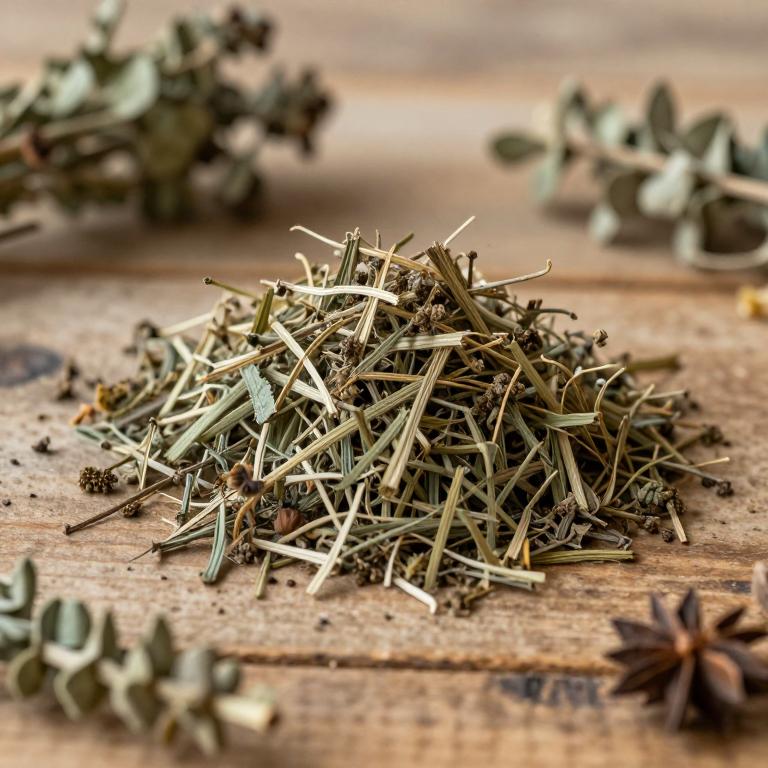
Elaeoselinum garganicum is a plant species characterized by several distinct morphological features. Specifically, the plant is known to possess a fruit component that serves as a primary part of its structure. In addition to its reproductive organs, the species also features leaves as a fundamental part of its anatomy. Understanding these specific botanical relationships is essential for the accurate identification of the plant. These morphological details provide a baseline for studying its biological and ecological properties.