blue quandong
Elaeocarpus grandis · Accepted scientific name
Scientific literature: Very Sparse (12 studies) · ★☆☆☆☆
Blue quandong, scientifically known as Elaeocarpus grandis, is a versatile tropical tree highly valued in traditional medicine. Native to Southeast Asia, its various parts, including the bark and leaves, possess significant therapeutic properties. It is widely utilized to treat ailments such as inflammation, skin conditions, and digestive issues.
- Family
- Elaeocarpaceae
- Native range
- Australasia
- Parts used
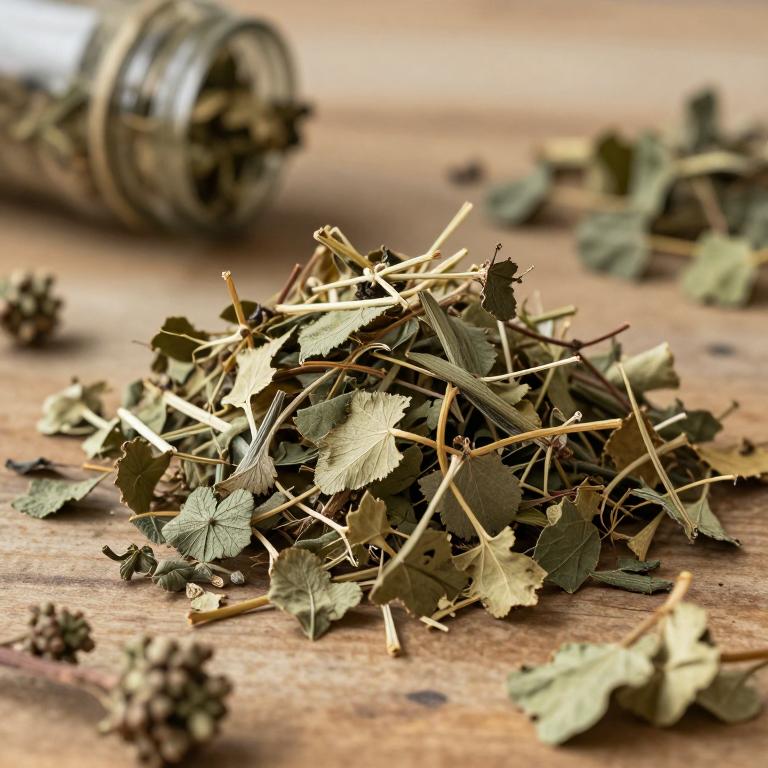
- Leaf
- Common names
- Not available
- Scientific synonyms
- Elaeocarpus Drymophilus
Names and Synonyms
Scientific Names
Accepted name
Elaeocarpus grandisSynonyms
- Elaeocarpus drymophilus
Sources: Wikidata
Taxonomical Classification
This plant, Elaeocarpus grandis, belongs to the kingdom Plantae and the phylum Streptophyta. Within the class Equisetopsida and subclass Magnoliidae, it is categorized under the order Oxalidales. Finally, it is classified under the family Elaeocarpaceae and the genus Elaeocarpus.
| Rank | Classification |
|---|---|
| Kingdom | Plantae |
| Phylum | Streptophyta |
| Class | Equisetopsida |
| Subclass | Magnoliidae |
| Order | Oxalidales |
| Family | Elaeocarpaceae |
| Genus | Elaeocarpus |
Sources: The World Checklist of Vascular Plants (WCVP)
Distribution
This plant exhibits a specific geographical distribution across several distinct regions. Within Australia, it can be found growing in the state of New South Wales. It also occupies parts of Queensland, extending its presence across the northeastern coast of the continent. Beyond the Australian mainland, the species reaches into the Northwestern Pacific. Specifically, its range includes the Caroline Islands located in that oceanic region.
| Region | Area |
|---|---|
| Australia | New South Wales |
| Australia | Queensland |
| Northwestern Pacific | Caroline Is. |
Sources: The World Checklist of Vascular Plants (WCVP)
Botanical Identification
Morphology
The morphology of Elaeoocarpus grandis is characterized by its robust growth form, specifically identifying as a woody tree. As a self-supporting organism, it does not exhibit climbing or parasitic tendencies, functioning as an independent species within its ecosystem. Regarding its habitat and ecological positioning, the plant is terrestrial rather than aquatic or epiphytic, maintaining a stable growth habit that relies on its own structural integrity.
- Aquatic :
- terrestrial
- Climber :
- self-supporting
- Epiphyte :
- terrestrial
- Growth form :
- tree
- Parasite :
- independent
- Woodiness :
- woody
Physiology
The physiology of Elaeoocarpus grandis is characterized by a C3 photosynthetic pathway, a common metabolic strategy that allows for efficient carbon fixation under moderate environmental conditions. The vegetative structure of the plant features leaves with significant morphological variability, where leaf length typically ranges from a minimum of 8 cm to a maximum of 19 cm. Complementing this longitudinal variation, the leaf width fluctuates between a minimum of 1 cm and a maximum of 4 cm, reflecting a range of leaf dimensions that influence its overall surface area for gas exchange and light interception.
- Leaf length max:
- 19 cm
- Leaf length min:
- 8 cm
- Leaf width max:
- 4 cm
- Leaf width min:
- 1 cm
- Photosynthetic pathway :
- C3
Reproduction
The reproduction of Elaeoocarpus grandis is characterized by the production of specialized fruit structures and specific dispersal mechanisms. The plant produces fruit categorized as a drupe, which is notably indehiscent, meaning it does not split open at maturity to release its contents. These fruits possess an average length of 1.92 cm and an average width of 1.85 cm. Within these fruits, the seeds are relatively uniform in size, with a consistent seed mass recorded at 0.01707 g (representing both the minimum and maximum values). To facilitate the spread of its offspring, the species utilizes a zoochorous dispersal syndrome, relying on animals to transport the fruit or seeds to new locations.
- Dehiscence :
- indehiscent
- Dispersal syndrome :
- zoochorous
- Fruit length mean:
- 1.92 cm
- Fruit type :
- drupe
- Fruit width mean:
- 1.85 cm
- Seed mass mean:
- 0.01707 g
Sources: Global Inventory of Floras and Traits (GIFT)
Plant Parts
Elaeocarpus grandis has 1 reported plant parts identified across 1 scientific publications and several other databases that are studied for medicinal purposes. The most consistently reported plant part include leaf.
| Plant part | Supporting sources | Consensus |
|---|---|---|
| Leaf | 1 supporting sources | ★☆☆☆☆ |
Leaf
- Journal of natural products
Chemicals
Elaeocarpus grandis has 8 reported phytochemicals identified across 1 scientific publications and several other databases. The most consistently reported chemicals include (-)-isoelaeocarpiline, Grandisine C, Grandisine E, Grandisine F, Grandisine G.
| Chemical | Supporting sources | Consensus |
|---|---|---|
| (-)-isoelaeocarpiline | 1 supporting sources | ★☆☆☆☆ |
| Grandisine C | 1 supporting sources | ★☆☆☆☆ |
| Grandisine E | 1 supporting sources | ★☆☆☆☆ |
| Grandisine F | 1 supporting sources | ★☆☆☆☆ |
| Grandisine G | 1 supporting sources | ★☆☆☆☆ |
| Habbemine A | 1 supporting sources | ★☆☆☆☆ |
| Heterophylliin A | 1 supporting sources | ★☆☆☆☆ |
| grandisine D | 1 supporting sources | ★☆☆☆☆ |
(-)-isoelaeocarpiline
- Journal of natural products
Grandisine C
- Journal of natural products
Grandisine E
- Journal of natural products
Grandisine F
- Journal of natural products
Grandisine G
- Journal of natural products
Habbemine A
- Archiv der Pharmazie
Heterophylliin A
- Archiv der Pharmazie
grandisine D
- Journal of natural products
Activities
Elaeocarpus grandis has 1 reported activities identified across 1 scientific publications and several other databases. The most consistently reported activities include Antidiabetic.
| Activity | Supporting sources | Consensus |
|---|---|---|
| Antidiabetic | 1 supporting sources | ★☆☆☆☆ |
Antidiabetic
- Archiv der Pharmazie
Conditions
Elaeocarpus grandis has 2 reported investigations on conditions identified across 1 scientific publications and several other databases. The most consistently reported conditions include hyperglycemia, type 2 diabetes mellitus.
| Condition | Supporting sources | Consensus |
|---|---|---|
| Hyperglycemia | 1 supporting sources | ★☆☆☆☆ |
| Type 2 diabetes mellitus | 1 supporting sources | ★☆☆☆☆ |
Hyperglycemia
- Archiv der Pharmazie
Type 2 diabetes mellitus
- Archiv der Pharmazie
Preparations
Elaeocarpus grandis has 2 reported preparations identified across 1 scientific publications and several other databases. The most consistently reported preparations include ethyl acetate fraction, petroleum ether fraction.
| Preparation | Supporting sources | Consensus |
|---|---|---|
| Ethyl acetate fraction | 1 supporting sources | ★☆☆☆☆ |
| Petroleum ether fraction | 1 supporting sources | ★☆☆☆☆ |
Ethyl acetate fraction
- Archiv der Pharmazie
Petroleum ether fraction
- Archiv der Pharmazie