Indian Olive
Elaeocarpus floribundus · Accepted scientific name
Scientific literature: Very Sparse (18 studies) · ★☆☆☆☆
Indian Olive, scientifically known as Elaeocarpus floribundus, is a versatile medicinal tree native to tropical regions. Renowned for its nutrient-rich fruits, it offers significant therapeutic benefits, including antioxidant, anti-inflammatory, and antimicrobial properties. Traditionally used in holistic wellness, this plant serves as a valuable natural resource for various healing applications.
- Family
- Elaeocarpaceae
- Native range
- Africa
- Parts used
- Leaf
- Common names
- Indian Olive · Rugged Oil-Fruit
- Scientific synonyms
- Cordia Dubiosa · Elaeocarpus Lobbianus · 2 more
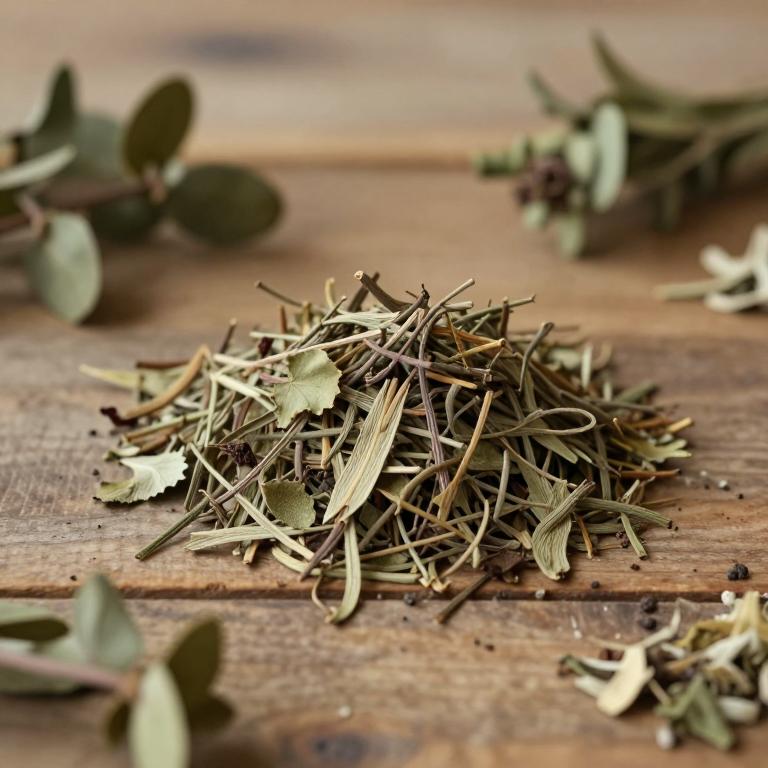
Names and Synonyms
Common Names
- Indian Olive
- Rugged Oil-Fruit
Scientific Names
Accepted name
Elaeocarpus floribundusSynonyms
- Cordia dubiosa
- Elaeocarpus lobbianus
- Elaeocarpus rigidus
- Elaeocarpus ramosii
Sources: Wikidata, Catalogue of Life
Taxonomical Classification
This plant belongs to the kingdom Plantae and the phylum Streptophyta, placing it within the class Equisetopsida. It is further classified under the subclass Magnoliidae and the order Oxalidales. Finally, it is a member of the family Elaeocarpaceae and the genus Elaeocarpus.
| Rank | Classification |
|---|---|
| Kingdom | Plantae |
| Phylum | Streptophyta |
| Class | Equisetopsida |
| Subclass | Magnoliidae |
| Order | Oxalidales |
| Family | Elaeocarpaceae |
| Genus | Elaeocarpus |
Sources: The World Checklist of Vascular Plants (WCVP)
Distribution
This plant exhibits a wide geographical distribution across several distinct tropical regions. Within the Western Indian Ocean, it is specifically found in Mauritius. Its presence extends significantly into the Indian Subcontinent, where it inhabits Assam, Bangladesh, and the East Himalaya. Furthermore, the species can be located within the Indo-China region, specifically around the Andaman Islands. Together, these locations highlight the diverse environmental range of Elaeocarpus floribundus.
| Region | Area |
|---|---|
| Western Indian Ocean | Mauritius |
| Indian Subcontinent | Assam |
| Indian Subcontinent | Bangladesh |
| Indian Subcontinent | East Himalaya |
| Indo-China | Andaman Is. |
| Indo-China | Cambodia |
| Indo-China | Laos |
| Indo-China | Myanmar |
| Indo-China | Nicobar Is. |
| Indo-China | Thailand |
Sources: The World Checklist of Vascular Plants (WCVP)
Botanical Identification
Life history
The life history of Elaeocarpus floribundus is characterized by its status as a perennial species, allowing it to persist in its environment through multiple growing seasons. Throughout its existence, the plant maintains an evergreen habit, ensuring that its foliage remains functional and present year-round rather than shedding seasonally.
- Deciduousness :
- evergreen
- Lifecycle :
- perennial
Morphology
The morphology of Elaeocarpus floribundus is characterized by its growth form as a woody tree, which functions as a self-supporting structure rather than a climber or vine. As an independent organism, it does not exhibit parasitic behavior and is strictly terrestrial in its habitat, lacking any epiphytic qualities. This species reaches significant dimensions in the forest canopy, typically attaining an average plant height of 25 meters, with the potential to reach a maximum height of up to 30 meters.
- Aquatic :
- terrestrial
- Climber :
- self-supporting
- Epiphyte :
- terrestrial
- Growth form :
- tree
- Parasite :
- independent
- Plant height max:
- 30 m
- Plant height mean:
- 25 m
- Woodiness :
- woody
Physiology
The physiology of Elaeocarpus floribundus is characterized by a standard C3 photosynthetic pathway, which involves the direct fixation of atmospheric carbon dioxide through the Calvin cycle without the specialized carbon-concentrating mechanisms found in C4 or CAM species. This metabolic process dictates its carbon assimilation efficiency and water-use strategies within its natural habitat. Furthermore, the plant does not function as a nitrogen fixer, meaning it lacks the symbiotic relationship with nitrogen-fixing bacteria necessary to convert atmospheric nitrogen into usable forms, thus relying instead on the uptake of available nitrates and ammonium from the soil to satisfy its nutritional requirements.
- Nitrogen fixer :
- no
- Photosynthetic pathway :
- C3
Sources: Global Inventory of Floras and Traits (GIFT)
Plant Parts
Elaeocarpus floribundus has 1 reported plant parts identified across 2 scientific publications and several other databases that are studied for medicinal purposes. The most consistently reported plant part include leaf.
| Plant part | Supporting sources | Consensus |
|---|---|---|
| Leaf | 2 supporting sources | ★☆☆☆☆ |
Leaf
- Natural product research
- Food & function
Chemicals
Elaeocarpus floribundus has 11 reported phytochemicals identified across 2 scientific publications and several other databases. The most consistently reported chemicals include Epifriedelanol, Fatty acids, Fatty alcohols, Friedelin, Gallic acid.
| Chemical | Supporting sources | Consensus |
|---|---|---|
| Epifriedelanol | 1 supporting sources | ★☆☆☆☆ |
| Fatty acids | 1 supporting sources | ★☆☆☆☆ |
| Fatty alcohols | 1 supporting sources | ★☆☆☆☆ |
| Friedelin | 1 supporting sources | ★☆☆☆☆ |
| Gallic acid | 1 supporting sources | ★☆☆☆☆ |
| Mearnsitrin | 1 supporting sources | ★☆☆☆☆ |
| Myricitrin | 1 supporting sources | ★☆☆☆☆ |
| Phytosterol | 1 supporting sources | ★☆☆☆☆ |
| Sesquiterpene | 1 supporting sources | ★☆☆☆☆ |
| mearnsetin | 1 supporting sources | ★☆☆☆☆ |
Epifriedelanol
- Pakistan journal of pharmaceutical sciences
Fatty acids
- Natural product research
Fatty alcohols
- Natural product research
Friedelin
- Pakistan journal of pharmaceutical sciences
Gallic acid
- Zeitschrift fur Naturforschung. C, Journal of biosciences
Mearnsitrin
- Food & function
Myricitrin
- Food & function
Phytosterol
- Natural product research
Sesquiterpene
- Natural product research
mearnsetin
- Food & function
Activities
Elaeocarpus floribundus has 2 reported activities identified across 2 scientific publications and several other databases. The most consistently reported activities include Antimicrobial, Antioxidant.
| Activity | Supporting sources | Consensus |
|---|---|---|
| Antimicrobial | 1 supporting sources | ★☆☆☆☆ |
| Antioxidant | 1 supporting sources | ★☆☆☆☆ |
Antimicrobial
- Zeitschrift fur Naturforschung. C, Journal of biosciences
Antioxidant
- Zeitschrift fur Naturforschung. C, Journal of biosciences
Conditions
Elaeocarpus floribundus has 1 reported investigations on conditions identified across 2 scientific publications and several other databases. The most consistently reported conditions include Parkinson's disease.
| Condition | Supporting sources | Consensus |
|---|---|---|
| Parkinson's disease | 1 supporting sources | ★☆☆☆☆ |
Parkinson's disease
- Food & function
Preparations
Elaeocarpus floribundus has 8 reported preparations identified across 2 scientific publications and several other databases. The most consistently reported preparations include Polar extracts of leaves, Polar extracts of stem bark, chloroform extract of leaves, edible oil, hexane extract of the leaves.
| Preparation | Supporting sources | Consensus |
|---|---|---|
| Polar extracts of leaves | 1 supporting sources | ★☆☆☆☆ |
| Polar extracts of stem bark | 1 supporting sources | ★☆☆☆☆ |
| Chloroform extract of leaves | 1 supporting sources | ★☆☆☆☆ |
| Edible oil | 1 supporting sources | ★☆☆☆☆ |
| Hexane extract of the leaves | 1 supporting sources | ★☆☆☆☆ |
| Methanol extract of stem bark | 1 supporting sources | ★☆☆☆☆ |
| Methanolic extract of leaves | 1 supporting sources | ★☆☆☆☆ |
| Methanolic extract of stem bark | 1 supporting sources | ★☆☆☆☆ |
Polar extracts of leaves
- Pakistan journal of pharmaceutical sciences
Polar extracts of stem bark
- Pakistan journal of pharmaceutical sciences
Chloroform extract of leaves
- Pakistan journal of pharmaceutical sciences
Edible oil
- Journal of ethnobiology and ethnomedicine
Hexane extract of the leaves
- Natural product research
Methanol extract of stem bark
- Pakistan journal of pharmaceutical sciences
Methanolic extract of leaves
- Pakistan journal of pharmaceutical sciences
Methanolic extract of stem bark
- Pakistan journal of pharmaceutical sciences