Elaeagia utilis
Elaeagia utilis · Accepted scientific name
Scientific literature: Very Sparse (3 studies) · ★☆☆☆☆
Elaeagia utilis, scientifically known as Elaeagia utilis, is a versatile medicinal plant valued in traditional healing practices. Often found in tropical regions, it is prized for its diverse therapeutic properties, including anti-inflammatory and antimicrobial effects. This robust species serves as a vital natural resource for managing various ailments.
- Family
- Rubiaceae
- Native range
- Southern America
- Parts used
- Leaf
- Common names
- Not available
- Scientific synonyms
- Condaminea Utilis
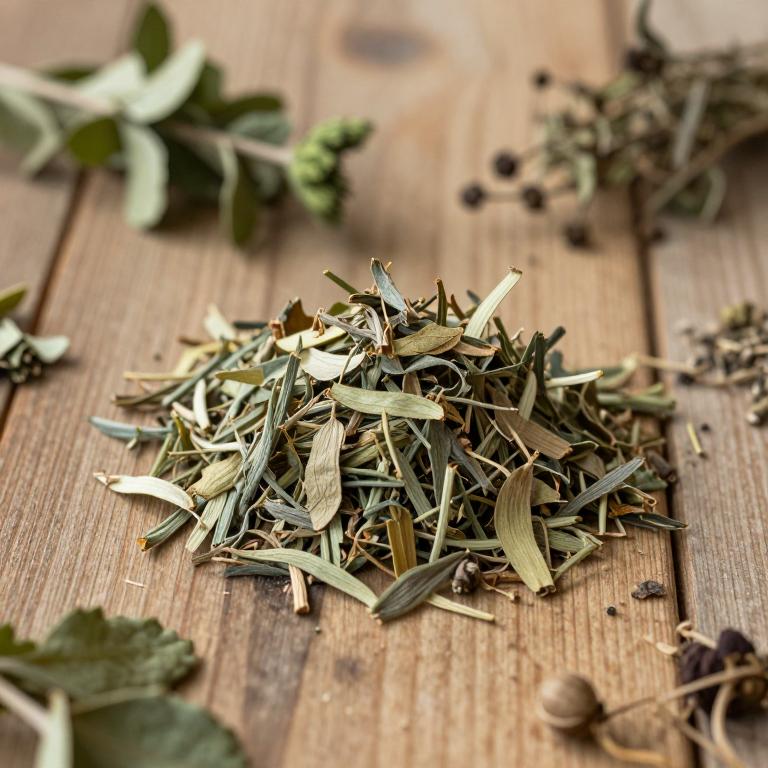
Names and Synonyms
Scientific Names
Accepted name
Elaeagia utilisSynonyms
- Condaminea utilis
Sources: Wikidata
Taxonomical Classification
This plant belongs to the kingdom Plantae and is classified under the phylum Streptophyta and class Equisetopsida. Within the subclass Magnoliidae and order Gentianaales, it is a member of the Rubiaceae family. Specifically, it is identified by the genus Elaeagia and the species Elaeagia utilis.
| Rank | Classification |
|---|---|
| Kingdom | Plantae |
| Phylum | Streptophyta |
| Class | Equisetopsida |
| Subclass | Magnoliidae |
| Order | Gentianales |
| Family | Rubiaceae |
| Genus | Elaeagia |
Sources: The World Checklist of Vascular Plants (WCVP)
Distribution
This plant is distributed across several key regions in South America. In the northern part of the continent, it can be found within Venezuela. Its presence extends into western South America, specifically inhabiting the territory of Colombia. Furthermore, the species is located within the borders of Ecuador. Finally, its geographical range reaches into the western nation of Peru.
| Region | Area |
|---|---|
| Northern South America | Venezuela |
| Western South America | Colombia |
| Western South America | Ecuador |
| Western South America | Peru |
Sources: The World Checklist of Vascular Plants (WCVP)
Botanical Identification
Ecology
The ecology of Elaeagia utilis is characterized by its specific vertical distribution within montane ecosystems, where it occupies a distinct altitudinal niche. This species thrives within an elevational range that begins at a minimum of 630 m AMSL and extends up to a maximum of 2500 m AMSL. This broad altitudinal span suggests an ability to adapt to varying environmental gradients, including fluctuations in temperature, atmospheric pressure, and moisture availability common in mid-to-high elevation tropical or subtropical landscapes. Such a distribution pattern typically indicates that the plant can inhabit diverse forest types or transitional zones found between lower montane and higher altitude environments.
- Elevational range max:
- 2500 m AMSL
- Elevational range min:
- 630 m AMSL
Life history
The life history of Elaeagnus utilis is characterized by its classification as a phanerophyte, specifically exhibiting traits consistent with both phanerophyte and nanophanerophyte life forms. As a phanerophyte, the plant maintains its perennating buds well above the soil surface, typically on woody branches, which allows it to survive through unfavorable seasonal periods. Its growth habit involves the development of persistent woody structures that support its vegetative expansion, ensuring long-term survival within its ecological niche. This life strategy enables the species to establish a stable presence, utilizing its elevated bud placement to protect reproductive and vegetative tissues from environmental stressors such as temperature fluctuations and herbivory.
- Life form :
- phanerophyte
Morphology
The morphology of Elaeagia utilis is characterized by its robust growth form as a woody tree, reaching a maximum plant height of approximately 18 meters. It is a terrestrial species, functioning as an independent organism rather than a parasite or an epiphyte, as it maintains a strictly terrestrial existence. Unlike climbing plants such as lianas or vines, this species is entirely self-supporting in its structural development. Its physical constitution is defined by its woody nature, providing the necessary stability for its significant vertical stature in its natural habitat.
- Aquatic :
- terrestrial
- Climber :
- self-supporting
- Epiphyte :
- terrestrial
- Growth form :
- tree
- Parasite :
- independent
- Plant height max:
- 18 m
- Woodiness :
- woody
Sources: Global Inventory of Floras and Traits (GIFT)
Plant Parts
Elaeagia utilis has 1 reported plant parts identified across 1 scientific publications and several other databases that are studied for medicinal purposes. The most consistently reported plant part include leaf.
| Plant part | Supporting sources | Consensus |
|---|---|---|
| Leaf | 1 supporting sources | ★☆☆☆☆ |
Leaf
- Acta odontologica latinoamericana : AOL
Chemicals
Elaeagia utilis has 1 reported phytochemicals identified across 1 scientific publications and several other databases. The most consistently reported chemicals include Terpenes.
| Chemical | Supporting sources | Consensus |
|---|---|---|
| Terpenes | 1 supporting sources | ★☆☆☆☆ |
Terpenes
- Acta odontologica latinoamericana : AOL
Conditions
Elaeagia utilis has 1 reported investigations on conditions identified across 1 scientific publications and several other databases. The most consistently reported conditions include dental caries.
| Condition | Supporting sources | Consensus |
|---|---|---|
| Dental caries | 1 supporting sources | ★☆☆☆☆ |
Dental caries
- Acta odontologica latinoamericana : AOL