Scorpionbush
Ehretia microphylla · Accepted scientific name
Scientific literature: Very Sparse (6 studies) · ★☆☆☆☆
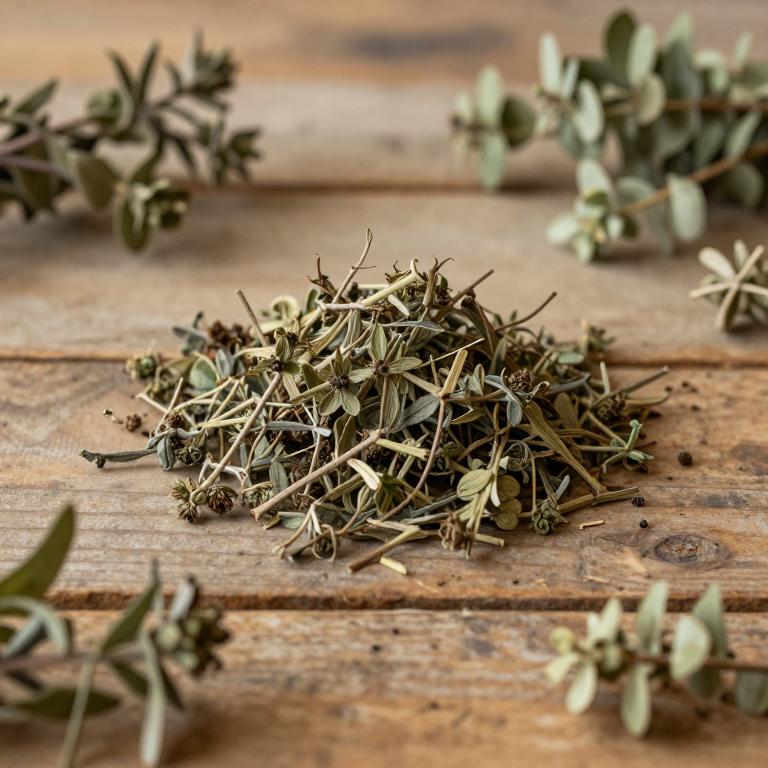
Scorpionbush, scientifically known as Ehretiya microphylla, is a versatile evergreen shrub native to various tropical regions. Renowned for its medicinal properties, this plant is frequently utilized in traditional healing practices to treat skin ailments, inflammation, and digestive issues. Its robust foliage and unique ecological role make it highly significant.
Names and Synonyms
Common Names
- Fukien-tea
- Philippine-tea
- Fukien tea tree
Scientific Names
Accepted name
Ehretia microphyllaSynonyms
- Carmona microphylla
- Ehretia buxifolia var. heterophylla
- Carmona retusa
- Cordia retusa
- Cordia coromandeliana
- Carmona heterophylla
- Ehretia buxifolia
- Ehretia dentata
- Lithothamnus buxioides
- Ehretia monopyrena
- Ehretia heterophylla
- Ehretia coromandeliana
Regional and Traditional Names
Spanish:
- árbol de té Fukien
Sources: Wikidata, Catalogue of Life
Taxonomical Classification
This plant belongs to the kingdom Plantae and is classified under the phylum Streptophyta and class Equisetopsida. Within the subclass Magnoliidae, it is positioned in the order Boraginales and the family Boraginaceae. Finally, it is identified by its specific genus, Ehretia.
| Rank | Classification |
|---|---|
| Kingdom | Plantae |
| Phylum | Streptophyta |
| Class | Equisetopsida |
| Subclass | Magnoliidae |
| Order | Boraginales |
| Family | Boraginaceae |
| Genus | Ehretia |
Sources: The World Checklist of Vascular Plants (WCVP)
Distribution
This plant exhibits a diverse geographical distribution across several key regions in Asia. Within the Arabian Peninsula, its presence is noted throughout the Gulf States. In China, it can be found specifically in Hainan as well as across China Southeast. Its range extends into Eastern Asia, where it inhabits the Nansei-shoto islands. Finally, the species is also distributed throughout Taiwan.
| Region | Area |
|---|---|
| Arabian Peninsula | Gulf States |
| China | Hainan |
| China | China Southeast |
| Eastern Asia | Nansei-shoto |
| Eastern Asia | Taiwan |
| Indian Subcontinent | India |
| Indian Subcontinent | Sri Lanka |
| Indo-China | Andaman Is. |
| Indo-China | Cambodia |
| Indo-China | Laos |
Sources: The World Checklist of Vascular Plants (WCVP)
Botanical Identification
Life history
The life history of Eretia microphylla is characterized by its status as a perennial species, allowing it to persist in its environment through multiple growing seasons. As an evergreen plant, it maintains its foliage year-round, providing continuous vegetative cover and photosynthetic activity without the seasonal shedding associated with deciduous varieties.
- Deciduousness :
- evergreen
- Lifecycle :
- perennial
Morphology
The morphology of Eretia microphylla is characterized by a woody growth form, primarily manifesting as a shrub. It functions as a self-supporting plant and is classified as a terrestrial species rather than an epiphyte. In terms of stature, the plant exhibits significant variation in height, ranging from a minimum of 1 meter to a maximum of 4 meters, with an average plant height of approximately 2.5 meters.
- Climber :
- self-supporting
- Epiphyte :
- terrestrial
- Growth form :
- shrub
- Plant height max:
- 4 m
- Plant height mean:
- 2.5 m
- Plant height min:
- 1 m
- Woodiness :
- woody
Physiology
The physiology of Ehratia microphylla is characterized by specific vegetative dimensions and nutrient acquisition strategies. The foliage exhibits a distinct range of leaf morphology, with leaf lengths varying from a minimum of 1.5 cm to a mean of 2.5 cm, reaching a maximum length of 3.5 cm. Complementing this, the leaf width displays a corresponding range, starting from a minimum of 1 cm, maintaining a mean width of 1.5 cm, and expanding to a maximum width of 2 cm. Regarding its metabolic nutrient cycling, the plant does not function as a nitrogen fixer, relying instead on the soil's available nitrogen reserves rather than symbiotic nitrogen-fixing bacteria to support its physiological processes.
- Leaf length max:
- 3.5 cm
- Leaf length mean:
- 2.5 cm
- Leaf length min:
- 1.5 cm
- Leaf width max:
- 2 cm
- Leaf width mean:
- 1.5 cm
- Leaf width min:
- 1 cm
- Nitrogen fixer :
- no
Reproduction
The reproduction of Ehretia microphylla is characterized by the development of small, fleshy fruits that serve as the primary dispersal mechanism for the species. These fruits exhibit specific morphological dimensions, with a recorded minimum fruit width of 0.3 cm and a maximum width reaching up to 0.4 cm. On average, the fruit width measures approximately 0.35 cm, reflecting a consistent size distribution within the population. These small fruits are essential to the plant's life cycle, facilitating the propagation of the species through their structural characteristics.
- Fruit width max:
- 0.4 cm
- Fruit width mean:
- 0.35 cm
- Fruit width min:
- 0.3 cm
Sources: Global Inventory of Floras and Traits (GIFT)
Plant Parts
Ehretia microphylla has 2 reported plant parts identified across 3 scientific publications and several other databases that are studied for medicinal purposes. The most consistently reported plant part include leaf, root.
| Plant part | Supporting sources | Consensus |
|---|---|---|
| Leaf | 2 supporting sources | ★☆☆☆☆ |
| Root | 1 supporting sources | ★☆☆☆☆ |
Leaf
- Carcinogenesis
- Drug development and industrial pharmacy
Root
- Journal of natural products
Chemicals
Ehretia microphylla has 2 reported phytochemicals identified across 3 scientific publications and several other databases. The most consistently reported chemicals include Ehretianone, Sterols.
| Chemical | Supporting sources | Consensus |
|---|---|---|
| Ehretianone | 1 supporting sources | ★☆☆☆☆ |
| Sterols | 1 supporting sources | ★☆☆☆☆ |
Ehretianone
- Journal of natural products
Sterols
- Journal of natural products
Activities
Ehretia microphylla has 1 reported activities identified across 3 scientific publications and several other databases. The most consistently reported activities include Antimutagenic.
| Activity | Supporting sources | Consensus |
|---|---|---|
| Antimutagenic | 1 supporting sources | ★☆☆☆☆ |
Antimutagenic
- Carcinogenesis
Preparations
Ehretia microphylla has 3 reported preparations identified across 3 scientific publications and several other databases. The most consistently reported preparations include MeOH extract, ethyl acetate-soluble portion of the MeOH extract, leaves.
| Preparation | Supporting sources | Consensus |
|---|---|---|
| Meoh extract | 2 supporting sources | ★☆☆☆☆ |
| Ethyl acetate-soluble portion of the meoh extract | 1 supporting sources | ★☆☆☆☆ |
| Leaves | 1 supporting sources | ★☆☆☆☆ |
Meoh extract
- Journal of natural products
- Phytochemistry
Ethyl acetate-soluble portion of the meoh extract
- Phytochemistry
Leaves
- Mutation research