Echium amoenum
Echium amoenum · Accepted scientific name
Scientific literature: Sparse (95 studies) · ★★☆☆☆
Echium amoenum, scientifically known as Echium amoenum, is a rare and enchanting medicinal plant endemic to the Canary Islands. Renowned for its striking blue blossoms, this species is valued in traditional herbalism for its unique phytochemical properties, offering potential therapeutic benefits in treating various ailments through its bioactive compounds.
- Family
- Boraginaceae
- Native range
- Asia-Temperate
- Parts used
- Not available
- Common names
- Not available
- Scientific synonyms
- Echium Orientale
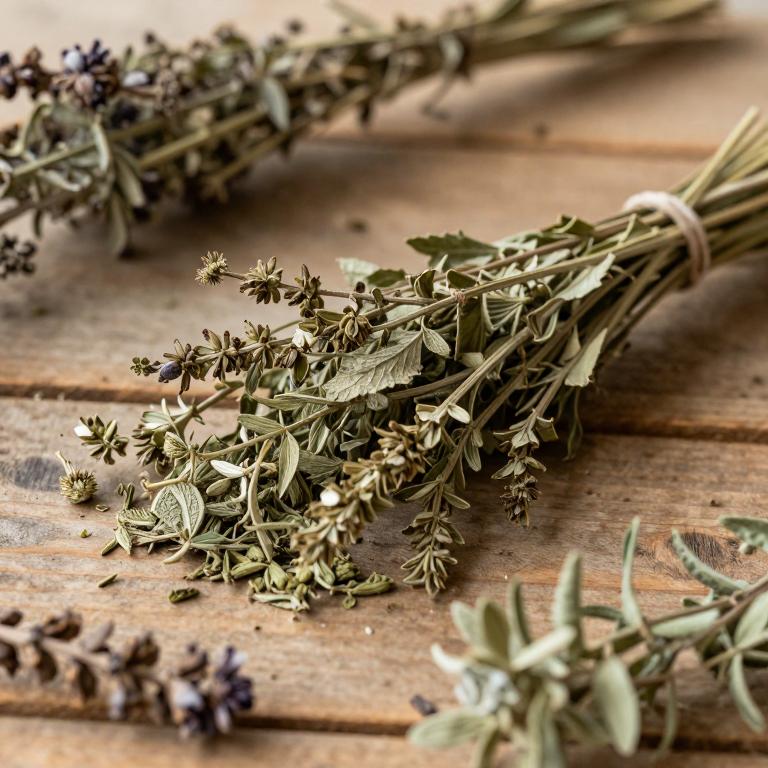
Names and Synonyms
Scientific Names
Accepted name
Echium amoenumSynonyms
- Echium orientale
Regional and Traditional Names
German:
- Kaukasischer Natternkopf
Sources: Wikidata, Catalogue of Life
Taxonomical Classification
This plant, known scientifically as Echium amoenum, belongs to the kingdom Plantae and the phylum Streptophyta. Within the class Equisetopsida and subclass Magnoliidae, it is classified under the order Boraginales and the family Boraginaceae. It is ultimately identified by its genus, Echium.
| Rank | Classification |
|---|---|
| Kingdom | Plantae |
| Phylum | Streptophyta |
| Class | Equisetopsida |
| Subclass | Magnoliidae |
| Order | Boraginales |
| Family | Boraginaceae |
| Genus | Echium |
Sources: The World Checklist of Vascular Plants (WCVP)
Distribution
This plant exhibits a specific geographical range concentrated within the mountainous regions of Eurasia. Its primary distribution includes the North Caucasus area, where it adapts to unique local climates. Additionally, the species can be found throughout the Transcaucasus region. Moving further south, its presence extends into the landscapes of Western Asia. Specifically, the plant is known to inhabit parts of Iran within this broader territory.
| Region | Area |
|---|---|
| Caucasus | North Caucasus |
| Caucasus | Transcaucasus |
| Western Asia | Iran |
Sources: The World Checklist of Vascular Plants (WCVP)
Botanical Identification
Ecology
The ecology of Echium amoenum is defined by its ability to thrive in diverse and often rugged environmental settings. It is primarily found colonizing stony places, where its root systems can navigate rocky substrates and find stability amidst sparse soil. In addition to these rocky terrains, the plant is frequently situated along rivers, benefiting from the moisture gradients and alluvial deposits found in riparian zones. Furthermore, its adaptability allows it to integrate into managed landscapes, such as gardens, where it can persist under varied cultivation conditions. This combination of habitats—ranging from the high-moisture environments of riverbanks to the well-drained, mineral-rich conditions of stony areas and human-altered garden settings—highlights the species' ecological versatility.
- Habitat :
- garden,rivers,stonyplaces
Life history
The life history of Echium amoenum is characterized by a biennial lifecycle, a developmental pattern where the plant typically spends its first year as a vegetative rosette and its second year focusing on reproductive efforts. During its initial stage, the plant establishes a robust root system and produces a cluster of basal leaves, gathering the necessary energy reserves to support future growth. In its second year, the plant undergoes a dramatic transition, bolting upward to produce a flowering stalk topped with characteristic inflorescences. Once the flowering and seed production processes are complete, the individual plant typically reaches the end of its life cycle.
- Lifecycle :
- biennial
Morphology
The morphology of Echium amoenum is characterized by its growth form as a herb, which maintains a non-woody structure throughout its development. The plant typically reaches a height ranging from a minimum of 0.5 m to a maximum of 0.8 m.
- Growth form :
- herb
- Plant height max:
- 0.8 m
- Plant height min:
- 0.5 m
- Woodiness :
- non-woody
Reproduction
The reproduction of Echium amoenum is primarily characterized by its seasonal flowering cycle, which serves as the critical phase for its pollination and subsequent seed production. The reproductive period begins in May, marking the onset of its flowering stage, and continues steadily through the late spring and early summer months. This flowering window reaches its conclusion in July, defining a specific temporal window for its reproductive activity. During this period, the plant produces its floral structures to facilitate genetic exchange, with the timing of these biological processes being essential to the plant's lifecycle and successful propagation within its natural habitat.
- Flowering time :
- May
- Flowering time :
- Jul
Sources: Global Inventory of Floras and Traits (GIFT)
Chemicals
Echium amoenum has 21 reported phytochemicals identified across 0 scientific publications and several other databases. The most consistently reported chemicals include Anthocyanins, Flavonoids, polyphenols, rosmarinic acid, (e)-caffeic acid.
| Chemical | Supporting sources | Consensus |
|---|---|---|
| Anthocyanins | 3 supporting sources | ★★☆☆☆ |
| Flavonoids | 2 supporting sources | ★☆☆☆☆ |
| polyphenols | 2 supporting sources | ★☆☆☆☆ |
| rosmarinic acid | 2 supporting sources | ★☆☆☆☆ |
| (e)-caffeic acid | 1 supporting sources | ★☆☆☆☆ |
| Anthocyanidins | 1 supporting sources | ★☆☆☆☆ |
| Be | 1 supporting sources | ★☆☆☆☆ |
| Echimidine N-oxide | 1 supporting sources | ★☆☆☆☆ |
| Fatty acids | 1 supporting sources | ★☆☆☆☆ |
| INTERMEDINE N-OXIDE | 1 supporting sources | ★☆☆☆☆ |
Anthocyanins
- Journal of food science and technology
- Galen medical journal
- International journal of biological macromolecules
Flavonoids
- Journal of food science and technology
- Galen medical journal
polyphenols
- Journal of food science and technology
- Scientific reports
rosmarinic acid
- Galen medical journal
- International journal of molecular sciences
(e)-caffeic acid
- Molecules (Basel, Switzerland)
Anthocyanidins
- Galen medical journal
Be
- Journal of photochemistry and photobiology. B, Biology
Echimidine N-oxide
- BMC plant biology
Fatty acids
- Galen medical journal
INTERMEDINE N-OXIDE
- BMC plant biology
Activities
Echium amoenum has 15 reported activities identified across 0 scientific publications and several other databases. The most consistently reported activities include Antioxidant, Anxiolytic, Sedative, Antidepressant, Antibacterial.
| Activity | Supporting sources | Consensus |
|---|---|---|
| Antioxidant | 3 supporting sources | ★★☆☆☆ |
| Anxiolytic | 3 supporting sources | ★★☆☆☆ |
| Sedative | 3 supporting sources | ★★☆☆☆ |
| Antidepressant | 2 supporting sources | ★☆☆☆☆ |
| Antibacterial | 1 supporting sources | ★☆☆☆☆ |
| Anticancer | 1 supporting sources | ★☆☆☆☆ |
| Antifebrile | 1 supporting sources | ★☆☆☆☆ |
| Antimicrobial | 1 supporting sources | ★☆☆☆☆ |
| Antiviral | 1 supporting sources | ★☆☆☆☆ |
| Demulcent | 1 supporting sources | ★☆☆☆☆ |
Antioxidant
- Scientific reports
- Molecular biology reports
- Evidence-based complementary and alternative medicine : eCAM
Anxiolytic
- Galen medical journal
- Toxicon : official journal of the International Society on Toxinology
- Molecular biology reports
Sedative
- Toxicon : official journal of the International Society on Toxinology
- Pharmaceutical biology
- Molecular biology reports
Antidepressant
- Galen medical journal
- Archives of medical science : AMS
Antibacterial
- Archives of medical science : AMS
Anticancer
- International journal of molecular sciences
Antifebrile
- Archives of medical science : AMS
Antimicrobial
- Scientific reports
Antiviral
- Archives of medical science : AMS
Demulcent
- Archives of medical science : AMS
Conditions
Echium amoenum has 30 reported investigations on conditions identified across 0 scientific publications and several other databases. The most consistently reported conditions include depression, anxiety, infectious diseases, inflammation, obsessive-compulsive disorder.
| Condition | Supporting sources | Consensus |
|---|---|---|
| Depression | 3 supporting sources | ★★☆☆☆ |
| Anxiety | 2 supporting sources | ★☆☆☆☆ |
| Infectious diseases | 2 supporting sources | ★☆☆☆☆ |
| Inflammation | 2 supporting sources | ★☆☆☆☆ |
| Obsessive-compulsive disorder | 2 supporting sources | ★☆☆☆☆ |
| Sedative | 2 supporting sources | ★☆☆☆☆ |
| Sore throat | 2 supporting sources | ★☆☆☆☆ |
| Wound healing | 2 supporting sources | ★☆☆☆☆ |
| (non)infectious diseases | 1 supporting sources | ★☆☆☆☆ |
| Alzheimer's disease | 1 supporting sources | ★☆☆☆☆ |
Depression
- Galen medical journal
- Scientific reports
- BioImpacts : BI
Anxiety
- Galen medical journal
- Scientific reports
Infectious diseases
- Archives of medical science : AMS
- The Brazilian journal of infectious diseases : an official publication of the Brazilian Society of Infectious Diseases
Inflammation
- Toxicon : official journal of the International Society on Toxinology
- Molecules (Basel, Switzerland)
Obsessive-compulsive disorder
- Phytotherapy research : PTR
- Neuropsychopharmacology reports
Sedative
- Toxicon : official journal of the International Society on Toxinology
- Pharmaceutical biology
Sore throat
- Scientific reports
- Toxicon : official journal of the International Society on Toxinology
Wound healing
- Mini reviews in medicinal chemistry
- Natural product research
(non)infectious diseases
- Journal of photochemistry and photobiology. B, Biology
Alzheimer's disease
- Galen medical journal
Preparations
Echium amoenum has 8 reported preparations identified across 0 scientific publications and several other databases. The most consistently reported preparations include Echium amoenum extract, EA cream, aqueous extract, dried flowers, ethyl acetate extract.
| Preparation | Supporting sources | Consensus |
|---|---|---|
| Echium amoenum extract | 2 supporting sources | ★☆☆☆☆ |
| Ea cream | 1 supporting sources | ★☆☆☆☆ |
| Aqueous extract | 1 supporting sources | ★☆☆☆☆ |
| Dried flowers | 1 supporting sources | ★☆☆☆☆ |
| Ethyl acetate extract | 1 supporting sources | ★☆☆☆☆ |
| Fermented echium amoenum polyphenols | 1 supporting sources | ★☆☆☆☆ |
| Hydroalcoholic echium amoenum extract | 1 supporting sources | ★☆☆☆☆ |
| Infusion of dried petals in hot water (90 centigrade) | 1 supporting sources | ★☆☆☆☆ |
Echium amoenum extract
- Current drug discovery technologies
- Molecular biology reports
Ea cream
- Natural product research
Aqueous extract
- Scientific reports
Dried flowers
- Avicenna journal of phytomedicine
Ethyl acetate extract
- International journal of molecular sciences
Fermented echium amoenum polyphenols
- Scientific reports
Hydroalcoholic echium amoenum extract
- Pharmaceutical biology
Infusion of dried petals in hot water (90 centigrade)
- Toxicon : official journal of the International Society on Toxinology