Echinops spinosissimus
Echinops spinosissimus · Accepted scientific name
Scientific literature: Very Sparse (5 studies) · ★☆☆☆☆
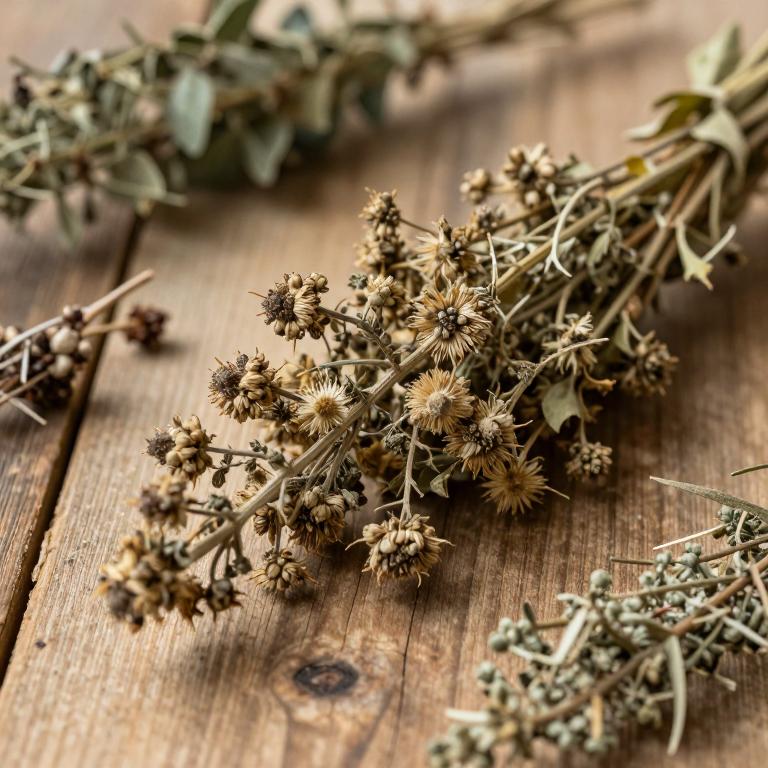
Scientifically known as Echinops spinosissimus, is a distinctive perennial herb characterized by its prickly, globe-shaped flower heads. Native to arid regions, this medicinal plant is highly valued in traditional medicine for its therapeutic properties, often utilized to support digestive health and provide antioxidant benefits through its unique bioactive compounds.
- Family
- Asteraceae
- Native range
- Europe
- Parts used
- Not available
- Common names
- Not available
- Scientific synonyms
- Not available
Names and Synonyms
Scientific Names
Accepted name
Echinops spinosissimusRegional and Traditional Names
Spanish:
- Echinops creticus
- Echinops spinosus var. oligadenus
- Echinops spinosus var. macrochaetus
- Echinops spinosus var. glabrescens
- Echinops spinosus var. longisetus
- Echinops spinosus var. tenuisectus
- Echinops spinosus var. tmarae
- Echinops glandulosus
- Echinops spinosus var. maurus
- Echinops spinosus var. jallui
- Echinops viscosus
- Echinops tunetanus
- Echinops spinosus
- Echinops echinophorus
- Echinops spinosus var. chaetocephalus
- Echinops spinosus var. mekinensis
Sources: Wikidata
Taxonomical Classification
This plant belongs to the kingdom Plantae within the phylum Streptophyta and the class Equisetopsida. It is classified under the subclass Magnoliidae and the order Asterales, falling into the family Asteraceae. Finally, it is situated within the genus Echinops under the specific species name Echinops spinosissimus.
| Rank | Classification |
|---|---|
| Kingdom | Plantae |
| Phylum | Streptophyta |
| Class | Equisetopsida |
| Subclass | Magnoliidae |
| Order | Asterales |
| Family | Asteraceae |
| Genus | Echinops |
Sources: The World Checklist of Vascular Plants (WCVP)
Distribution
This plant exhibits a specific geographical distribution concentrated throughout the Mediterranean and Southeastern European regions. It can be found growing in the country of Albania, where it occupies certain ecological niches. The species is also widely documented across Greece, including its presence on the island of Kriti. Furthermore, its range extends to the island of Sicilia, demonstrating its adaptability to these coastal environments. Finally, the plant is located in the European portion of Türkiye, completing its regional distribution pattern.
| Region | Area |
|---|---|
| Southeastern Europe | Albania |
| Southeastern Europe | Greece |
| Southeastern Europe | Kriti |
| Southeastern Europe | Sicilia |
| Southeastern Europe | Türkiye-in-Europe |
| Southeastern Europe | NW. Balkan Pen. |
| Northern Africa | Algeria |
| Northern Africa | Egypt |
| Northern Africa | Libya |
| Northern Africa | Morocco |
Sources: The World Checklist of Vascular Plants (WCVP)
Botanical Identification
Life history
The life history of Echinops spinosissimus is characterized by its classification as a perennial plant, allowing it to persist across multiple growing seasons. In terms of its botanical life form, it is categorized as a chamaephyte, a growth habit where the majority of the plant's vegetative biomass is located close to or just above the soil surface, often protected by seasonal environmental conditions. This life history strategy enables the species to establish robust presence within its native habitats through long-term survival and recurring reproductive cycles.
- Life form :
- chamaephyte
- Lifecycle :
- perennial
Morphology
The morphology of Echinops spinosissimus is characterized by a self-supporting growth habit, functioning as an independent organism without parasitic tendencies. This species is a non-woody herb, specifically categorized as a forb, which lacks any climbing mechanisms. It is a terrestrial plant, adapted to land environments rather than aquatic or semiaquatic habitats. In terms of stature, the plant reaches a maximum height of approximately 1.524 meters, maintaining a robust structure throughout its developmental stages.
- Aquatic :
- terrestrial
- Climber :
- self-supporting
- Growth form :
- herb
- Parasite :
- independent
- Plant height max:
- 1.524018532 m
- Woodiness :
- non-woody
Reproduction
The reproduction of Echinops spinosissimus is primarily driven by the production of seeds contained within its characteristic globose flower heads. The morphological characteristics of these seeds exhibit a notable range in weight, reflecting biological variability within the species. The seed mass is characterized by a mean value of 0.02402 g, with individual seeds deviating from this average to reach a maximum weight of 0.04105 g and a minimum weight of 0.01471 g. This variation in seed mass is a critical component of its reproductive strategy, influencing dispersal capabilities and the initial resource allocation available to emerging seedlings.
- Seed mass max:
- 0.04105 g
- Seed mass mean:
- 0.02402 g
- Seed mass min:
- 0.01471 g
Sources: Global Inventory of Floras and Traits (GIFT)
Activities
Echinops spinosissimus has 2 reported activities identified across 0 scientific publications and several other databases. The most consistently reported activities include Antibiotic, Antioxidant.
| Activity | Supporting sources | Consensus |
|---|---|---|
| Antibiotic | 1 supporting sources | ★☆☆☆☆ |
| Antioxidant | 1 supporting sources | ★☆☆☆☆ |
Antibiotic
- Plants (Basel, Switzerland)
Antioxidant
- Plants (Basel, Switzerland)
Conditions
Echinops spinosissimus has 2 reported investigations on conditions identified across 0 scientific publications and several other databases. The most consistently reported conditions include cutaneous leishmaniasis, hemorrhoids.
| Condition | Supporting sources | Consensus |
|---|---|---|
| Cutaneous leishmaniasis | 1 supporting sources | ★☆☆☆☆ |
| Hemorrhoids | 1 supporting sources | ★☆☆☆☆ |
Cutaneous leishmaniasis
- Acta parasitologica
Hemorrhoids
- Plants (Basel, Switzerland)
Preparations
Echinops spinosissimus has 1 reported preparations identified across 0 scientific publications and several other databases. The most consistently reported preparations include extracts prepared with methanol.
| Preparation | Supporting sources | Consensus |
|---|---|---|
| Extracts prepared with methanol | 1 supporting sources | ★☆☆☆☆ |
Extracts prepared with methanol
- Acta parasitologica