Echinops niveus
Echinops niveus · Accepted scientific name
Scientific literature: Very Sparse (19 studies) · ★☆☆☆☆
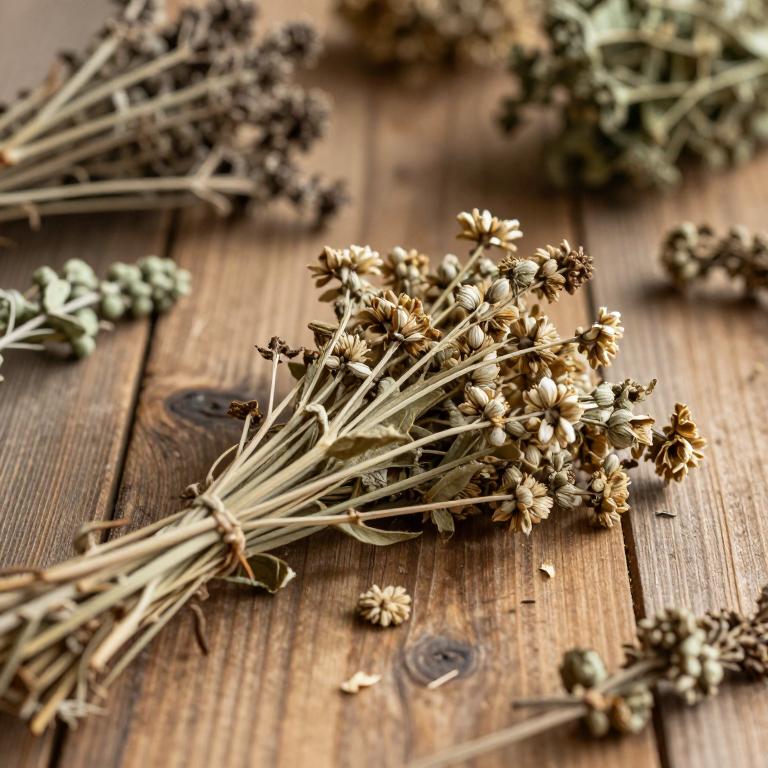
Echinops niveus, scientifically known as Echinops niveus, is a distinctive medicinal plant belonging to the Asteraceae family. Renowned for its unique globe-like blue flower heads, it is valued in traditional medicine for its therapeutic properties, often used to address various ailments and promote overall wellness through its natural compounds.
- Family
- Not available
- Native range
- Asia-Tropical
- Parts used
- Not available
- Common names
- Not available
- Scientific synonyms
- Not available
Names and Synonyms
Scientific Names
Accepted name
Echinops niveusDistribution
This plant exhibits a wide distribution across several key regions within the Asian continent. Within the Indian Subcontinent, it can be found growing in the mountainous landscapes of Nepal. Its presence is also documented across various parts of Pakistan. Furthermore, the species is native to the West Himalaya region of the Indian Subcontinent. Finally, its geographical range extends into Indo-China, specifically within the borders of Myanmar.
| Region | Area |
|---|---|
| Indian Subcontinent | Nepal |
| Indian Subcontinent | Pakistan |
| Indian Subcontinent | West Himalaya |
| Indo-China | Myanmar |
Sources: The World Checklist of Vascular Plants (WCVP)
Botanical Identification
Ecology
The ecology of Echinops niveus is characterized by its presence in specific montane environments, where it thrives within a defined altitudinal gradient. This species is typically found across an elevational range that begins at 1200 m AMSL and extends up to a maximum of 2500 m AMSL. This distribution suggests an adaptation to sub-alpine or high-altitude montane ecosystems, where environmental factors such as temperature fluctuations, UV exposure, and moisture availability are governed by the varying pressure and climatic shifts inherent to these mid-to-high elevation zones.
- Elevational range max:
- 2500 m AMSL
- Elevational range min:
- 1200 m AMSL
Life history
The life history of Echinops niveus is characterized by its status as a perennial plant, meaning it maintains its existence through multiple growing seasons rather than completing its cycle in a single year. As a perennial species, it undergoes seasonal cycles of vegetative growth and reproductive development, often establishing a robust root system that allows it to persist in its habitat over several years. This long-lived nature enables the plant to adapt to its environment through repeated cycles of flowering and seed production, contributing to its stability within its ecological niche.
- Lifecycle :
- perennial
Morphology
The morphology of Echinops niveus is characterized by its growth form as a herb, exhibiting a non-woody structure throughout its vegetative parts. Unlike many climbing species, it does not function as a liana or a vine; instead, it is categorized as a self-supporting plant, possessing the necessary structural integrity to maintain its upright posture without the need for obligatory or facultative climbing mechanisms.
- Climber :
- self-supporting
- Growth form :
- herb
- Woodiness :
- non-woody
Reproduction
The reproduction of Echinops niveus is closely tied to its seasonal flowering cycle, which facilitates the production of seeds through pollination. The flowering period for this species typically commences in July and continues through the warmer months until it concludes in October. This specific window of availability for floral development ensures that the plant can undergo its reproductive processes within a predictable seasonal timeframe, allowing for the eventual dispersal of progeny.
- Flowering time :
- Jul
- Flowering time :
- Oct
Sources: Global Inventory of Floras and Traits (GIFT)
Chemicals
Echinops niveus has 1 reported phytochemicals identified across 0 scientific publications and several other databases. The most consistently reported chemicals include betulinic acid.
| Chemical | Supporting sources | Consensus |
|---|---|---|
| betulinic acid | 1 supporting sources | ★☆☆☆☆ |
betulinic acid
- Dr. Duke
Activities
Echinops niveus has 18 reported activities identified across 0 scientific publications and several other databases. The most consistently reported activities include Anthelmintic, AntiHIV, Antibacterial, Anticancer, Anticarcinomic.
| Activity | Supporting sources | Consensus |
|---|---|---|
| Anthelmintic | 1 supporting sources | ★☆☆☆☆ |
| AntiHIV | 1 supporting sources | ★☆☆☆☆ |
| Antibacterial | 1 supporting sources | ★☆☆☆☆ |
| Anticancer | 1 supporting sources | ★☆☆☆☆ |
| Anticarcinomic | 1 supporting sources | ★☆☆☆☆ |
| Antiedemic | 1 supporting sources | ★☆☆☆☆ |
| Antiinflammatory | 1 supporting sources | ★☆☆☆☆ |
| Antileukemic | 1 supporting sources | ★☆☆☆☆ |
| Antimalarial | 1 supporting sources | ★☆☆☆☆ |
| Antimelanomic | 1 supporting sources | ★☆☆☆☆ |
Anthelmintic
- Dr. Duke
AntiHIV
- Dr. Duke
Antibacterial
- Dr. Duke
Anticancer
- Dr. Duke
Anticarcinomic
- Dr. Duke
Antiedemic
- Dr. Duke
Antiinflammatory
- Dr. Duke
Antileukemic
- Dr. Duke
Antimalarial
- Dr. Duke
Antimelanomic
- Dr. Duke