Indian globe thistle
Echinops echinatus · Accepted scientific name
Scientific literature: Sparse (56 studies) · ★★☆☆☆
Indian globe thistle, scientifically known as Echinops echinatus, is a striking perennial herb celebrated for its unique, spiky blue flower heads. Renowned in traditional medicine, it possesses potent anti-inflammatory and antioxidant properties. Often used to support digestive health and immune function, this resilient plant remains a vital botanical resource.
- Family
- Asteraceae
- Native range
- Asia-Tropical
- Parts used
- Root
- Common names
- Indian Globe Thistle
- Scientific synonyms
- Sphaerocephalus Echinatus
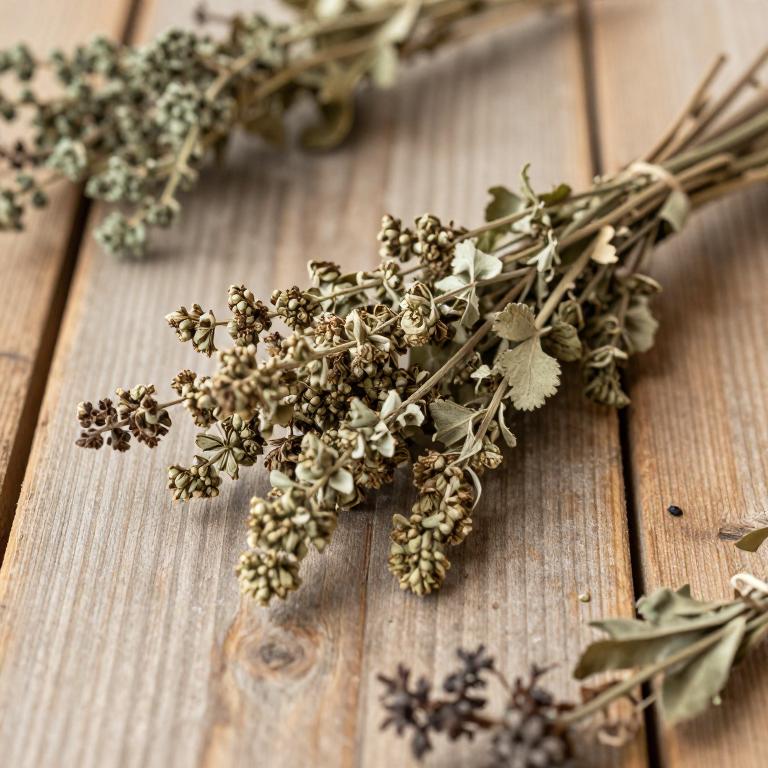
Names and Synonyms
Common Names
- Indian globe thistle
Scientific Names
Accepted name
Echinops echinatusSynonyms
- Sphaerocephalus echinatus
Sources: Wikidata, Catalogue of Life
Taxonomical Classification
This plant belongs to the kingdom Plantae and the phylum Streptophyta, falling under the class Equisetopsida and subclass Magnoliidae. Within the order Asterales, it is classified under the family Asteraceae. Specifically, Echinops echinatus is identified by the genus Echinops.
| Rank | Classification |
|---|---|
| Kingdom | Plantae |
| Phylum | Streptophyta |
| Class | Equisetopsida |
| Subclass | Magnoliidae |
| Order | Asterales |
| Family | Asteraceae |
| Genus | Echinops |
Sources: The World Checklist of Vascular Plants (WCVP)
Distribution
This plant exhibits a specific distribution pattern across several key regions in Asia. Within the Indian Subcontinent, it is widely found throughout the country of India. Its range also extends across the neighboring territory of Pakistan. Additionally, the species is native to the mountainous areas of the West Himalaya. Finally, its geographical presence reaches into Indo-China, specifically within Myanmar.
| Region | Area |
|---|---|
| Indian Subcontinent | India |
| Indian Subcontinent | Pakistan |
| Indian Subcontinent | West Himalaya |
| Indo-China | Myanmar |
Sources: The World Checklist of Vascular Plants (WCVP)
Botanical Identification
Life history
The life history of Echinops echinatus is characterized by a variable lifecycle that can manifest as an annual, biennial, or perennial depending on environmental conditions and local ecological factors. The biological progression begins with seed germination, typically following a period of vernalization or specific temperature shifts, leading to the development of a basal rosette of leaves. As the plant matures through its developmental stages, it allocates energy toward the production of distinctive, spiny, globe-like inflorescences. The duration of its life cycle is heavily influenced by resource availability and climate, allowing it to function as a quick-growing annual in certain habitats or establish more permanent, perennial structures in more stable environments. This flexibility in its lifecycle ensures reproductive success across diverse landscapes by adapting its growth duration to the prevailing seasonal patterns.
- Lifecycle :
- annual
Morphology
The morphology of Echinops echinatus is characterized by its growth form as a non-woody herb, functioning as a self-supporting plant that does not require climbing structures. As an independent species, it does not exhibit parasitic behavior, relying on its own physiological processes for nutrient acquisition. Regarding its habitat and moisture requirements, the plant is categorized as terrestrial, distinguishing it from aquatic or semiaquatic species. Its structure is defined by a herbaceous habit, lacking any woody tissue, which allows it to maintain a flexible yet upright presence within its ecosystem.
- Aquatic :
- terrestrial
- Climber :
- self-supporting
- Growth form :
- herb
- Parasite :
- independent
- Woodiness :
- non-woody
Sources: Global Inventory of Floras and Traits (GIFT)
Plant Parts
Echinops echinatus has 1 reported plant parts identified across 1 scientific publications and several other databases that are studied for medicinal purposes. The most consistently reported plant part include root.
| Plant part | Supporting sources | Consensus |
|---|---|---|
| Root | 1 supporting sources | ★☆☆☆☆ |
Root
- Organic letters
Chemicals
Echinops echinatus has 23 reported phytochemicals identified across 1 scientific publications and several other databases. The most consistently reported chemicals include 5-HYDROXYMETHYLFURFURAL, 7-Hydroxyisoflavone, CHLOROGENIC ACID, DODECANOIC ACID, Fatty acids.
| Chemical | Supporting sources | Consensus |
|---|---|---|
| 5-HYDROXYMETHYLFURFURAL | 1 supporting sources | ★☆☆☆☆ |
| 7-Hydroxyisoflavone | 1 supporting sources | ★☆☆☆☆ |
| CHLOROGENIC ACID | 1 supporting sources | ★☆☆☆☆ |
| DODECANOIC ACID | 1 supporting sources | ★☆☆☆☆ |
| Fatty acids | 1 supporting sources | ★☆☆☆☆ |
| Flavonoid | 1 supporting sources | ★☆☆☆☆ |
| Flavonoids | 1 supporting sources | ★☆☆☆☆ |
| Glycosides | 1 supporting sources | ★☆☆☆☆ |
| Kaempferol 3-O-alpha-L-rhamnoside | 1 supporting sources | ★☆☆☆☆ |
| Lupeol | 1 supporting sources | ★☆☆☆☆ |
5-HYDROXYMETHYLFURFURAL
- Current research in microbial sciences
7-Hydroxyisoflavone
- Journal of Asian natural products research
CHLOROGENIC ACID
- Genes and environment : the official journal of the Japanese Environmental Mutagen Society
DODECANOIC ACID
- Current research in microbial sciences
Fatty acids
- Mutation research. Genetic toxicology and environmental mutagenesis
Flavonoid
- Genes and environment : the official journal of the Japanese Environmental Mutagen Society
Flavonoids
- Current research in microbial sciences
Glycosides
- Current research in microbial sciences
Kaempferol 3-O-alpha-L-rhamnoside
- Journal of Asian natural products research
Lupeol
- Current research in microbial sciences
Activities
Echinops echinatus has 26 reported activities identified across 1 scientific publications and several other databases. The most consistently reported activities include Antibacterial, Anticancer, Antioxidant, Anthelmintic, AntiHIV.
| Activity | Supporting sources | Consensus |
|---|---|---|
| Antibacterial | 2 supporting sources | ★☆☆☆☆ |
| Anticancer | 2 supporting sources | ★☆☆☆☆ |
| Antioxidant | 2 supporting sources | ★☆☆☆☆ |
| Anthelmintic | 1 supporting sources | ★☆☆☆☆ |
| AntiHIV | 1 supporting sources | ★☆☆☆☆ |
| Antiapoptotic | 1 supporting sources | ★☆☆☆☆ |
| Anticarcinomic | 1 supporting sources | ★☆☆☆☆ |
| Anticonvulsant | 1 supporting sources | ★☆☆☆☆ |
| Antiedemic | 1 supporting sources | ★☆☆☆☆ |
| Antiinflammatory | 1 supporting sources | ★☆☆☆☆ |
Antibacterial
- Dr. Duke
- Neurochemical research
Anticancer
- Dr. Duke
- Current research in microbial sciences
Antioxidant
- Chemistry & biodiversity
- Neurochemical research
Anthelmintic
- Dr. Duke
AntiHIV
- Dr. Duke
Antiapoptotic
- Neurochemical research
Anticarcinomic
- Dr. Duke
Anticonvulsant
- Neurochemical research
Antiedemic
- Dr. Duke
Antiinflammatory
- Dr. Duke
Preparations
Echinops echinatus has 8 reported preparations identified across 1 scientific publications and several other databases. The most consistently reported preparations include E. spinosus extract, Ethanol extracts, aqueous fraction, crude extract, crude extract of Echinops spinosus (CEES).
| Preparation | Supporting sources | Consensus |
|---|---|---|
| E. spinosus extract | 1 supporting sources | ★☆☆☆☆ |
| Ethanol extracts | 1 supporting sources | ★☆☆☆☆ |
| Aqueous fraction | 1 supporting sources | ★☆☆☆☆ |
| Crude extract | 1 supporting sources | ★☆☆☆☆ |
| Crude extract of echinops spinosus (cees) | 1 supporting sources | ★☆☆☆☆ |
| Ethanol extract | 1 supporting sources | ★☆☆☆☆ |
| Its butanol fraction (bfes) | 1 supporting sources | ★☆☆☆☆ |
| Whole plant | 1 supporting sources | ★☆☆☆☆ |
E. spinosus extract
- Mutation research. Genetic toxicology and environmental mutagenesis
Ethanol extracts
- Pakistan journal of pharmaceutical sciences
Aqueous fraction
- Genes and environment : the official journal of the Japanese Environmental Mutagen Society
Crude extract
- Genes and environment : the official journal of the Japanese Environmental Mutagen Society
Crude extract of echinops spinosus (cees)
- Chemistry & biodiversity
Ethanol extract
- Journal of ethnopharmacology
Its butanol fraction (bfes)
- Chemistry & biodiversity
Whole plant
- Journal of Asian natural products research