Echinops davuricus
Echinops davuricus · Accepted scientific name
Scientific literature: Very Sparse (17 studies) · ★☆☆☆☆
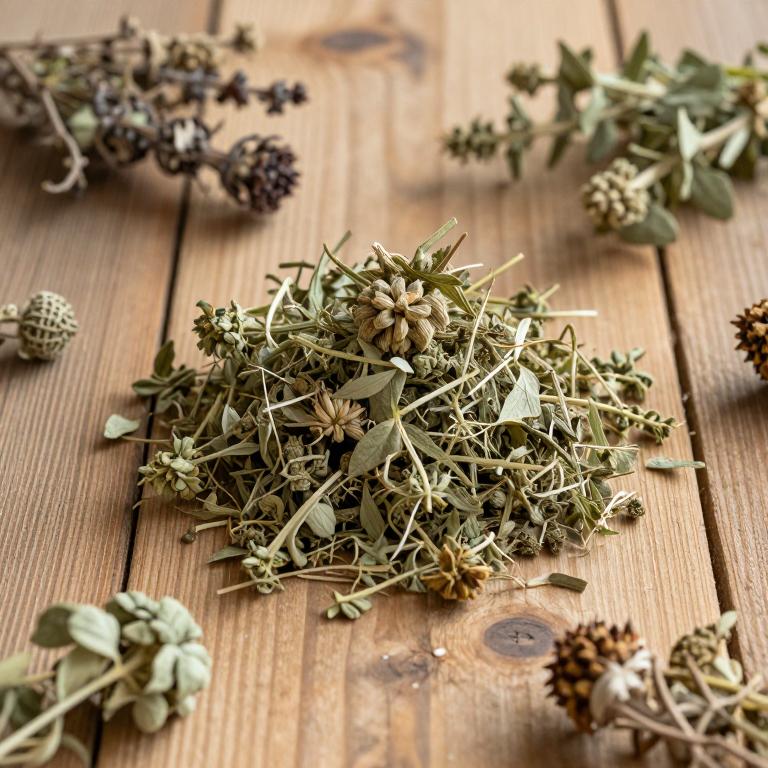
, scientifically known as Echinops davuricus, is a resilient medicinal herb celebrated in traditional practices for its therapeutic potential. Often characterized by its unique spherical flower heads, this plant is frequently utilized to support immune function, reduce inflammation, and promote overall vitality through its rich concentration of bioactive compounds.
- Family
- Asteraceae
- Native range
- Asia-Temperate
- Parts used
- Root · Leaf
- Common names
- Not available
- Scientific synonyms
- Echinops Latifolius · Echinops Latifolius F. Angustilobus · 7 more
Names and Synonyms
Scientific Names
Accepted name
Echinops davuricusSynonyms
- Echinops latifolius
- Echinops latifolius f. angustilobus
- Echinops davuricus var. latilobus
- Echinops davuricus var. angustilobus
- Sphaerocephalus latifolius
- Echinops latifolius var. manshuricus
- Spaerocephalus dahuricus
- Echinops manshuricus
- Echinops pratensis
Sources: Wikidata
Taxonomical Classification
This plant belongs to the kingdom Plantae and is classified within the phylum Streptophyta and the class Equisetopsida. It is further organized under the subclass Magnoliidae and the order Asterales. Finally, it is a member of the family Asteraceae within the genus Echinops.
| Rank | Classification |
|---|---|
| Kingdom | Plantae |
| Phylum | Streptophyta |
| Class | Equisetopsida |
| Subclass | Magnoliidae |
| Order | Asterales |
| Family | Asteraceae |
| Genus | Echinops |
Sources: The World Checklist of Vascular Plants (WCVP)
Distribution
This plant is widely distributed across various regions of Northern Asia. In the vast territory of Siberia, it can be found specifically in Buryatiya, Chita, and Irkutsk. Its range extends further east into the Russian Far East, where it inhabits the Amur region. Additionally, the species is present in the northern parts of China, particularly within Inner Mongolia. These diverse locations highlight the specific environmental preferences of this medicinal species.
| Region | Area |
|---|---|
| Siberia | Buryatiya |
| Siberia | Chita |
| Siberia | Irkutsk |
| Russian Far East | Amur |
| China | Inner Mongolia |
| China | Manchuria |
| China | China North-Central |
| China | China Southeast |
| Mongolia | Mongolia |
| Eastern Asia | Korea |
Sources: The World Checklist of Vascular Plants (WCVP)
Botanical Identification
Ecology
The ecology of Echinops davuricus is characterized by its ability to thrive across a broad altitudinal spectrum and diverse terrains. It is primarily found inhabiting mountainous regions, steppes, and stony places, suggesting an adaptability to both rugged and semi-arid environments. The species exhibits a significant elevational range, occurring from as low as 120 m AMSL to a maximum altitude of 2200 m AMSL, with a mean elevation of approximately 1160 m AMSL. This wide distribution across varying altitudes and substrates indicates a resilient ecological profile capable of enduring the fluctuating climatic conditions typical of montane and steppe ecosystems.
- Elevational range max:
- 2200 m AMSL
- Elevational range mean:
- 1160 m AMSL
- Elevational range min:
- 120 m AMSL
- Habitat :
- mountains, steppe, stony places
Life history
The life history of Echinops davuricus is characterized by its status as a perennial plant, allowing it to persist through multiple growing seasons. As a perennial species, it maintains a robust root system that enables the plant to survive dormant periods and re-emerge annually. Its developmental stages involve a cyclical pattern of vegetative growth and reproductive phases, where it establishes itself firmly in its habitat before transitioning into a flowering state. This long-term life strategy supports its ability to endure environmental fluctuations, ensuring continuous presence within its ecological niche through repeated cycles of growth and senescence.
- Lifecycle :
- perennial
Morphology
The morphology of Echinops davuricus is characterized by its growth form as a non-woody herb, appearing as both a general herb and a forb. This species is a terrestrial, self-supporting plant that functions independently, as it is not a parasite. In terms of stature, it maintains a relatively low profile, with a plant height that typically ranges from a minimum of 0.3 m to a maximum of 0.6 m, resulting in an average height of approximately 0.45 m.
- Aquatic :
- terrestrial
- Climber :
- self-supporting
- Growth form :
- herb
- Parasite :
- independent
- Plant height max:
- 0.6 m
- Plant height mean:
- 0.45 m
- Plant height min:
- 0.3 m
- Woodiness :
- non-woody
Physiology
The physiology of Echinops davuricus is characterized by a C3 photosynthetic pathway, which governs its carbon fixation processes and metabolic efficiency. The vegetative architecture is defined by its leaf morphology, where the dimensions exhibit significant variability to optimize light interception and gas exchange. The leaves typically maintain a mean length of 17.5 cm, ranging from a minimum of 15 cm to a maximum of 20 cm. Complementing this longitudinal growth, the leaf width demonstrates a substantial breadth, with a mean width of 13 cm, ranging from a minimum of 8 cm to a maximum of 18 cm. These morphological parameters reflect a specialized physiological adaptation to its environmental niche, balancing surface area for photosynthesis with structural integrity.
- Leaf length max:
- 20 cm
- Leaf length mean:
- 17.5 cm
- Leaf length min:
- 15 cm
- Leaf width max:
- 18 cm
- Leaf width mean:
- 13 cm
- Leaf width min:
- 8 cm
- Photosynthetic pathway :
- C3
Reproduction
The reproduction of Echinops davuricus is characterized by its bisexual floral structure, which facilitates sexual reproduction. The flowering period for this species is concentrated in May, marking both the beginning and the end of its bloom cycle. Following pollination, the plant produces fruits that are highly uniform in size, with a minimum, mean, and maximum length all recorded at approximately 0.7 cm. These fruits are disseminated via an anemochorous dispersal syndrome, meaning they rely on wind currents to transport seeds to new locations.
- Dispersal syndrome :
- anemochorous
- Flowering time :
- May
- Fruit length max:
- 0.7 cm
- Reproduction sexual :
- bisexual
Sources: Global Inventory of Floras and Traits (GIFT)
Plant Parts
Echinops davuricus has 3 reported plant parts identified across 4 scientific publications and several other databases that are studied for medicinal purposes. The most consistently reported plant part include root, leaf, stem.
| Plant part | Supporting sources | Consensus |
|---|---|---|
| Root | 2 supporting sources | ★☆☆☆☆ |
| Leaf | 1 supporting sources | ★☆☆☆☆ |
| Stem | 1 supporting sources | ★☆☆☆☆ |
Root
- Zhongguo Zhong yao za zhi = Zhongguo zhongyao zazhi = China journal of Chinese materia medica
- Acta pharmaceutica Hungarica
Leaf
- Biological research
Stem
- Acta pharmaceutica Hungarica
Chemicals
Echinops davuricus has 7 reported phytochemicals identified across 4 scientific publications and several other databases. The most consistently reported chemicals include Flavonoids, Thiophenes, 5-(3-hydroxmethyl-3-isovaleroyloxyprop-1-ynyl)-2,2'-bithiophene, 5-(3-hydroxy-4-isovaleroyloxybut-1-ynyl)-2,2'-bithiophene, H2O2.
| Chemical | Supporting sources | Consensus |
|---|---|---|
| Flavonoids | 2 supporting sources | ★☆☆☆☆ |
| Thiophenes | 2 supporting sources | ★☆☆☆☆ |
| 5-(3-hydroxmethyl-3-isovaleroyloxyprop-1-ynyl)-2,2'-bithiophene | 1 supporting sources | ★☆☆☆☆ |
| 5-(3-hydroxy-4-isovaleroyloxybut-1-ynyl)-2,2'-bithiophene | 1 supporting sources | ★☆☆☆☆ |
| H2O2 | 1 supporting sources | ★☆☆☆☆ |
| NO2- | 1 supporting sources | ★☆☆☆☆ |
| triterpenoids | 1 supporting sources | ★☆☆☆☆ |
Flavonoids
- Biological research
- Molecules (Basel, Switzerland)
Thiophenes
- Journal of Asian natural products research
- Molecules (Basel, Switzerland)
5-(3-hydroxmethyl-3-isovaleroyloxyprop-1-ynyl)-2,2'-bithiophene
- Journal of Asian natural products research
5-(3-hydroxy-4-isovaleroyloxybut-1-ynyl)-2,2'-bithiophene
- Journal of Asian natural products research
H2O2
- Recent patents on food, nutrition & agriculture
NO2-
- Recent patents on food, nutrition & agriculture
triterpenoids
- Molecules (Basel, Switzerland)
Activities
Echinops davuricus has 2 reported activities identified across 4 scientific publications and several other databases. The most consistently reported activities include Antifungal, Antitumor.
| Activity | Supporting sources | Consensus |
|---|---|---|
| Antifungal | 1 supporting sources | ★☆☆☆☆ |
| Antitumor | 1 supporting sources | ★☆☆☆☆ |
Antifungal
- Molecules (Basel, Switzerland)
Antitumor
- Molecules (Basel, Switzerland)
Preparations
Echinops davuricus has 2 reported preparations identified across 4 scientific publications and several other databases. The most consistently reported preparations include dried root, leaves.
| Preparation | Supporting sources | Consensus |
|---|---|---|
| Dried root | 1 supporting sources | ★☆☆☆☆ |
| Leaves | 1 supporting sources | ★☆☆☆☆ |
Dried root
- Zhongguo Zhong yao za zhi = Zhongguo zhongyao zazhi = China journal of Chinese materia medica
Leaves
- Biological research