Headed globe thistle
Echinops cephalotes · Accepted scientific name
Scientific literature: Very Sparse (13 studies) · ★☆☆☆☆
Headed globe thistle, scientifically known as Echinops cephalotes, is a striking perennial native to Southern Europe. Renowned for its dramatic, spherical blue flower heads, this hardy plant serves both ornamental and medicinal purposes. It is traditionally valued in herbal practices for its potential properties in supporting overall wellness and vitality.
- Family
- Asteraceae
- Native range
- Asia-Temperate
- Parts used
- Not available
- Common names
- Headed Globe Thistle
- Scientific synonyms
- Sphaerocephalus Cephalotes · Echinops Candidus · 1 more
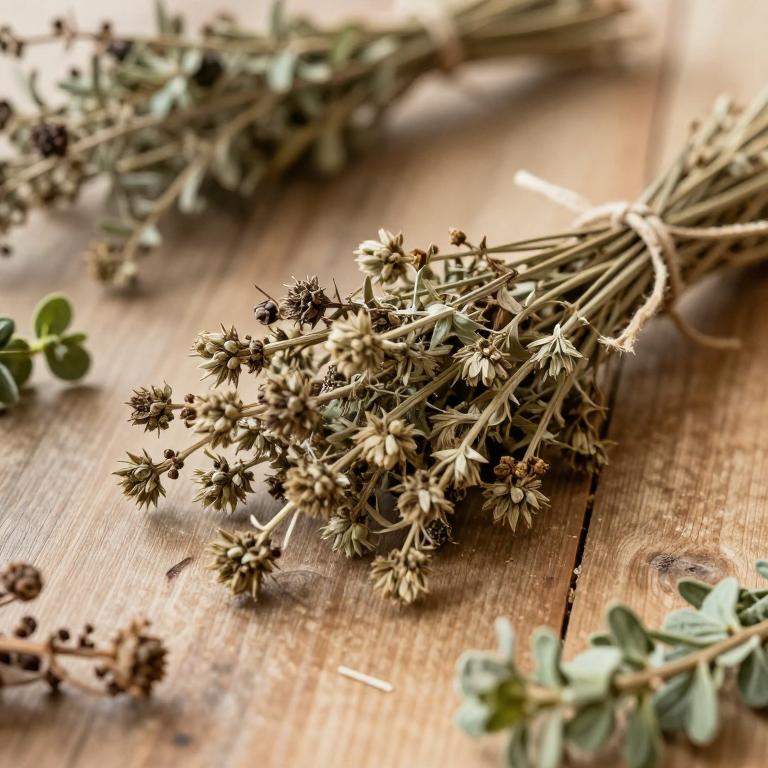
Names and Synonyms
Common Names
- Headed globe thistle
Scientific Names
Accepted name
Echinops cephalotesSynonyms
- Sphaerocephalus cephalotes
- Echinops candidus
- Echinops stapfianus
Sources: Wikidata, Catalogue of Life
Taxonomical Classification
This plant belongs to the kingdom Plantae and the phylum Streptophyta, falling under the class Equisetopsida and subclass Magnoliidae. Within the order Asterales, it is classified under the family Asteraceae and the genus Echinops. Specifically, Echinops cephalotes represents a distinct species within this botanical hierarchy.
| Rank | Classification |
|---|---|
| Kingdom | Plantae |
| Phylum | Streptophyta |
| Class | Equisetopsida |
| Subclass | Magnoliidae |
| Order | Asterales |
| Family | Asteraceae |
| Genus | Echinops |
Sources: The World Checklist of Vascular Plants (WCVP)
Distribution
This plant exhibits a specific geographical distribution spanning across several regions in Asia. Within Western Asia, it can be found growing in the country of Iran. Moving toward the Indian Subcontinent, its presence extends into the territory of Pakistan. These locations represent the primary areas where the species is naturally documented. Therefore, its habitat is concentrated within these specific continental zones.
| Region | Area |
|---|---|
| Western Asia | Iran |
| Indian Subcontinent | Pakistan |
Sources: The World Checklist of Vascular Plants (WCVP)
Chemicals
Echinops cephalotes has 5 reported phytochemicals identified across 0 scientific publications and several other databases. The most consistently reported chemicals include CALCIUM, MAGNESIUM, POTASSIUM, SODIUM, sugar.
| Chemical | Supporting sources | Consensus |
|---|---|---|
| CALCIUM | 1 supporting sources | ★☆☆☆☆ |
| MAGNESIUM | 1 supporting sources | ★☆☆☆☆ |
| POTASSIUM | 1 supporting sources | ★☆☆☆☆ |
| SODIUM | 1 supporting sources | ★☆☆☆☆ |
| sugar | 1 supporting sources | ★☆☆☆☆ |
CALCIUM
- Journal of ethnopharmacology
MAGNESIUM
- Journal of ethnopharmacology
POTASSIUM
- Journal of ethnopharmacology
SODIUM
- Journal of ethnopharmacology
sugar
- Journal of ethnopharmacology
Activities
Echinops cephalotes has 4 reported activities identified across 0 scientific publications and several other databases. The most consistently reported activities include Antihyperglycemic, Antiobesity, Cardioprotective, Hepatoprotective.
| Activity | Supporting sources | Consensus |
|---|---|---|
| Antihyperglycemic | 1 supporting sources | ★☆☆☆☆ |
| Antiobesity | 1 supporting sources | ★☆☆☆☆ |
| Cardioprotective | 1 supporting sources | ★☆☆☆☆ |
| Hepatoprotective | 1 supporting sources | ★☆☆☆☆ |
Antihyperglycemic
- Journal of ethnopharmacology
Antiobesity
- Journal of ethnopharmacology
Cardioprotective
- Biomedicine & pharmacotherapy = Biomedecine & pharmacotherapie
Hepatoprotective
- Journal of ethnopharmacology
Conditions
Echinops cephalotes has 4 reported investigations on conditions identified across 0 scientific publications and several other databases. The most consistently reported conditions include infectious diseases, inflammation, oxidative stress, pain.
| Condition | Supporting sources | Consensus |
|---|---|---|
| Infectious diseases | 1 supporting sources | ★☆☆☆☆ |
| Inflammation | 1 supporting sources | ★☆☆☆☆ |
| Oxidative stress | 1 supporting sources | ★☆☆☆☆ |
| Pain | 1 supporting sources | ★☆☆☆☆ |
Infectious diseases
- Journal of ethnopharmacology
Inflammation
- Journal of ethnopharmacology
Oxidative stress
- Biomedicine & pharmacotherapy = Biomedecine & pharmacotherapie
Pain
- Journal of ethnopharmacology
Preparations
Echinops cephalotes has 2 reported preparations identified across 0 scientific publications and several other databases. The most consistently reported preparations include aqueous extract, aqueous extracts.
| Preparation | Supporting sources | Consensus |
|---|---|---|
| Aqueous extract | 1 supporting sources | ★☆☆☆☆ |
| Aqueous extracts | 1 supporting sources | ★☆☆☆☆ |
Aqueous extract
- Biomedicine & pharmacotherapy = Biomedecine & pharmacotherapie
Aqueous extracts
- Journal of ethnopharmacology