Echinophora tenuifolia
Echinophora tenuifolia · Accepted scientific name
Scientific literature: Very Sparse (7 studies) · ★☆☆☆☆
Echinophora tenuifolia, scientifically known as Echinophora tenuifolia, is a perennial medicinal herb native to the arid regions of Central Asia. Renowned in traditional medicine, it is primarily valued for its potent antioxidant, anti-inflammatory, and neuroprotective properties, making it a significant subject in modern pharmacological research for brain health.
- Family
- Apiaceae
- Native range
- Europe
- Parts used
- Not available
- Common names
- Not available
- Scientific synonyms
- Not available
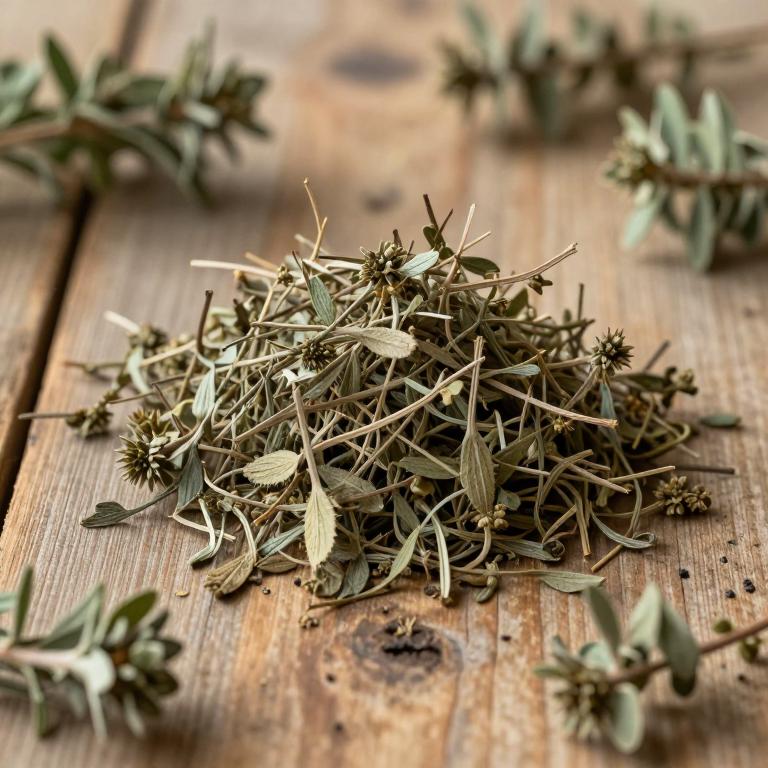
Names and Synonyms
Scientific Names
Accepted name
Echinophora tenuifoliaSources: Wikidata
Taxonomical Classification
This plant belongs to the kingdom Plantae and is classified under the phylum Streptophyta and class Equisetopsida. Within the subclass Magnoliidae, it is further categorized under the order Apiales and the family Apiaceae. Finally, it is identified by the genus Echinophora, specifically as the species Echinophora tenuifolia.
| Rank | Classification |
|---|---|
| Kingdom | Plantae |
| Phylum | Streptophyta |
| Class | Equisetopsida |
| Subclass | Magnoliidae |
| Order | Apiales |
| Family | Apiaceae |
| Genus | Echinophora |
Sources: The World Checklist of Vascular Plants (WCVP)
Distribution
This plant exhibits a specific geographical range spanning across parts of Europe and Western Asia. In Southeastern Europe, it can be found growing within the country of Italy. Its distribution also extends to the Mediterranean island of Sicilia, which is located in Southeastern Europe. Moving eastward, the species is also documented across Western Asia. Specifically, its presence is noted within the territories of Lebanon and Syria.
| Region | Area |
|---|---|
| Southeastern Europe | Italy |
| Southeastern Europe | Sicilia |
| Western Asia | Lebanon-Syria |
Sources: The World Checklist of Vascular Plants (WCVP)
Botanical Identification
Life history
The life history of Echinophora tenuifolia is characterized by its classification as a hemicryptophyte, a life form where the perennating buds are located at or just below the soil surface, protected by leaf litter or substrate. This biological strategy allows the plant to survive seasonal fluctuations and environmental stressors by maintaining its regenerative capacity near the ground level. Within the broader spectrum of botanical growth forms, it functions as a hemicryptophyte, distinguishing it from other categories such as phanerophytes, chamaephytes, cryptophytes, or therophytes. This specific life history enables the plant to re-emerge following periods of dormancy, utilizing its protected buds to initiate new seasonal growth from the soil interface.
- Life form :
- hemicryptophyte
Morphology
The morphology of Echinophora tenuifolia is characterized by a growth habit that adapts to varying moisture levels, manifesting as an aquaic, semiaquatic, or terrestrial plant depending on its immediate environment. The plant typically features slender, somewhat herbaceous stems that may exhibit a sprawling or upright growth pattern. Its leaves are generally arranged in an opposite or alternate fashion, often displaying a narrow, lanceolate, or linear shape with finely serrated margins, consistent with its specific epithet. The reproductive structures consist of small, inconspicuous flowers that develop into distinctive, bristly or spiny fruits, which are a hallmark of the genus. The root system is adapted to stabilize the plant across its diverse ecological niches, ranging from damp, marshy soils to more stable terrestrial substrates.
- Aquatic :
- terrestrial
Sources: Global Inventory of Floras and Traits (GIFT)
Chemicals
Echinophora tenuifolia has 7 reported phytochemicals identified across 0 scientific publications and several other databases. The most consistently reported chemicals include CHLOROGENIC ACID, RUTIN, caffeic acid, ferulic acid, p-coumaric acid.
| Chemical | Supporting sources | Consensus |
|---|---|---|
| CHLOROGENIC ACID | 1 supporting sources | ★☆☆☆☆ |
| RUTIN | 1 supporting sources | ★☆☆☆☆ |
| caffeic acid | 1 supporting sources | ★☆☆☆☆ |
| ferulic acid | 1 supporting sources | ★☆☆☆☆ |
| p-coumaric acid | 1 supporting sources | ★☆☆☆☆ |
| rosmarinic acid | 1 supporting sources | ★☆☆☆☆ |
| salicylic acid | 1 supporting sources | ★☆☆☆☆ |
CHLOROGENIC ACID
- Antioxidants (Basel, Switzerland)
RUTIN
- Antioxidants (Basel, Switzerland)
caffeic acid
- Antioxidants (Basel, Switzerland)
ferulic acid
- Antioxidants (Basel, Switzerland)
p-coumaric acid
- Antioxidants (Basel, Switzerland)
rosmarinic acid
- Antioxidants (Basel, Switzerland)
salicylic acid
- Antioxidants (Basel, Switzerland)
Preparations
Echinophora tenuifolia has 1 reported preparations identified across 0 scientific publications and several other databases. The most consistently reported preparations include extract of E. tenuifolia.
| Preparation | Supporting sources | Consensus |
|---|---|---|
| Extract of e. tenuifolia | 1 supporting sources | ★☆☆☆☆ |
Extract of e. tenuifolia
- Journal of fluorescence