purple cone flower
Echinacea · Accepted scientific name
Scientific literature: Sparse (75 studies) · ★★☆☆☆
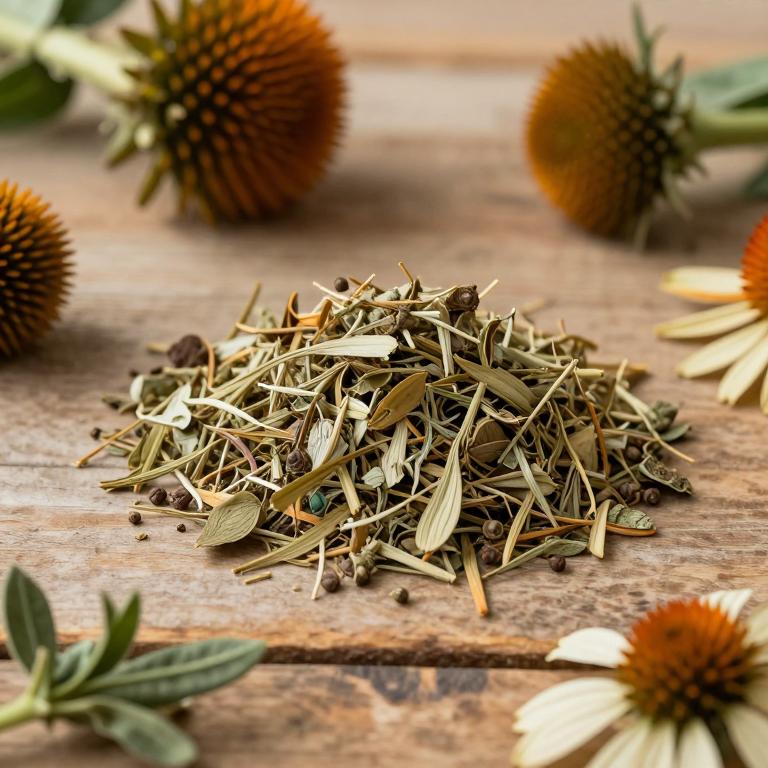
Purple cone flower, scientifically known as Echinacea, is a renowned perennial herb prized for its therapeutic properties. Native to North America, this resilient plant is most famous for its ability to support the immune system. Often used to combat common colds, Echinacea remains a staple in natural wellness traditions worldwide.
- Family
- Asteraceae
- Native range
- Europe
- Parts used
- Root · Flower
- Common names
- Purple Coneflower · Coneflowers · 1 more
- Scientific synonyms
- Helichroa
Names and Synonyms
Common Names
- purple coneflower
- coneflowers
- Coneflower
Scientific Names
Accepted name
EchinaceaSynonyms
- Helichroa
Regional and Traditional Names
Spanish:
- Equináceas
German:
- Sonnenhüte
- Sonnenhut
- Sonnenhut
- Sonnenhüte
French:
- Échinacées
Sources: Wikidata, Catalogue of Life
Taxonomical Classification
This plant belongs to the kingdom Plantae within the phylum Streptophyta and the class Equisetopsida. It is classified under the subclass Magnoliidae in the order Asterales and is a member of the Asteraceae family. Ultimately, its taxonomic identity is defined by the genus Echinacea.
| Rank | Classification |
|---|---|
| Kingdom | Plantae |
| Phylum | Streptophyta |
| Class | Equisetopsida |
| Subclass | Magnoliidae |
| Order | Asterales |
| Family | Asteraceae |
| Genus | Echinacea |
Sources: The World Checklist of Vascular Plants (WCVP)
Distribution
This plant is found across several distinct regions of the European continent. In Middle Europe, its presence is documented in Austria, Germany, and Poland. Moving toward the west, the species can also be located in Southwestern Europe within France. Additionally, its range extends into the Baltic States located in Eastern Europe. This diverse distribution demonstrates the plant's ability to thrive in various European environments.
| Region | Area |
|---|---|
| Middle Europe | Austria |
| Middle Europe | Germany |
| Middle Europe | Poland |
| Southwestern Europe | France |
| Eastern Europe | Baltic States |
| Eastern Europe | Krym |
| Eastern Europe | Ukraine |
| Central Asia | Kazakhstan |
| Central Asia | Turkmenistan |
| Central Asia | Tadzhikistan |
Sources: The World Checklist of Vascular Plants (WCVP)
Plant Parts
Echinacea has 4 reported plant parts identified across 15 scientific publications and several other databases that are studied for medicinal purposes. The most consistently reported plant part include root, flower, leaf, stem.
| Plant part | Supporting sources | Consensus |
|---|---|---|
| Root | 12 supporting sources | ★★★★★ |
| Flower | 1 supporting sources | ★☆☆☆☆ |
| Leaf | 1 supporting sources | ★☆☆☆☆ |
| Stem | 1 supporting sources | ★☆☆☆☆ |
Root
- Journal of leukocyte biology
- Analytical and bioanalytical chemistry
- Reviews on recent clinical trials
- The American journal of clinical nutrition
- Forschende Komplementarmedizin und klassische Naturheilkunde = Research in complementary and natural classical medicine
View 7 additional sources
- Journal of functional foods
- Current medical science
- Journal of agricultural and food chemistry
- Journal of AOAC International
- Natural product reports
- Advances in therapy
- Journal of alternative and complementary medicine (New York, N.Y.)
Flower
- Current medical science
Leaf
- Current medical science
Stem
- Current medical science
Chemicals
Echinacea has 9 reported phytochemicals identified across 15 scientific publications and several other databases. The most consistently reported chemicals include Echinacoside, Cichoric Acid, CHLOROGENIC ACID, Phenolic acid, betaine.
| Chemical | Supporting sources | Consensus |
|---|---|---|
| Echinacoside | 4 supporting sources | ★★☆☆☆ |
| Cichoric Acid | 2 supporting sources | ★☆☆☆☆ |
| CHLOROGENIC ACID | 1 supporting sources | ★☆☆☆☆ |
| Phenolic acid | 1 supporting sources | ★☆☆☆☆ |
| betaine | 1 supporting sources | ★☆☆☆☆ |
| caffeic acid | 1 supporting sources | ★☆☆☆☆ |
| caftaric acid | 1 supporting sources | ★☆☆☆☆ |
| dodeca-2E,4E,8Z,10Z-tetraenoic acid isobutylamide | 1 supporting sources | ★☆☆☆☆ |
| dodeca-2E,4E-dienoic acid isobutylamide | 1 supporting sources | ★☆☆☆☆ |
Echinacoside
- Journal of leukocyte biology
- OncoTargets and therapy
- Journal of molecular histology
- Journal of voice : official journal of the Voice Foundation
Cichoric Acid
- Analytical and bioanalytical chemistry
- Forschende Komplementarmedizin und klassische Naturheilkunde = Research in complementary and natural classical medicine
CHLOROGENIC ACID
- Analytical and bioanalytical chemistry
Phenolic acid
- Journal of leukocyte biology
betaine
- Die Pharmazie
caffeic acid
- Analytical and bioanalytical chemistry
caftaric acid
- Analytical and bioanalytical chemistry
dodeca-2E,4E,8Z,10Z-tetraenoic acid isobutylamide
- Journal of natural products
dodeca-2E,4E-dienoic acid isobutylamide
- Journal of natural products
Activities
Echinacea has 11 reported activities identified across 15 scientific publications and several other databases. The most consistently reported activities include Antiviral, Immunomodulator, Immunostimulant, Analgesic, Antiaging.
| Activity | Supporting sources | Consensus |
|---|---|---|
| Antiviral | 3 supporting sources | ★★☆☆☆ |
| Immunomodulator | 3 supporting sources | ★★☆☆☆ |
| Immunostimulant | 2 supporting sources | ★☆☆☆☆ |
| Analgesic | 1 supporting sources | ★☆☆☆☆ |
| Antiaging | 1 supporting sources | ★☆☆☆☆ |
| Antibacterial | 1 supporting sources | ★☆☆☆☆ |
| Anticancer | 1 supporting sources | ★☆☆☆☆ |
| Antifungal | 1 supporting sources | ★☆☆☆☆ |
| Antiinflammatory | 1 supporting sources | ★☆☆☆☆ |
| Antioxidant | 1 supporting sources | ★☆☆☆☆ |
Antiviral
- Plants (Basel, Switzerland)
- The American journal of clinical nutrition
- Biomolecules
Immunomodulator
- Journal of ethnopharmacology
- Planta medica
- Advances in therapy
Immunostimulant
- Journal of the American Academy of Dermatology
- Reviews on recent clinical trials
Analgesic
- The American journal of clinical nutrition
Antiaging
- Journal of molecular histology
Antibacterial
- Plants (Basel, Switzerland)
Anticancer
- Journal of molecular histology
Antifungal
- Plants (Basel, Switzerland)
Antiinflammatory
- The American journal of clinical nutrition
Antioxidant
- Journal of leukocyte biology
Conditions
Echinacea has 19 reported investigations on conditions identified across 15 scientific publications and several other databases. The most consistently reported conditions include common cold, upper respiratory infections, upper respiratory tract infections, AIDS, Saccharomyces cerevisiae.
| Condition | Supporting sources | Consensus |
|---|---|---|
| Common cold | 3 supporting sources | ★★☆☆☆ |
| Upper respiratory infections | 2 supporting sources | ★☆☆☆☆ |
| Upper respiratory tract infections | 2 supporting sources | ★☆☆☆☆ |
| Aids | 1 supporting sources | ★☆☆☆☆ |
| Saccharomyces cerevisiae | 1 supporting sources | ★☆☆☆☆ |
| Bacterial infections | 1 supporting sources | ★☆☆☆☆ |
| Breast cancer | 1 supporting sources | ★☆☆☆☆ |
| Bronchitis | 1 supporting sources | ★☆☆☆☆ |
| Cancer | 1 supporting sources | ★☆☆☆☆ |
| Cold- | 1 supporting sources | ★☆☆☆☆ |
Common cold
- Biochemical pharmacology
- The Cochrane database of systematic reviews
- Journal of alternative and complementary medicine (New York, N.Y.)
Upper respiratory infections
- Biochemical pharmacology
- Planta medica
Upper respiratory tract infections
- Journal of the American Academy of Dermatology
- The Cochrane database of systematic reviews
Aids
- Journal of alternative and complementary medicine (New York, N.Y.)
Saccharomyces cerevisiae
- Planta medica
Bacterial infections
- Nutrients
Breast cancer
- Medicines (Basel, Switzerland)
Bronchitis
- Biochemical pharmacology
Cancer
- OncoTargets and therapy
Cold-
- Biomolecules
Preparations
Echinacea has 41 reported preparations identified across 15 scientific publications and several other databases. The most consistently reported preparations include Echinacea extract, extracts, Chizukit, ECHINACEA preparations, Echinacea ethanolic extract.
| Preparation | Supporting sources | Consensus |
|---|---|---|
| Echinacea extract | 2 supporting sources | ★☆☆☆☆ |
| Extracts | 2 supporting sources | ★☆☆☆☆ |
| Chizukit | 1 supporting sources | ★☆☆☆☆ |
| Echinacea preparations | 1 supporting sources | ★☆☆☆☆ |
| Echinacea ethanolic extract | 1 supporting sources | ★☆☆☆☆ |
| Echinacea extracts | 1 supporting sources | ★☆☆☆☆ |
| Echinacea preparations | 1 supporting sources | ★☆☆☆☆ |
| Echinacea root extracts | 1 supporting sources | ★☆☆☆☆ |
| Echinacea tincture | 1 supporting sources | ★☆☆☆☆ |
| Extracts of the plant echinacea | 1 supporting sources | ★☆☆☆☆ |
Echinacea extract
- Planta medica
- Phytomedicine : international journal of phytotherapy and phytopharmacology
Extracts
- Pharmacological research
- Journal of leukocyte biology
Chizukit
- Archives of pediatrics & adolescent medicine
Echinacea preparations
- Planta medica
Echinacea ethanolic extract
- Phytomedicine : international journal of phytotherapy and phytopharmacology
Echinacea extracts
- The Journal of family practice
Echinacea preparations
- Arzneimittel-Forschung
Echinacea root extracts
- Journal of agricultural and food chemistry
Echinacea tincture
- Medicina (Kaunas, Lithuania)
Extracts of the plant echinacea
- The Cochrane database of systematic reviews