Echeveria pallida
Echeveria pallida · Accepted scientific name
Scientific literature: Very Sparse (0 studies) · ★☆☆☆☆
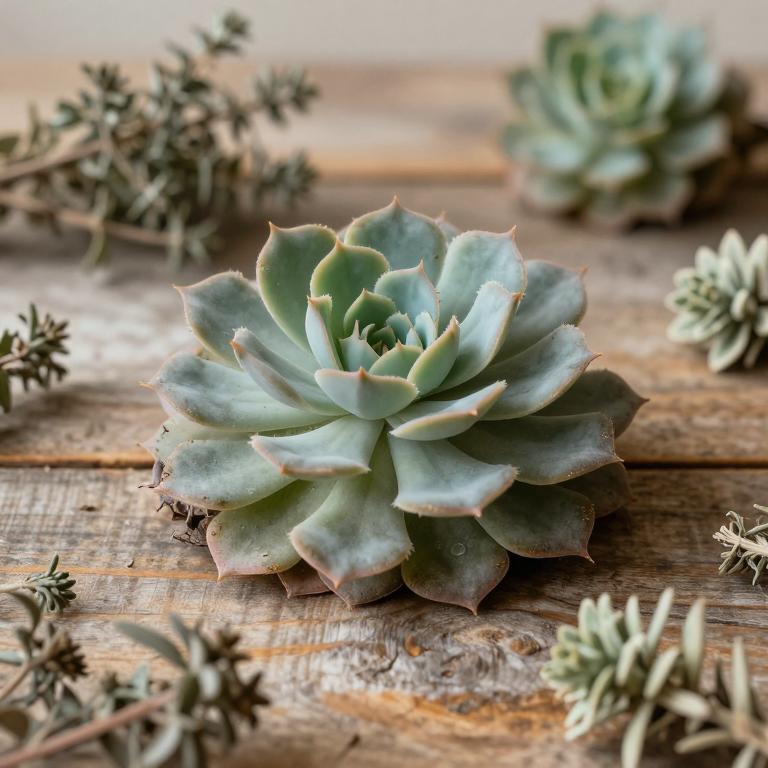
Echeveria pallida is a striking succulent known for its rosette-shaped arrangement of fleshy, pale leaves. In certain traditional applications, the fresh juice extracted directly from the plant's leaf is utilized for its medicinal properties. This botanical extract is specifically studied for its potential role in managing conditions such as pterygium. By harnessing the natural components within the leaf, users seek to leverage the plant's unique biological profile. Understanding the careful preparation of this juice is essential for exploring its therapeutic possibilities.
- Synonyms
- Not available
- Common names
- Not available
- Family
- Crassulaceae
- Distribution
- Africa
- Plant Parts
- Leaf
Classification
Common Names
Echeveria pallida is a striking succulent widely recognized by its enchanting common name, Siempre Viva. This name, which translates to "always living," reflects the plant's remarkable resilience and ability to thrive in diverse environments. Its pale, rosette-shaped leaves capture the light beautifully, making it a centerpiece in many succulent collections. Because of its hardy nature, it serves as a symbol of endurance and everlasting life for many gardeners. Cultivating this species allows enthusiasts to bring a touch of timeless beauty into their homes.
Sources: Catalogue of Life (COL)
Taxonomy
Echeveria pallida belongs to the vast kingdom Plantae, encompassing all known forms of plant life. Within this kingdom, it is classified under the class Equisetopsida. The species is further organized into the order Saxifragales. It finds its specific place within the Crassulaceae family, a group known for its succulent varieties. Finally, this distinct plant is identified by its unique genus, Echeveria.
| Rank | Classification |
|---|---|
| Kingdom | Plantae |
| Phylum | Streptophyta |
| Class | Equisetopsida |
| Subclass | Magnoliidae |
| Order | Saxifragales |
| Family | Crassulaceae |
| Genus | Echeveria |
Sources: The World Checklist of Vascular Plants (WCVP)
Distribution
Geographic Regions
Echeveria pallida is a resilient succulent found throughout various regions of Northern America. Its natural habitat primarily encompasses much of Mexico, where it thrives in diverse environments. Specifically, the species maintains a significant presence throughout the Southeast portions of the country. It also holds a widespread distribution across the Southwest territories of Mexico. These varied locations highlight the plant's ability to adapt to different regional climates.
Sources: The World Checklist of Vascular Plants (WCVP)
Identification
Biological Activities
Compounds
Conditions
Echeveria pallida demonstrates significant therapeutic potential in the management of pterygium, a disease characterized by abnormal corneal overgrowth. Research indicates that an ethanolic extract of this medicinal plant effectively inhibits the adhesion of fibroblasts derived from pterygium tissues. Furthermore, the extract shows a notable ability to suppress the production of neutrophil extracellular traps (NETs). These inhibitory actions occur at concentrations of 100 µg/mL and higher during in-vitro testing. Consequently, the plant serves as a scientifically supported agent for treating the cellular mechanisms associated with pterygium.
Preparations
Echeveria pallida is prepared as a fresh juice by being mechanically extracted from its leaves. This specific preparation can be utilized to lubricate the eyes and assist in the removal of pterygium. Research indicates that the juice and its derived ethanolic extracts hold medicinal potential for ocular health. Specifically, the plant's components demonstrate an ability to inhibit the adhesion of fibroblasts derived from human pterygium. Furthermore, the extracts have shown significant inhibitory activity regarding the production of neutrophil extracellular traps.
Parts used
Echeveria pallida is a medicinal plant that offers significant therapeutic potential for treating ocular conditions such as pterygium. The primary source of its medicinal properties is the fresh juice extracted mechanically from the plant's leaf. Recent research has focused on using an ethanolic extract derived from these leaves to study its effects on human cells. The study specifically examined how this leaf extract influences the adhesion of fibroblasts and the production of neutrophil extracellular traps. Ultimately, the findings provide scientific evidence that the bioactive compounds within the leaf can help inhibit the processes that drive pterygium progression.