Echeveria gibbiflora
Echeveria gibbiflora · Accepted scientific name
Scientific literature: Very Sparse (0 studies) · ★☆☆☆☆
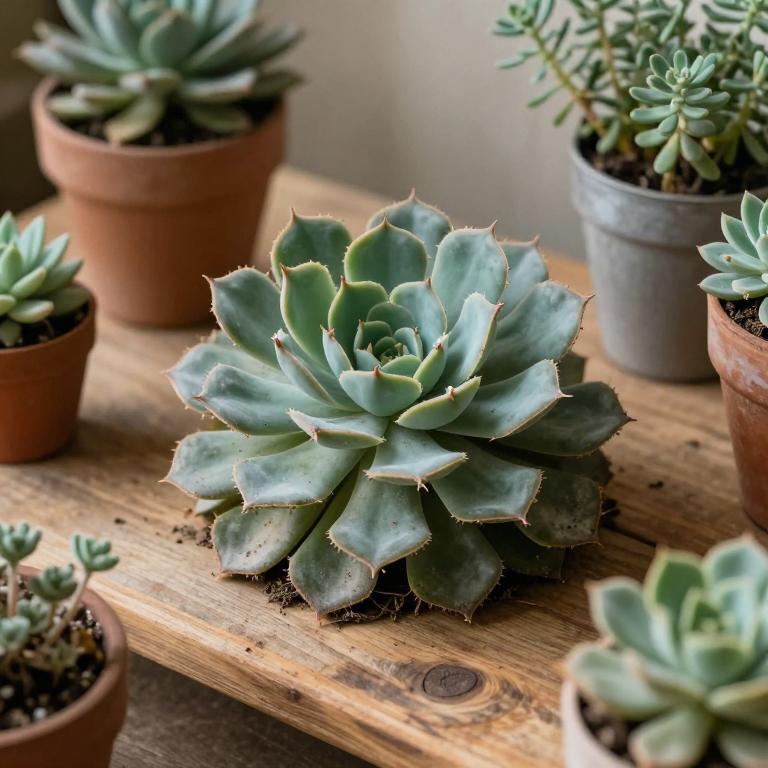
Echeveria gibbiflora is a popular succulent species known for its striking rosette-shaped leaves and resilient nature. Beyond its ornamental appeal, this plant has become a subject of scientific interest due to its diverse phytochemical profile. Recent research has focused on evaluating the therapeutic potential of its aqueous crude extract. Further investigations have also isolated a purified fraction to better understand its specific bioactive properties. These preparations offer promising insights into the medicinal applications of this unique succulent.
- Synonyms
- Echeveria Metallica · Echeveria Metallica Glauca · 4 more
- Common names
- Not available
- Family
- Crassulaceae
- Distribution
- Not available
- Plant Parts
- Not available
Classification
Common Names
Echeveria gibbiflora is a charming succulent that is known by several distinct common names. Depending on the region, enthusiasts may refer to this plant as the jätte-echeveria. It is also frequently called oreja de burro, a name that highlights its unique physical characteristics. These various labels help gardeners identify its beautiful rosette structure in diverse settings. Whether you call it by its formal common name or a local nickname, this species remains a favorite among collectors.
Sources: Catalogue of Life (COL)
Synonyms
Echeveria gibbiflora is a plant known for its complex botanical history and various taxonomic classifications. In botanical literature, it is frequently identified by its synonym, Cotyledon gibbiflora. This species also encompasses specific variations, such as Cotyledon gibbiflora var. metallica and Echeveria gibbiflora var. metallica. Furthermore, the plant has been historically referred to under the names Echeveria metallica and Echeveria grandis. Understanding these overlapping relationships is essential for anyone studying the diverse nomenclature of this succulent.
Sources: The World Checklist of Vascular Plants (WCVP)
Taxonomy
Echeveria gibbiflora is a distinctive succulent that belongs to the vast kingdom Plantae. Within this kingdom, it is classified under the class Equisetopsida and the order Saxifragales. It further resides in the Crassulaceae family, a group well known for its diverse fleshy-leaved species. Specifically, this plant is a member of the genus Echeveria, which defines its unique structural characteristics. Understanding these biological relationships helps botanists place this beautiful specimen within the broader tree of life.
| Rank | Classification |
|---|---|
| Kingdom | Plantae |
| Phylum | Streptophyta |
| Class | Equisetopsida |
| Subclass | Magnoliidae |
| Order | Saxifragales |
| Family | Crassulaceae |
| Genus | Echeveria |
Sources: The World Checklist of Vascular Plants (WCVP)
Distribution
Geographic Regions
Echeveria gibbiflora is a resilient succulent species native to various regions across Northern America. Its natural distribution spans across several key areas within Mexico, making it a staple of the local landscape. Specifically, this plant can be found thriving throughout Mexico Central and stretching into the Mexico Northeast. Additionally, populations are well-established within the Mexico Southwest region. These diverse habitats allow the species to flourish across a wide range of Mexican territories.
Sources: The World Checklist of Vascular Plants (WCVP)
Identification
Biological Activities
Compounds
Conditions
Echeveria gibbiflora aqueous crude extract induces an enhanced agglutination effect that produces cane-like stalk structures instead of standard sperm clusters. The plant extract also causes the disappearance of the external acrosome membrane in guinea-pig spermatozoa. Furthermore, it triggers the dispersion of the acrosomal content through a hypotonic-like effect. This process leads to a significant distension of the plasma membrane over the acrosome region. Consequently, these combined physiological changes result in the formation of a huge 'head-bubble' on the sperm cell.
Preparations
Echeveria gibbiflora is prepared as an aqueous crude extract to facilitate scientific study. From this initial preparation, a purified fraction of the plant is further isolated. This purified fraction is then tested for its specific biological effects on guinea-pig spermatozoa. The research demonstrates that the extract and its fraction can induce significant morphological changes in sperm cells. Ultimately, the preparation of these specific plant components suggests potential applications in male contraceptive development.