Green shrimp plant
Ecbolium viride · Accepted scientific name
Scientific literature: Very Sparse (5 studies) · ★☆☆☆☆
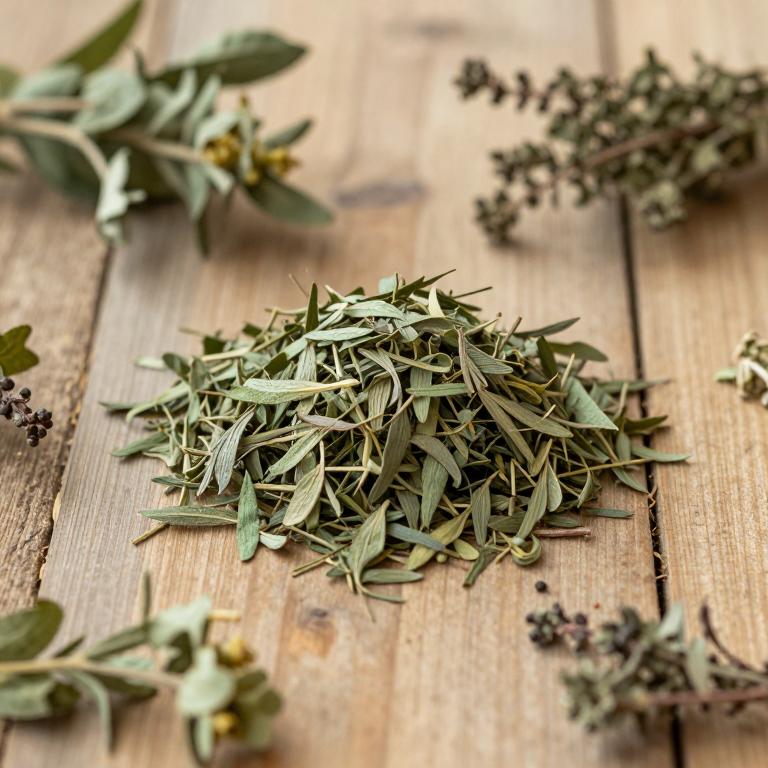
Green shrimp plant, scientifically known as Ecbolium viride, is a striking tropical perennial celebrated for its unique, shrimp-like blossoms. Beyond its ornamental beauty, this plant holds significant ethnobotanical importance, traditionally utilized in various cultures for its diverse medicinal properties, particularly in treating inflammatory conditions and supporting overall wellness.
- Family
- Acanthaceae
- Native range
- Africa
- Parts used
- Leaf
- Common names
- Green Shrimp Plant
- Scientific synonyms
- Ecbolium Viride Var. Chandrasekariana · Ecbolium Linneanum Var. Rotundifolium
Names and Synonyms
Common Names
- Green shrimp plant
Scientific Names
Accepted name
Ecbolium virideSynonyms
- Ecbolium viride var. chandrasekariana
- Ecbolium linneanum var. rotundifolium
Sources: Wikidata, Catalogue of Life
Taxonomical Classification
This plant belongs to the kingdom Plantae and the phylum Streptophyta. Within the class Equisetopsida and subclass Magnoliidae, it is classified under the order Lamiales. Finally, it is a member of the family Acanthaceae and falls under the genus Ecbolium.
| Rank | Classification |
|---|---|
| Kingdom | Plantae |
| Phylum | Streptophyta |
| Class | Equisetopsida |
| Subclass | Magnoliidae |
| Order | Lamiales |
| Family | Acanthaceae |
| Genus | Ecbolium |
Sources: The World Checklist of Vascular Plants (WCVP)
Distribution
This plant is primarily found throughout the Northeast Tropical Africa region. Its natural distribution includes the territories of Djibouti and Eritrea. Furthermore, it can be located across the vast landscapes of Ethiopia and Somalia. The species also extends its reach into the areas of both Sudan and South Sudan. Consequently, its geographical range is concentrated within these specific African nations.
| Region | Area |
|---|---|
| Northeast Tropical Africa | Djibouti |
| Northeast Tropical Africa | Eritrea |
| Northeast Tropical Africa | Ethiopia |
| Northeast Tropical Africa | Somalia |
| Northeast Tropical Africa | Sudan-South Sudan |
| East Tropical Africa | Kenya |
| Arabian Peninsula | Oman |
| Arabian Peninsula | Saudi Arabia |
| Arabian Peninsula | Yemen |
| Indian Subcontinent | Assam |
Sources: The World Checklist of Vascular Plants (WCVP)
Botanical Identification
Life history
The life history of Euphorbia viride is characterized by a perennial lifecycle, allowing the plant to persist through multiple growing seasons. In terms of its structural growth strategy and ecological positioning, it is classified as a chamaephyte, a life form where the permanent buds are located near or just above the soil surface. This specific life form categorization is consistent across both its primary and secondary botanical descriptors, identifying it as a chamaephyte within the broader spectrum of plant life forms.
- Life form :
- chamaephyte
- Lifecycle :
- perennial
Morphology
The morphology of Ecbolium viride is characterized by its growth form as a woody herb, exhibiting a robust structure that distinguishes it from non-woody herbaceous species. It functions as a self-supporting climber, possessing the mechanical strength to ascend without the strict necessity of external hosts, though it maintains an independent life cycle as a non-parasitic organism. As a terrestrial species, it grows directly in the soil rather than inhabiting trees or rocks as an epiphyte. Its physical development is defined by this combination of woody tissue and a climbing habit, allowing it to occupy specific niches within its habitat while remaining ecologically independent.
- Climber :
- self-supporting
- Epiphyte :
- terrestrial
- Growth form :
- herb
- Parasite :
- independent
- Woodiness :
- woody
Sources: Global Inventory of Floras and Traits (GIFT)
Plant Parts
Ecbolium viride has 1 reported plant parts identified across 1 scientific publications and several other databases that are studied for medicinal purposes. The most consistently reported plant part include leaf.
| Plant part | Supporting sources | Consensus |
|---|---|---|
| Leaf | 1 supporting sources | ★☆☆☆☆ |
Leaf
- Journal of natural medicines
Activities
Ecbolium viride has 1 reported activities identified across 1 scientific publications and several other databases. The most consistently reported activities include Cytotoxic.
| Activity | Supporting sources | Consensus |
|---|---|---|
| Cytotoxic | 1 supporting sources | ★☆☆☆☆ |
Cytotoxic
- Journal of natural medicines
Conditions
Ecbolium viride has 3 reported investigations on conditions identified across 1 scientific publications and several other databases. The most consistently reported conditions include breast cancer, colon cancer, gastric cancer.
| Condition | Supporting sources | Consensus |
|---|---|---|
| Breast cancer | 1 supporting sources | ★☆☆☆☆ |
| Colon cancer | 1 supporting sources | ★☆☆☆☆ |
| Gastric cancer | 1 supporting sources | ★☆☆☆☆ |
Breast cancer
- Journal of natural medicines
Colon cancer
- Journal of natural medicines
Gastric cancer
- Journal of natural medicines
Preparations
Ecbolium viride has 1 reported preparations identified across 1 scientific publications and several other databases. The most consistently reported preparations include leaf.
| Preparation | Supporting sources | Consensus |
|---|---|---|
| Leaf | 1 supporting sources | ★☆☆☆☆ |
Leaf
- Journal of natural medicines