fetid goosefoot
Dysphania incisa · Accepted scientific name
Scientific literature: Very Sparse (14 studies) · ★☆☆☆☆
Fetid goosefoot, scientifically known as Dysphania inciosa, is a versatile medicinal herb belonging to the Amaranthaceae family. Renowned for its pungent aroma, this plant is utilized in traditional medicine to treat various ailments, including skin infections and digestive issues, offering significant therapeutic potential through its unique bioactive compounds.
- Family
- Amaranthaceae
- Native range
- Europe
- Parts used
- Not available
- Common names
- Fetid Goosefoot
- Scientific synonyms
- Teloxys Graveolens · Chenopodium Ambrosioides Var. Graveolens · 24 more
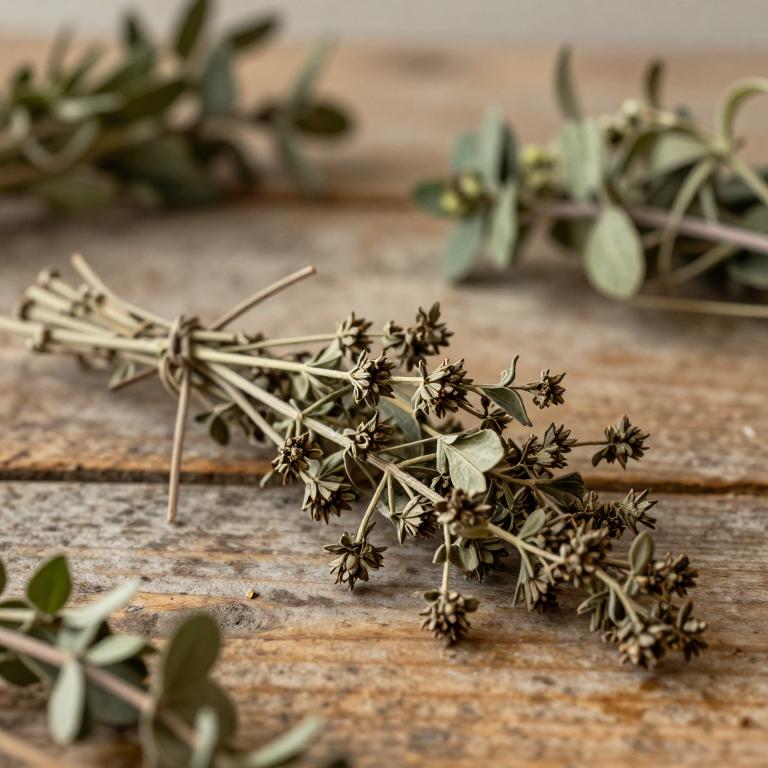
Names and Synonyms
Common Names
- fetid goosefoot
Scientific Names
Accepted name
Dysphania incisaSynonyms
- Teloxys graveolens
- Chenopodium ambrosioides var. graveolens
- Chenopodium graveolens var. bangii
- Chenopodium graveolens var. mexicanum
- Chenopodium graveolens var. neomexicanum
- Chenopodium incisum f. pumilum
- Dysphania graveolens
- Ambrina graveolens
- Neobotrydium graveolens
- Neobotrydium incisum
- Ambrina incisa
- Chenopodium foetidum f. pumilum
- Chenopodium rigidum
- Chenopodium graveolens
- Chenopodium graveolens f. rotundifolium
- Chenopodium incisum
- Chenopodium incisum var. bangii
- Chenopodium mandonii
- Teloxys mandonii
- Chenopodium graveolens f. pumilum
- Dysphania mandonii
- Chenopodium incisum var. mexicanum
- Chenopodium incisum var. neomexicanum
- Chenopodium incisum f. rotundifolium
- Chenopodium incisum f. rubellum
- Chenopodium graveolens f. rubellum
Regional and Traditional Names
Spanish:
- Epazote de monte
- Epazote de zorrillo
- Yerba larca
Sources: Wikidata, Catalogue of Life
Taxonomical Classification
This plant belongs to the kingdom Plantae and is classified under the phylum Streptophyta and class Equisetopsida. Within the subclass Magnoliidae, it is situated in the order Caryophyllales and is a member of the family Amaranthaceae. It is specifically identified under the genus Dysphania.
| Rank | Classification |
|---|---|
| Kingdom | Plantae |
| Phylum | Streptophyta |
| Class | Equisetopsida |
| Subclass | Magnoliidae |
| Order | Caryophyllales |
| Family | Amaranthaceae |
| Genus | Dysphania |
Sources: The World Checklist of Vascular Plants (WCVP)
Distribution
This plant exhibits a scattered geographical distribution across several distinct regions of the world. In Middle Europe, its presence has been documented specifically within Germany. Moving to the North American continent, it can be found in the Northwestern United States in Colorado. Its range also extends significantly into the Northeastern United States. Specifically, this species inhabits the states of Maine, Massachusetts, and New York.
| Region | Area |
|---|---|
| Middle Europe | Germany |
| Northwestern U.S.A. | Colorado |
| Northeastern U.S.A. | Maine |
| Northeastern U.S.A. | Massachusetts |
| Northeastern U.S.A. | New York |
| Southwestern U.S.A. | Arizona |
| Southwestern U.S.A. | Utah |
| South-Central U.S.A. | New Mexico |
| South-Central U.S.A. | Texas |
| Southeastern U.S.A. | Louisiana |
Sources: The World Checklist of Vascular Plants (WCVP)
Botanical Identification
Ecology
The ecology of Dysphania incisa is characterized by its specialized adaptation to high-altitude environments, primarily thriving within distinct montane or subalpine zones. This species occupies a specific vertical niche, maintaining a presence across an elevational range that begins at 2000 m AMSL and extends up to a maximum of 4000 m AMSL. Within this altitudinal gradient, the plant is subject to the unique climatic pressures of high-mountain ecosystems, including lower temperatures, increased ultraviolet radiation, and potentially thinner atmospheric conditions. Its ability to inhabit such a broad vertical span suggests a high degree of physiological plasticity, allowing it to colonize various microhabitats within the high-elevation landscape.
- Elevational range max:
- 4000 m AMSL
- Elevational range min:
- 2000 m AMSL
Life history
The life history of Dysphania incisa is characterized by an annual lifecycle, meaning the plant completes its entire developmental process—from seed germination to flowering and eventual senescence—within a single growing season. This rapid progression is typical of many species within the genus that thrive in disturbed habitats or open areas where seasonal resources are readily available. Following germination, the plant undergoes a period of vegetative growth, developing its distinctively serrated leaves and stem structure before transitioning into its reproductive phase. During this stage, it produces inflorescences that facilitate pollination, eventually leading to the production of seeds that ensure the continuity of the species. Once the seeds have matured and been dispersed, the individual plant completes its life cycle, leaving the next generation to emerge when environmental conditions become favorable again.
- Lifecycle :
- annual
Morphology
The morphology of Dysphania incisa is characterized by its growth form as a non-woody herb, specifically classified as a forb. It typically reaches a mean plant height of approximately 0.9 m. The plant exhibits a self-supporting habit, functioning as a self-supporting climber rather than a liana or vine, and it does not require external structures for support. It is an independent organism, showing no parasitic behavior, and is strictly terrestrial in its ecological niche, meaning it does not function as an epiphyte (whether holoepiphyte, hemiepiphyte, or otherwise) nor does it possess aquatic or semiaquatic characteristics.
- Aquatic :
- terrestrial
- Climber :
- self-supporting
- Epiphyte :
- terrestrial
- Growth form :
- herb
- Growth form :
- forb
- Parasite :
- independent
- Plant height mean:
- 0.9 m
- Woodiness :
- non-woody
Physiology
The physiology of Dysphania incisa is characterized by a C3 photosynthetic pathway, utilizing the standard Calvin cycle to fix carbon dioxide during the light-independent reactions. Unlike plants that employ C4 or CAM mechanisms to optimize water-use efficiency in arid environments, this species relies on the direct carboxylation of RuBP by the enzyme Rubisco. Additionally, in terms of nutrient acquisition, the plant is not a nitrogen fixer, meaning it lacks the symbiotic relationship with diazotrophic bacteria, such as Rhizobium, required to convert atmospheric nitrogen into bioavailable forms; instead, it depends on the uptake of nitrates and ammonium present within the soil matrix to fulfill its nitrogen requirements for protein synthesis and metabolic processes.
- Nitrogen fixer :
- no
- Photosynthetic pathway :
- C3
Reproduction
The reproduction of Dysphania incisa is governed by abiotic mechanisms, specifically characterized by an abiotic pollination syndrome. The plant relies on non-living environmental factors to facilitate the transfer of pollen, with its pollination processes primarily driven by wind. This reliance on wind-mediated dispersal serves as the central mode for pollen movement, distinguishing its reproductive strategy from those dependent on biotic vectors such as insects or birds.
- Pollination syndrome :
- wind
- Pollination syndrome :
- abiotic
Sources: Global Inventory of Floras and Traits (GIFT)
Chemicals
Dysphania incisa has 8 reported phytochemicals identified across 0 scientific publications and several other databases. The most consistently reported chemicals include Pinocembrin, Pinostrobin, chrysin, 5,7-Dihydroxyflavanone, Eucalyptol.
| Chemical | Supporting sources | Consensus |
|---|---|---|
| Pinocembrin | 2 supporting sources | ★☆☆☆☆ |
| Pinostrobin | 2 supporting sources | ★☆☆☆☆ |
| chrysin | 2 supporting sources | ★☆☆☆☆ |
| 5,7-Dihydroxyflavanone | 1 supporting sources | ★☆☆☆☆ |
| Eucalyptol | 1 supporting sources | ★☆☆☆☆ |
| Flavonoids | 1 supporting sources | ★☆☆☆☆ |
| P-CYMENE | 1 supporting sources | ★☆☆☆☆ |
| pinocembrine | 1 supporting sources | ★☆☆☆☆ |
Pinocembrin
- Phytochemical analysis : PCA
- Biomedicine & pharmacotherapy = Biomedecine & pharmacotherapie
Pinostrobin
- Phytochemical analysis : PCA
- Biomedicine & pharmacotherapy = Biomedecine & pharmacotherapie
chrysin
- Phytochemical analysis : PCA
- Biomedicine & pharmacotherapy = Biomedecine & pharmacotherapie
5,7-Dihydroxyflavanone
- Journal of ethnopharmacology
Eucalyptol
- Phytochemical analysis : PCA
Flavonoids
- Journal of ethnopharmacology
P-CYMENE
- Phytochemical analysis : PCA
pinocembrine
- Journal of ethnopharmacology
Activities
Dysphania incisa has 2 reported activities identified across 0 scientific publications and several other databases. The most consistently reported activities include Analgesic, Antinociceptive.
| Activity | Supporting sources | Consensus |
|---|---|---|
| Analgesic | 1 supporting sources | ★☆☆☆☆ |
| Antinociceptive | 1 supporting sources | ★☆☆☆☆ |
Analgesic
- Biomedicine & pharmacotherapy = Biomedecine & pharmacotherapie
Antinociceptive
- Biomedicine & pharmacotherapy = Biomedecine & pharmacotherapie
Preparations
Dysphania incisa has 6 reported preparations identified across 0 scientific publications and several other databases. The most consistently reported preparations include CH2Cl2-MeOH extract, acetone extract, crude drug, essential oil, infusion.
| Preparation | Supporting sources | Consensus |
|---|---|---|
| Ch2cl2-meoh extract | 1 supporting sources | ★☆☆☆☆ |
| Acetone extract | 1 supporting sources | ★☆☆☆☆ |
| Crude drug | 1 supporting sources | ★☆☆☆☆ |
| Essential oil | 1 supporting sources | ★☆☆☆☆ |
| Infusion | 1 supporting sources | ★☆☆☆☆ |
| Methanol extracts | 1 supporting sources | ★☆☆☆☆ |
Ch2cl2-meoh extract
- Biomedicine & pharmacotherapy = Biomedecine & pharmacotherapie
Acetone extract
- Journal of ethnopharmacology
Crude drug
- Phytochemical analysis : PCA
Essential oil
- Biomedicine & pharmacotherapy = Biomedecine & pharmacotherapie
Infusion
- Biomedicine & pharmacotherapy = Biomedecine & pharmacotherapie
Methanol extracts
- Journal of ethnopharmacology