Dysoxylum gotadhora
Dysoxylum gotadhora · Accepted scientific name
Scientific literature: Very Sparse (23 studies) · ★☆☆☆☆
, scientifically known as Dysoxylum gotadhora, is a versatile medicinal plant highly valued in traditional healing practices. Renowned for its potent bioactive compounds, it is frequently utilized to treat various ailments, including skin infections and inflammatory conditions. This botanical treasure offers significant therapeutic potential for modern pharmacological research and wellness.
- Family
- Meliaceae
- Native range
- Asia-Temperate
- Parts used
- Leaf · Stem
- Common names
- Not available
- Scientific synonyms
- Dysoxylum Binectariferum · Alliaria Golodhara · 13 more
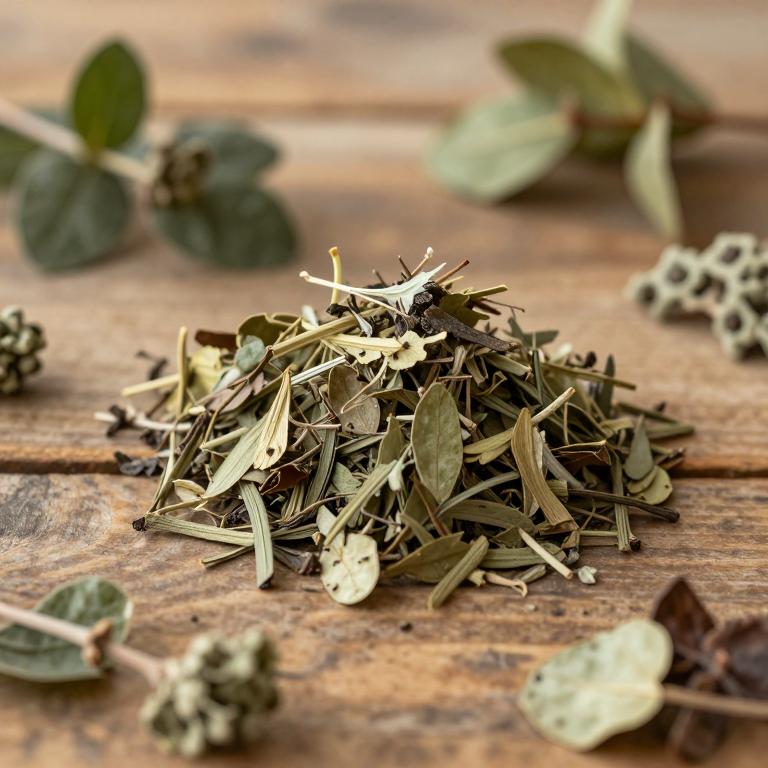
Names and Synonyms
Scientific Names
Accepted name
Dysoxylum gotadhoraSynonyms
- Dysoxylum binectariferum
- Alliaria golodhara
- Guarea amaris
- Guarea gotadhora
- Dysoxylum zeylanicum
- Dysoxylum reticulatum
- Amoora ficiformis
- Dysoxylum binectariferum var. coriaceum
- Dysoxylum binectariferum var. punctulatum
- Dysoxylum binectariferum var. pyriforme
- Dysoxylum binectarifolium
- Dysoxylum ficiforme
- Dysoxylum translucidum
- Guarea binectarifera
- Epicharis gotadhora
Sources: Wikidata, Catalogue of Life
Taxonomical Classification
This plant belongs to the kingdom Plantae and the phylum Streptophyta, falling under the class Equisetopsida and subclass Magnoliidae. Within the order Sapindaales, it is classified under the family Meliaceae. It is specifically identified by the genus Dysoxylum and the species Dysoxylum gotadhora.
| Rank | Classification |
|---|---|
| Kingdom | Plantae |
| Phylum | Streptophyta |
| Class | Equisetopsida |
| Subclass | Magnoliidae |
| Order | Sapindales |
| Family | Meliaceae |
| Genus | Dysoxylum |
Sources: The World Checklist of Vascular Plants (WCVP)
Distribution
This plant exhibits a diverse geographical distribution spanning across several key regions in Asia. Within China, it can be found throughout the South-Central areas as well as on the island of Hainan. Moving into the Indian Subcontinent, its presence is noted in the state of Assam and the broader East Himalaya region. Additionally, the species extends its range into the neighboring country of Bangladesh. Together, these locations highlight the plant's ability to thrive in various subtropical and montane environments.
| Region | Area |
|---|---|
| China | China South-Central |
| China | Hainan |
| Indian Subcontinent | Assam |
| Indian Subcontinent | Bangladesh |
| Indian Subcontinent | East Himalaya |
| Indian Subcontinent | India |
| Indian Subcontinent | Nepal |
| Indian Subcontinent | Sri Lanka |
| Indo-China | Andaman Is. |
| Indo-China | Cambodia |
Sources: The World Checklist of Vascular Plants (WCVP)
Botanical Identification
Ecology
The ecology of Dysocalymnum gotaadhora is characterized by its specific preference for mid-altitude tropical or subtropical forest environments. It thrives within a defined altitudinal belt, typically occurring at elevations ranging from a minimum of 300 m AMSL to a maximum of 600 m AMSL. This narrow elevational range suggests that the species is adapted to particular thermic and hygric conditions found within these specific altitudinal strata, likely favoring the humidity and temperature stability provided by these mid-level forest ecosystems.
- Elevational range max:
- 600 m AMSL
- Elevational range min:
- 300 m AMSL
Life history
The life history of Dysoxylum gotadhora is characterized by its status as a perennial organism, allowing it to persist in its environment through multiple growing seasons. This longevity is supported by its evergreen nature, as the plant maintains its foliage throughout the year rather than shedding it seasonally. This combination of a perennial lifecycle and evergreen deciduousness ensures a consistent presence within its ecological niche, providing continuous vegetative activity.
- Deciduousness :
- evergreen
- Lifecycle :
- perennial
Morphology
The morphology of Diospyros gota-dhora (commonly referred to in botanical contexts as Diospyros gota-dhora) is characterized by its substantial stature and woody structure. This plant typically manifests as a large tree, reaching an average height of approximately 20 m. In terms of its growth form, it is classified as a tree and exhibits a woody constitution. While it shares certain structural similarities with climbing forms, it is specifically identified as a self-supporting plant rather than an obligatory or facultative climber. Furthermore, it is a terrestrial species, growing directly in the soil rather than acting as an epiphyte.
- Climber :
- self-supporting
- Epiphyte :
- terrestrial
- Growth form :
- tree
- Plant height mean:
- 20 m
- Woodiness :
- woody
Physiology
The physiology of Diospyros gota-dhora is characterized by a C3 photosynthetic pathway, indicating a standard carbon fixation process typical of many woody species. Its leaf morphology is defined by an elliptic form with entire margins, and the foliage is notably devoid of any defensive structures such as leaf thorns or spines. The plant exhibits a Specific Leaf Area (SLA) that is uniform across its measured range, with a minimum, maximum, and mean value of 109.1548227 cm²/g, suggesting a consistent leaf thickness and density relative to its surface area. In terms of structural composition, the stem possesses a mean specific density (SSD) of 700 mg/cm³. Additionally, the species does not function as a nitrogen fixer, relying instead on soil nutrient availability for its metabolic requirements.
- Leaf form :
- elliptic
- Leaf margin :
- entire
- Leaf spines :
- no
- Leaf thorns :
- no
- Nitrogen fixer :
- no
- Photosynthetic pathway :
- C3
- Specific Leaf Area (SLA) min:
- 109.1548227 cm²/g
- Stem specific density (SSD) mean:
- 700 mg/cm³
Sources: Global Inventory of Floras and Traits (GIFT)
Plant Parts
Dysoxylum gotadhora has 2 reported plant parts identified across 4 scientific publications and several other databases that are studied for medicinal purposes. The most consistently reported plant part include leaf, stem.
| Plant part | Supporting sources | Consensus |
|---|---|---|
| Leaf | 3 supporting sources | ★★☆☆☆ |
| Stem | 1 supporting sources | ★☆☆☆☆ |
Leaf
- Steroids
- Bioorganic & medicinal chemistry letters
- Journal of ethnopharmacology
Stem
- Phytomedicine : international journal of phytotherapy and phytopharmacology
Chemicals
Dysoxylum gotadhora has 6 reported phytochemicals identified across 4 scientific publications and several other databases. The most consistently reported chemicals include Rohitukine, CPT, Rocaglaol, Schumaniofioside A, Terpenoids.
| Chemical | Supporting sources | Consensus |
|---|---|---|
| Rohitukine | 6 supporting sources | ★★★☆☆ |
| CPT | 1 supporting sources | ★☆☆☆☆ |
| Rocaglaol | 1 supporting sources | ★☆☆☆☆ |
| Schumaniofioside A | 1 supporting sources | ★☆☆☆☆ |
| Terpenoids | 1 supporting sources | ★☆☆☆☆ |
| camptothecin | 1 supporting sources | ★☆☆☆☆ |
Rohitukine
- Journal of medicinal chemistry
- Bioorganic & medicinal chemistry letters
- Drug research
- Phytomedicine : international journal of phytotherapy and phytopharmacology
- Heliyon
View 1 additional sources
- Journal of ethnopharmacology
CPT
- Bioorganic & medicinal chemistry letters
Rocaglaol
- Fitoterapia
Schumaniofioside A
- Journal of ethnopharmacology
Terpenoids
- Heliyon
camptothecin
- Bioorganic & medicinal chemistry letters
Activities
Dysoxylum gotadhora has 2 reported activities identified across 4 scientific publications and several other databases. The most consistently reported activities include Anticancer, Antibacterial.
| Activity | Supporting sources | Consensus |
|---|---|---|
| Anticancer | 2 supporting sources | ★☆☆☆☆ |
| Antibacterial | 1 supporting sources | ★☆☆☆☆ |
Anticancer
- Bioorganic & medicinal chemistry letters
- Heliyon
Antibacterial
- Bioorganic chemistry
Preparations
Dysoxylum gotadhora has 12 reported preparations identified across 4 scientific publications and several other databases. The most consistently reported preparations include Chloroform fraction, Extracts, Hexane fraction, bark, chloroform fraction.
| Preparation | Supporting sources | Consensus |
|---|---|---|
| Chloroform fraction | 1 supporting sources | ★☆☆☆☆ |
| Extracts | 1 supporting sources | ★☆☆☆☆ |
| Hexane fraction | 1 supporting sources | ★☆☆☆☆ |
| Bark | 1 supporting sources | ★☆☆☆☆ |
| Chloroform fraction | 1 supporting sources | ★☆☆☆☆ |
| Crude ethanolic extract of stem bark | 1 supporting sources | ★☆☆☆☆ |
| Ethanolic extract | 1 supporting sources | ★☆☆☆☆ |
| Juices | 1 supporting sources | ★☆☆☆☆ |
| Leaves | 1 supporting sources | ★☆☆☆☆ |
| N-hexane fractions | 1 supporting sources | ★☆☆☆☆ |
Chloroform fraction
- Phytomedicine : international journal of phytotherapy and phytopharmacology
Extracts
- Saudi pharmaceutical journal : SPJ : the official publication of the Saudi Pharmaceutical Society
Hexane fraction
- Phytomedicine : international journal of phytotherapy and phytopharmacology
Bark
- Bioorganic & medicinal chemistry letters
Chloroform fraction
- Phytomedicine : international journal of phytotherapy and phytopharmacology
Crude ethanolic extract of stem bark
- Phytomedicine : international journal of phytotherapy and phytopharmacology
Ethanolic extract
- Phytomedicine : international journal of phytotherapy and phytopharmacology
Juices
- Saudi pharmaceutical journal : SPJ : the official publication of the Saudi Pharmaceutical Society
Leaves
- Bioorganic & medicinal chemistry letters
N-hexane fractions
- Phytomedicine : international journal of phytotherapy and phytopharmacology