Duguetia riparia
Duguetia riparia · Accepted scientific name
Scientific literature: Very Sparse (5 studies) · ★☆☆☆☆
Duguetia riparia, scientifically known as Duguetia riparia, is a significant medicinal plant native to tropical rainforest regions. Renowned for its diverse therapeutic properties, this species is traditionally utilized to treat various ailments. Its bioactive compounds offer promising potential for pharmacological research, highlighting its importance in both folk medicine and ethnobotany.
- Family
- Annonaceae
- Native range
- Southern America
- Parts used
- Not available
- Common names
- Not available
- Scientific synonyms
- Duguetia Insculpta
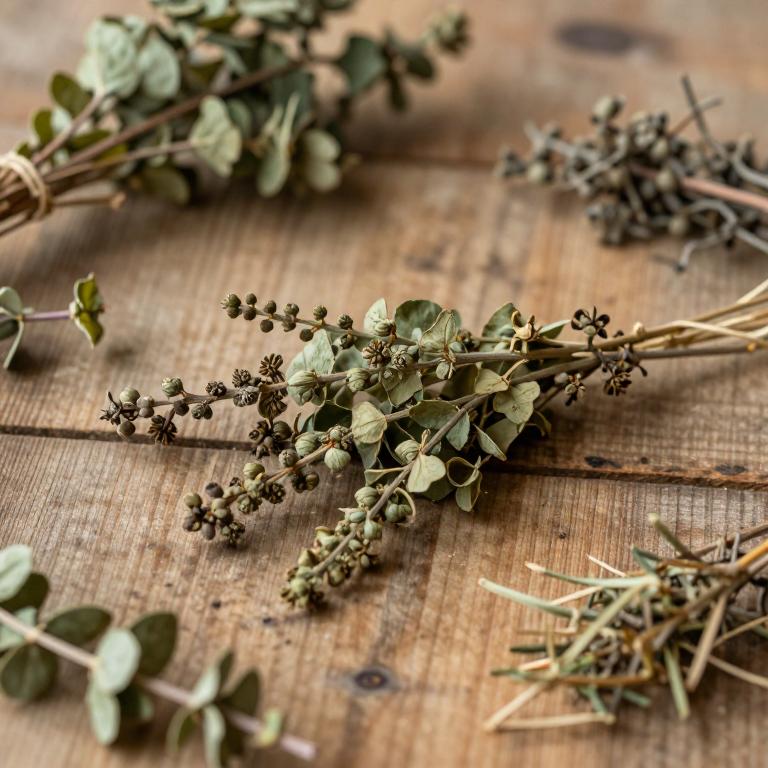
Names and Synonyms
Scientific Names
Accepted name
Duguetia ripariaSynonyms
- Duguetia insculpta
Sources: Wikidata, Catalogue of Life
Taxonomical Classification
This plant belongs to the kingdom Plantae and the phylum Streptophyta, placing it within the class Equisetopsida and subclass Magnoliidae. It is further classified under the order Magnoliales and the family Annonaceae. Within this botanical hierarchy, it is identified by the genus Duguetia.
| Rank | Classification |
|---|---|
| Kingdom | Plantae |
| Phylum | Streptophyta |
| Class | Equisetopsida |
| Subclass | Magnoliidae |
| Order | Magnoliales |
| Family | Annonaceae |
| Genus | Duguetia |
Sources: The World Checklist of Vascular Plants (WCVP)
Distribution
This plant exhibits a diverse presence across several regions of the South American continent. In Northern South America, its range extends through French Guiana and Suriname. The species can also be found in Western South America, specifically within the territories of Colombia and Bolivia. Additionally, its distribution reaches into Brazil, where it is documented in the Northeast region. Together, these locations highlight a broad geographical footprint spanning both the northern and western parts of the continent.
| Region | Area |
|---|---|
| Northern South America | French Guiana |
| Northern South America | Suriname |
| Western South America | Bolivia |
| Western South America | Colombia |
| Brazil | Brazil Northeast |
| Brazil | Brazil North |
Sources: The World Checklist of Vascular Plants (WCVP)
Botanical Identification
Ecology
The ecology of Duguetia riparia is characterized by its presence in specific forest ecosystems, primarily inhabiting both Floresta de Igapó and Floresta de Terra Firme. This species is typically found within an elevational range that begins at 150 m AMSL and extends up to a maximum of 300 m AMSL.
- Elevational range max:
- 300 m AMSL
- Elevational range min:
- 150 m AMSL
- Habitat :
- Floresta de Igapó, Floresta de Terra Firme
Morphology
The morphology of Duguetia riparia is characterized by its growth form as a woody tree, reaching a maximum plant height of approximately 10 m. This species functions as an independent organism, lacking any parasitic tendencies, and is classified as a terrestrial plant rather than an aquatic or semiaquatic species. Unlike climbing plants such as lianas or vines, it is a self-supporting structure, exhibiting no obligatory or facultative climbing habits. Furthermore, it does not exhibit epiphytic behavior, remaining firmly terrestrial throughout its life cycle.
- Aquatic :
- terrestrial
- Climber :
- self-supporting
- Epiphyte :
- terrestrial
- Growth form :
- tree
- Parasite :
- independent
- Plant height max:
- 10 m
- Woodiness :
- woody
Physiology
The physiology of Duguetia riparia is characterized by a C3 photosynthetic pathway, a mechanism in which carbon fixation occurs primarily through the enzyme RuBisCO during the Calvin cycle. As a C3 plant, its metabolic processes involve the direct fixation of atmospheric carbon dioxide into three-carbon compounds within the mesophyll cells, making it highly efficient under moderate temperatures and well-watered conditions typical of its native tropical habitats. This metabolic strategy dictates its transpiration rates and water-use efficiency, as the plant must maintain open stomata to facilitate gas exchange, thereby balancing the requirement for $CO_2$ uptake with the physiological necessity of minimizing water loss. This reliance on the C3 cycle influences its overall energy assimilation patterns and dictates its adaptation to the specific light and moisture regimes of its ecological niche.
- Photosynthetic pathway :
- C3
Reproduction
The reproduction of Duguetia riparia is characterized by the production of fruits that exhibit a fleshy texture, a trait that typically facilitates seed dispersal through biotic agents. The seeds produced within these fleshy fruits are remarkably uniform in size, maintaining a consistent seed volume throughout the reproductive cycle. Specifically, the seed volume remains constant at a mean of 750 mm³, with both the minimum and maximum measured values also recorded at exactly 750 mm³, indicating a highly standardized seed morphology for this species.
- Fruit dryness :
- fleshy
- Seed volume max:
- 750 mm³
Sources: Global Inventory of Floras and Traits (GIFT)
Chemicals
Duguetia riparia has 4 reported phytochemicals identified across 0 scientific publications and several other databases. The most consistently reported chemicals include Caryophyllene oxide, Humulene epoxide II, Spathulenol, allo-Aromadendrene epoxide.
| Chemical | Supporting sources | Consensus |
|---|---|---|
| Caryophyllene oxide | 1 supporting sources | ★☆☆☆☆ |
| Humulene epoxide II | 1 supporting sources | ★☆☆☆☆ |
| Spathulenol | 1 supporting sources | ★☆☆☆☆ |
| allo-Aromadendrene epoxide | 1 supporting sources | ★☆☆☆☆ |
Caryophyllene oxide
- Antioxidants (Basel, Switzerland)
Humulene epoxide II
- Antioxidants (Basel, Switzerland)
Spathulenol
- Antioxidants (Basel, Switzerland)
allo-Aromadendrene epoxide
- Antioxidants (Basel, Switzerland)
Activities
Duguetia riparia has 1 reported activities identified across 0 scientific publications and several other databases. The most consistently reported activities include Antioxidant.
| Activity | Supporting sources | Consensus |
|---|---|---|
| Antioxidant | 1 supporting sources | ★☆☆☆☆ |
Antioxidant
- Antioxidants (Basel, Switzerland)