Duguetia furfuracea
Duguetia furfuracea · Accepted scientific name
Scientific literature: Very Sparse (11 studies) · ★☆☆☆☆
, scientifically known as Duguetia furfuracea, is a remarkable medicinal plant native to tropical regions. Renowned for its diverse therapeutic properties, it is traditionally utilized in folk medicine to treat various ailments. Exploring its phytochemical composition offers promising insights into developing natural treatments for inflammation and other health conditions.
- Family
- Annonaceae
- Native range
- Southern America
- Parts used
- Leaf
- Common names
- Not available
- Scientific synonyms
- Aberemoa Furfuracea · Aberemoa Jonasiana · 5 more
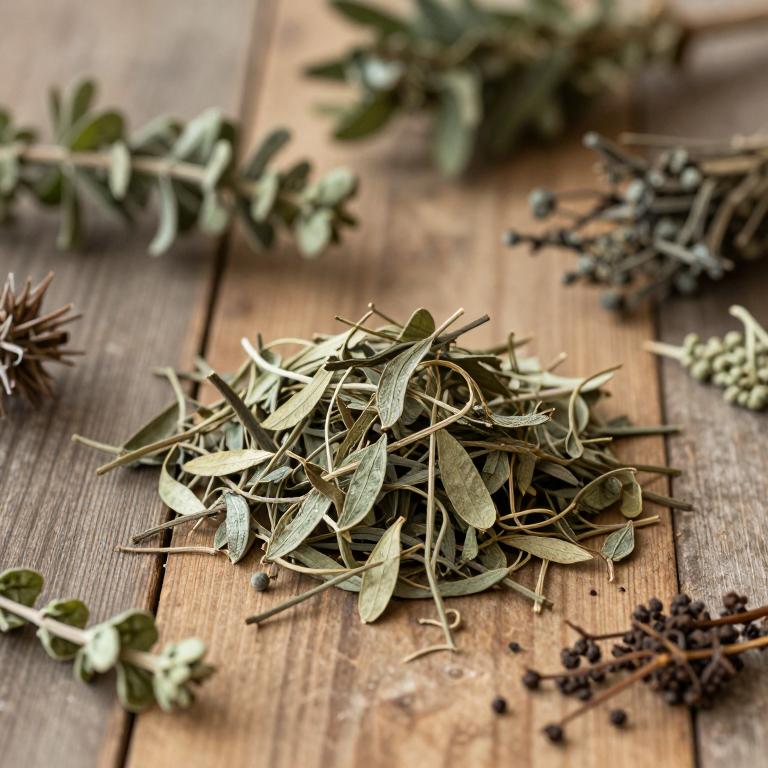
Names and Synonyms
Scientific Names
Accepted name
Duguetia furfuraceaSynonyms
- Aberemoa furfuracea
- Aberemoa jonasiana
- Annona furfuracea
- Aberemoa furfuracea var. jonasiana
- Duguetia jonasiana
- Duguetia coriacea
- Duguetia hemmendorffii
Regional and Traditional Names
Spanish:
- Araticu(m)
Sources: Wikidata, Catalogue of Life
Taxonomical Classification
This plant belongs to the kingdom Plantae and the phylum Streptophyta, falling under the class Equisetopsida and subclass Magnoliidae. Within the order Magnoliales, it is classified under the family Annonaceae. Its specific taxonomic designation is within the genus Duguetia.
| Rank | Classification |
|---|---|
| Kingdom | Plantae |
| Phylum | Streptophyta |
| Class | Equisetopsida |
| Subclass | Magnoliidae |
| Order | Magnoliales |
| Family | Annonaceae |
| Genus | Duguetia |
Sources: The World Checklist of Vascular Plants (WCVP)
Distribution
This plant exhibits a broad geographical presence across several key regions of South America. In the western part of the continent, its distribution includes the country of Bolivia. Within Brazil, the species can be found spanning across the North and Northeast regions. Furthermore, it is documented to inhabit the West-Central areas of the Brazilian territory. Finally, its range extends into the Southeast region of Brazil, highlighting its widespread occurrence.
| Region | Area |
|---|---|
| Western South America | Bolivia |
| Brazil | Brazil West-Central |
| Brazil | Brazil Northeast |
| Brazil | Brazil Southeast |
| Brazil | Brazil North |
| Brazil | Brazil South |
| Southern South America | Paraguay |
Sources: The World Checklist of Vascular Plants (WCVP)
Botanical Identification
Ecology
The ecology of Duguetia furfuracea is characterized by its occurrence within specific biomes and altitudinal gradients in South America. It is primarily found inhabiting the Caatinga (strictu sensu) and the Cerrado (lato sensu) ecosystems, where it has adapted to the distinct environmental conditions of these tropical formations. Regarding its vertical distribution, the species occupies an elevational range that begins at a minimum of 100 m AMSL and extends up to a maximum of 300 m AMSL.
- Elevational range max:
- 300 m AMSL
- Elevational range min:
- 100 m AMSL
- Habitat :
- Caatinga (stricto sensu), Cerrado (lato sensu)
Life history
The life history of Duguetia furfuracea is characterized by its status as a perennial organism, allowing it to persist in its ecosystem over many years. As a phanerophyte, its reproductive shoots are elevated well above the ground, a structural adaptation that defines its growth habit and survival strategy. Furthermore, the plant maintains an evergreen deciduousness, meaning it retains its foliage throughout the year rather than shedding it seasonally, which contributes to its continuous photosynthetic capacity and stable presence within its habitat.
- Deciduousness :
- evergreen
- Life form :
- phanerophyte
- Lifecycle :
- perennial
Morphology
The morphology of Duguetia furfuracea is characterized by a woody growth form, specifically manifesting as a shrub. This plant is a self-supporting species, meaning it does not function as a climber (such as a liana or vine) nor does it rely on other structures for vertical support. It is a terrestrial organism, existing as an independent species that does not exhibit epiphytic behavior or parasitic tendencies. In terms of its physical scale, the plant can reach a mean height of approximately 18 meters.
- Aquatic :
- terrestrial
- Climber :
- self-supporting
- Epiphyte :
- terrestrial
- Growth form :
- shrub
- Parasite :
- independent
- Plant height mean:
- 18 m
- Woodiness :
- woody
Physiology
The physiology of Duguetia furfuracea is characterized by a C3 photosynthetic pathway, which involves the direct fixation of atmospheric carbon dioxide through the Calvin cycle within the mesophyll cells. As a non-nitrogen-fixing species, the plant lacks the symbiotic relationship with diazotrophic bacteria necessary to convert atmospheric nitrogen into usable forms, meaning it must rely on the uptake of available nitrates and ammonium from the soil to meet its nutritional requirements.
- Nitrogen fixer :
- no
- Photosynthetic pathway :
- C3
Reproduction
The reproduction of Duguetia furfuracea is characterized by the development of fruit that exhibits a fleshy texture, providing a nutrient-rich medium for seed protection and dispersal. The seeds produced by this species are remarkably consistent in size, maintaining a specific volume profile throughout their development. Quantitatively, the seed volume is measured at a constant 1400 mm³, with the minimum, maximum, and mean values all aligning at this exact measurement. This uniformity in seed volume, combined with the fleshy nature of the fruit, plays a critical role in the plant's reproductive success and its interaction with dispersal agents.
- Fruit dryness :
- fleshy
- Seed volume max:
- 1400 mm³
Sources: Global Inventory of Floras and Traits (GIFT)
Plant Parts
Duguetia furfuracea has 1 reported plant parts identified across 1 scientific publications and several other databases that are studied for medicinal purposes. The most consistently reported plant part include leaf.
| Plant part | Supporting sources | Consensus |
|---|---|---|
| Leaf | 1 supporting sources | ★☆☆☆☆ |
Leaf
- Evidence-based complementary and alternative medicine : eCAM
Chemicals
Duguetia furfuracea has 4 reported phytochemicals identified across 1 scientific publications and several other databases. The most consistently reported chemicals include Flavonoids, N-Nitrosoanonaine, N-Nitrosoxylopine, Tannins.
| Chemical | Supporting sources | Consensus |
|---|---|---|
| Flavonoids | 1 supporting sources | ★☆☆☆☆ |
| N-Nitrosoanonaine | 1 supporting sources | ★☆☆☆☆ |
| N-Nitrosoxylopine | 1 supporting sources | ★☆☆☆☆ |
| Tannins | 1 supporting sources | ★☆☆☆☆ |
Flavonoids
- Evidence-based complementary and alternative medicine : eCAM
N-Nitrosoanonaine
- Journal of natural products
N-Nitrosoxylopine
- Journal of natural products
Tannins
- Evidence-based complementary and alternative medicine : eCAM
Activities
Duguetia furfuracea has 5 reported activities identified across 1 scientific publications and several other databases. The most consistently reported activities include Antimutagenic, Antiprotozoal, Antitumor, Cytotoxic, Mutagenic.
| Activity | Supporting sources | Consensus |
|---|---|---|
| Antimutagenic | 1 supporting sources | ★☆☆☆☆ |
| Antiprotozoal | 1 supporting sources | ★☆☆☆☆ |
| Antitumor | 1 supporting sources | ★☆☆☆☆ |
| Cytotoxic | 1 supporting sources | ★☆☆☆☆ |
| Mutagenic | 1 supporting sources | ★☆☆☆☆ |
Antimutagenic
- Genetics and molecular research : GMR
Antiprotozoal
- Memorias do Instituto Oswaldo Cruz
Antitumor
- Evidence-based complementary and alternative medicine : eCAM
Cytotoxic
- Evidence-based complementary and alternative medicine : eCAM
Mutagenic
- Genetics and molecular research : GMR
Preparations
Duguetia furfuracea has 2 reported preparations identified across 1 scientific publications and several other databases. The most consistently reported preparations include D. furfuracea infusion, hydroalcoholic leaves extracts.
| Preparation | Supporting sources | Consensus |
|---|---|---|
| D. furfuracea infusion | 1 supporting sources | ★☆☆☆☆ |
| Hydroalcoholic leaves extracts | 1 supporting sources | ★☆☆☆☆ |
D. furfuracea infusion
- Genetics and molecular research : GMR
Hydroalcoholic leaves extracts
- Evidence-based complementary and alternative medicine : eCAM