Ducrosia anethifolia
Ducrosia anethifolia · Accepted scientific name
Scientific literature: Very Sparse (19 studies) · ★☆☆☆☆
Ducrosia anethiifolia, scientifically known as Ducrosia anethiifolia, is a resilient medicinal shrub native to arid regions. Valued in traditional medicine, it possesses significant therapeutic properties, often used to treat digestive ailments and inflammation. Its unique phytochemical profile offers promising potential for pharmacological research and natural healing practices.
- Family
- Apiaceae
- Native range
- Asia-Temperate
- Parts used
- Not available
- Common names
- Not available
- Scientific synonyms
- Zosima Anethifolia · Ducrosia Olivieri
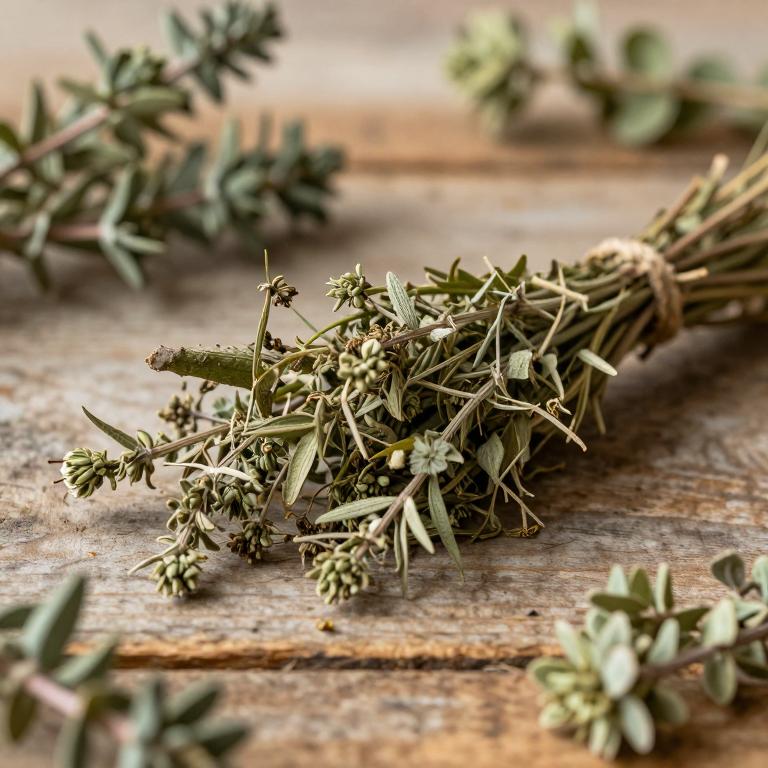
Names and Synonyms
Scientific Names
Accepted name
Ducrosia anethifoliaSynonyms
- Zosima anethifolia
- Ducrosia olivieri
Sources: Wikidata
Taxonomical Classification
This plant, Ducrosia anehtifolia, belongs to the kingdom Plantae and the phylum Streptophyta. Within the class Equisetopsida and subclass Magnoliidae, it is classified under the order Apiales and the family Apiaceae. It is further distinguished by its specific genus, Ducrosia.
| Rank | Classification |
|---|---|
| Kingdom | Plantae |
| Phylum | Streptophyta |
| Class | Equisetopsida |
| Subclass | Magnoliidae |
| Order | Apiales |
| Family | Apiaceae |
| Genus | Ducrosia |
Sources: The World Checklist of Vascular Plants (WCVP)
Distribution
This plant is primarily distributed across the diverse landscapes of Western Asia. Its natural range includes the mountainous and arid regions of Afghanistan. It can also be found growing throughout the vast territories of Iran. Furthermore, the species is native to parts of Iraq and the Levant region. Specifically, its distribution extends through Lebanon, Syria, and Palestine.
| Region | Area |
|---|---|
| Western Asia | Afghanistan |
| Western Asia | Iran |
| Western Asia | Iraq |
| Western Asia | Lebanon-Syria |
| Western Asia | Palestine |
| Arabian Peninsula | Gulf States |
| Arabian Peninsula | Oman |
| Arabian Peninsula | Saudi Arabia |
| Indian Subcontinent | Pakistan |
Sources: The World Checklist of Vascular Plants (WCVP)
Botanical Identification
Ecology
The ecology of Ducrosia anethifolia is characterized by its adaptation to specific altitudinal gradients within its native montane habitats. This species thrives within a distinct elevational range, establishing itself in environments situated between a minimum altitude of 600 m AMSL and a maximum altitude of 1800 m AMSL. This vertical distribution suggests a preference for mid-to-high altitude ecosystems, where it likely interacts with specific microclimatic conditions, such as varying temperature regimes and moisture availability, typical of these elevations. Such an ecological niche dictates its distribution patterns and its role within the specialized plant communities found across these mountainous landscapes.
- Elevational range max:
- 1800 m AMSL
- Elevational range min:
- 600 m AMSL
Morphology
The morphology of Dichrosia aneethifolia is characterized by its growth form as a non-woody herb, exhibiting a delicate and flexible structure. It functions as an independent organism, neither acting as a parasite nor an epiphyte, as it maintains a terrestrial existence within its habitat. Although it possesses climbing tendencies, it is categorized as a self-supporting plant rather than an obligatory or facultative liana or vine, allowing it to maintain its posture without external structural reliance. Its ecological niche spans a range of moisture conditions, including aquatic, semiaquatic, and terrestrial environments.
- Aquatic :
- terrestrial
- Climber :
- self-supporting
- Epiphyte :
- terrestrial
- Growth form :
- herb
- Parasite :
- independent
- Woodiness :
- non-woody
Reproduction
Reproduction in Ducrosia anethiifolia is characterized by the production of specialized seeds that exhibit high levels of morphological uniformity. Based on quantitative data, the seeds are notably small and consistent in their physical properties, maintaining a constant seed mass throughout the sampled population. The seed mass mean is recorded at 0.0027 g, a value that is mirrored by both the seed mass maximum and the seed mass minimum at exactly 0.0027 g. This lack of variance in seed mass indicates a highly standardized reproductive output, ensuring that each individual seed carries a precise and uniform weight of 0.0027 g.
- Seed mass mean:
- 0.0027 g
Sources: Global Inventory of Floras and Traits (GIFT)
Chemicals
Ducrosia anethifolia has 13 reported phytochemicals identified across 0 scientific publications and several other databases. The most consistently reported chemicals include ALPHA-PINENE, n-Decanal, Gallic acid, LIMONENE, MYRCENE.
| Chemical | Supporting sources | Consensus |
|---|---|---|
| ALPHA-PINENE | 2 supporting sources | ★☆☆☆☆ |
| n-Decanal | 2 supporting sources | ★☆☆☆☆ |
| Gallic acid | 1 supporting sources | ★☆☆☆☆ |
| LIMONENE | 1 supporting sources | ★☆☆☆☆ |
| MYRCENE | 1 supporting sources | ★☆☆☆☆ |
| Vanillic acid | 1 supporting sources | ★☆☆☆☆ |
| ferulic acid | 1 supporting sources | ★☆☆☆☆ |
| luteolin | 1 supporting sources | ★☆☆☆☆ |
| n-Decanol | 1 supporting sources | ★☆☆☆☆ |
| n-Dodecanal | 1 supporting sources | ★☆☆☆☆ |
ALPHA-PINENE
- Pharmaceutisch weekblad. Scientific edition
- Clinics (Sao Paulo, Brazil)
n-Decanal
- Pharmaceutisch weekblad. Scientific edition
- Clinics (Sao Paulo, Brazil)
Gallic acid
- Protoplasma
LIMONENE
- Pharmaceutisch weekblad. Scientific edition
MYRCENE
- Pharmaceutisch weekblad. Scientific edition
Vanillic acid
- Protoplasma
ferulic acid
- Protoplasma
luteolin
- Protoplasma
n-Decanol
- Pharmaceutisch weekblad. Scientific edition
n-Dodecanal
- Pharmaceutisch weekblad. Scientific edition
Activities
Ducrosia anethifolia has 1 reported activities identified across 0 scientific publications and several other databases. The most consistently reported activities include Analgesic.
| Activity | Supporting sources | Consensus |
|---|---|---|
| Analgesic | 1 supporting sources | ★☆☆☆☆ |
Analgesic
- Protoplasma
Conditions
Ducrosia anethifolia has 1 reported investigations on conditions identified across 0 scientific publications and several other databases. The most consistently reported conditions include cancer.
| Condition | Supporting sources | Consensus |
|---|---|---|
| Cancer | 1 supporting sources | ★☆☆☆☆ |
Cancer
- Pharmaceutical biology
Preparations
Ducrosia anethifolia has 3 reported preparations identified across 0 scientific publications and several other databases. The most consistently reported preparations include Ducrosia anethifolia essential oil, essential oil, extract of aerial parts of the plant.
| Preparation | Supporting sources | Consensus |
|---|---|---|
| Ducrosia anethifolia essential oil | 1 supporting sources | ★☆☆☆☆ |
| Essential oil | 1 supporting sources | ★☆☆☆☆ |
| Extract of aerial parts of the plant | 1 supporting sources | ★☆☆☆☆ |
Ducrosia anethifolia essential oil
- Clinics (Sao Paulo, Brazil)
Essential oil
- Clinics (Sao Paulo, Brazil)
Extract of aerial parts of the plant
- Pharmaceutical biology