corkwoodtree
Duboisia myoporoides · Accepted scientific name
Scientific literature: Very Extensive (286 studies) · ★★★★★
Corkwoodtree, scientifically known as Duboisia myoporoides, is a versatile Australian shrub prized for its medicinal properties. Rich in tropane alkaloids like scopolamine and hyoscyamine, it serves as a vital industrial source for pharmaceutical manufacturing. These compounds are essential in treating various neurological and gastrointestinal conditions worldwide.
- Family
- Solanaceae
- Native range
- Australasia
- Parts used
- Not available
- Common names
- Corkwoodtree · Eye-Opening-Tree · 9 more
- Scientific synonyms
- Myoporum Paniculatum · Entrecasteauxia Elliptica
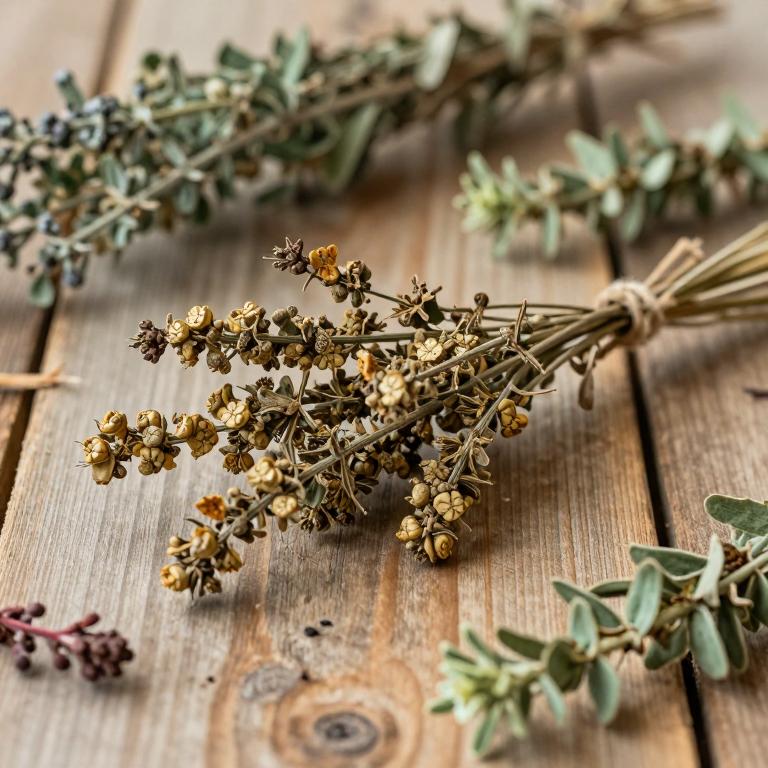
Names and Synonyms
Common Names
- corkwoodtree
- eye-opening-tree
- eyeplant
- hard corkwood
- poison corkwood
- poisonous corkwood
- soft corkwood
- yellow-basswood
- corkwood
- eye opening tree
- yellow basswood
Scientific Names
Accepted name
Duboisia myoporoidesSynonyms
- Myoporum paniculatum
- Entrecasteauxia elliptica
Sources: Wikidata, Catalogue of Life
Taxonomical Classification
This plant belongs to the kingdom Plantae and the phylum Streptophyta, falling under the class Equisetopsida and subclass Magnoliidae. Within the order Solanales and the family Solanaceae, it is specifically classified under the genus Duboisia.
| Rank | Classification |
|---|---|
| Kingdom | Plantae |
| Phylum | Streptophyta |
| Class | Equisetopsida |
| Subclass | Magnoliidae |
| Order | Solanales |
| Family | Solanaceae |
| Genus | Duboisia |
Sources: The World Checklist of Vascular Plants (WCVP)
Distribution
This plant is native to several specific regions across the Oceania territory. Within Australia, its natural range includes the coastal areas of New South Wales. It can also be found growing throughout the state of Queensland. Furthermore, the species extends its reach into the Southwestern Pacific. Specifically, it is known to inhabit the island of New Caledonia.
| Region | Area |
|---|---|
| Australia | New South Wales |
| Australia | Queensland |
| Southwestern Pacific | New Caledonia |
Sources: The World Checklist of Vascular Plants (WCVP)
Botanical Identification
Ecology
The ecology of Duboisia myoporoides is characterized by its preference for moist, shaded environments, typically flourishing within the complex layers of rain forests and dense secondary shrublands. It is frequently found colonizing ruderal vegetation, where it can exploit disturbed areas and transitional zones between forest edges and open clearings. This ability to thrive in secondary growth suggests a resilient ecological strategy, allowing the species to establish itself in habitats where sunlight may be intermittent but soil moisture remains consistent. By occupying these diverse niches—from stable rainforest interiors to more opportunistic, disturbed sites—the plant plays a role in the structural complexity of its local ecosystem.
- Habitat :
- rain forest, dense secondary shrub and ruderal vegetation
Life history
The life history of Duboisia myoporoides is characterized by its status as a perennial species, allowing it to persist through multiple growing seasons. As a long-lived woody shrub, it avoids the rapid turnover seen in annuals or biennials, instead focusing its energy on sustained vegetative growth and periodic reproductive cycles. Throughout its lifespan, the plant develops a robust structure that enables it to withstand environmental fluctuations, often establishing deep root systems to support its continuous life cycle. This perennial nature is essential for its ecological stability, as it provides a consistent presence in its natural habitat, transitioning through various stages of maturity while maintaining the capacity for long-term survival and seasonal flowering.
- Lifecycle :
- perennial
Morphology
The morphology of Duboisia myoporoides is characterized by its stature as a woody tree, exhibiting a robust and self-supporting growth form. As a terrestrial species, it grows independently without any parasitic or epiphytic requirements. The plant reaches significant dimensions, with a mean height of approximately 10 meters and the potential to attain a maximum height of up to 20 meters.
- Aquatic :
- terrestrial
- Climber :
- self-supporting
- Epiphyte :
- terrestrial
- Growth form :
- tree
- Parasite :
- independent
- Plant height max:
- 20 m
- Plant height mean:
- 10 m
- Woodiness :
- woody
Physiology
The physiology of Duboisia myoporoides is characterized by a C3 photosynthetic pathway, which dictates its carbon fixation processes and metabolic efficiency. The vegetative structure is defined by its foliage, where leaves exhibit significant morphological variability in size; individual leaves typically range from a minimum length of 4 cm to a maximum length of 15 cm, with widths spanning from a minimum of 1 cm to a maximum of 4 cm. In terms of nutrient cycling and soil interaction, the plant does not function as a nitrogen fixer, meaning it relies on the availability of exogenous nitrogen sources within the substrate rather than symbiotic biological nitrogen fixation.
- Leaf length max:
- 15 cm
- Leaf length min:
- 4 cm
- Leaf width max:
- 4 cm
- Leaf width min:
- 1 cm
- Nitrogen fixer :
- no
- Photosynthetic pathway :
- C3
Reproduction
The reproduction of Duboisia myoporoides is characterized by the development of a fruit categorized as a berry, which serves as the primary vessel for seed dispersal. This fruit type is notably indehiscent, meaning it does not spontaneously split open at maturity to release its contents, but instead relies on external factors such as animal consumption or decay to facilitate the release of the seeds.
- Dehiscence :
- indehiscent
- Fruit type :
- berry
Sources: Global Inventory of Floras and Traits (GIFT)
Chemicals
Duboisia myoporoides has 50 reported phytochemicals identified across 0 scientific publications and several other databases. The most consistently reported chemicals include hyoscyamine, scopolamine, (-)-Hyoscyamine, (-)-Pelletierine, 6-BENZYL AMINO PURINE.
| Chemical | Supporting sources | Consensus |
|---|---|---|
| hyoscyamine | 2 supporting sources | ★☆☆☆☆ |
| scopolamine | 2 supporting sources | ★☆☆☆☆ |
| (-)-Hyoscyamine | 1 supporting sources | ★☆☆☆☆ |
| (-)-Pelletierine | 1 supporting sources | ★☆☆☆☆ |
| 6-BENZYL AMINO PURINE | 1 supporting sources | ★☆☆☆☆ |
| 6-Hydroxy hyoscyamine | 1 supporting sources | ★☆☆☆☆ |
| 6-Hydroxyhyoscyamine | 1 supporting sources | ★☆☆☆☆ |
| 6-benzylamino purine | 1 supporting sources | ★☆☆☆☆ |
| 6-beta-hydroxyhyoscyamine | 1 supporting sources | ★☆☆☆☆ |
| 6-methyl-dotriacontane | 1 supporting sources | ★☆☆☆☆ |
hyoscyamine
- Dr. Duke
- Plant & cell physiology
scopolamine
- Dr. Duke
- Plant & cell physiology
(-)-Hyoscyamine
- Dr. Duke
(-)-Pelletierine
- Dr. Duke
6-BENZYL AMINO PURINE
- Plant cell reports
6-Hydroxy hyoscyamine
- Plant & cell physiology
6-Hydroxyhyoscyamine
- Dr. Duke
6-benzylamino purine
- Plant cell reports
6-beta-hydroxyhyoscyamine
- Dr. Duke
6-methyl-dotriacontane
- Dr. Duke
Activities
Duboisia myoporoides has 195 reported activities identified across 0 scientific publications and several other databases. The most consistently reported activities include Anticholinergic, Antispasmodic, ANS-Paralytic, ANS-Stimulant, Addictive.
| Activity | Supporting sources | Consensus |
|---|---|---|
| Anticholinergic | 2 supporting sources | ★☆☆☆☆ |
| Antispasmodic | 2 supporting sources | ★☆☆☆☆ |
| ANS-Paralytic | 1 supporting sources | ★☆☆☆☆ |
| ANS-Stimulant | 1 supporting sources | ★☆☆☆☆ |
| Addictive | 1 supporting sources | ★☆☆☆☆ |
| Aldose-Reductase-Inhibitor | 1 supporting sources | ★☆☆☆☆ |
| Allelochemic | 1 supporting sources | ★☆☆☆☆ |
| Allergenic | 1 supporting sources | ★☆☆☆☆ |
| Amnesigenic | 1 supporting sources | ★☆☆☆☆ |
| Analgesic | 1 supporting sources | ★☆☆☆☆ |
Anticholinergic
- Dr. Duke
- Plant & cell physiology
Antispasmodic
- Dr. Duke
- Plant & cell physiology
ANS-Paralytic
- Dr. Duke
ANS-Stimulant
- Dr. Duke
Addictive
- Dr. Duke
Aldose-Reductase-Inhibitor
- Dr. Duke
Allelochemic
- Dr. Duke
Allergenic
- Dr. Duke
Amnesigenic
- Dr. Duke
Analgesic
- Dr. Duke
Conditions
Duboisia myoporoides has 2 reported investigations on conditions identified across 0 scientific publications and several other databases. The most consistently reported conditions include anticholinergic, antispasmodic.
| Condition | Supporting sources | Consensus |
|---|---|---|
| Anticholinergic | 1 supporting sources | ★☆☆☆☆ |
| Antispasmodic | 1 supporting sources | ★☆☆☆☆ |
Anticholinergic
- Plant & cell physiology
Antispasmodic
- Plant & cell physiology