pituri
Duboisia hopwoodii · Accepted scientific name
Scientific literature: Very Sparse (4 studies) · ★☆☆☆☆
Pituri, scientifically known as Duboisia hopwoodii, is a significant Australian shrub historically utilized by Indigenous peoples. Rich in nicotine and related alkaloids, it served as a vital stimulant and social tool. Today, it remains a subject of pharmacological interest due to its potent bioactive compounds and traditional medicinal importance.
- Family
- Solanaceae
- Native range
- Australasia
- Parts used
- Not available
- Common names
- Pituri · Pitcheri · 1 more
- Scientific synonyms
- Anthocercis Hopwoodii
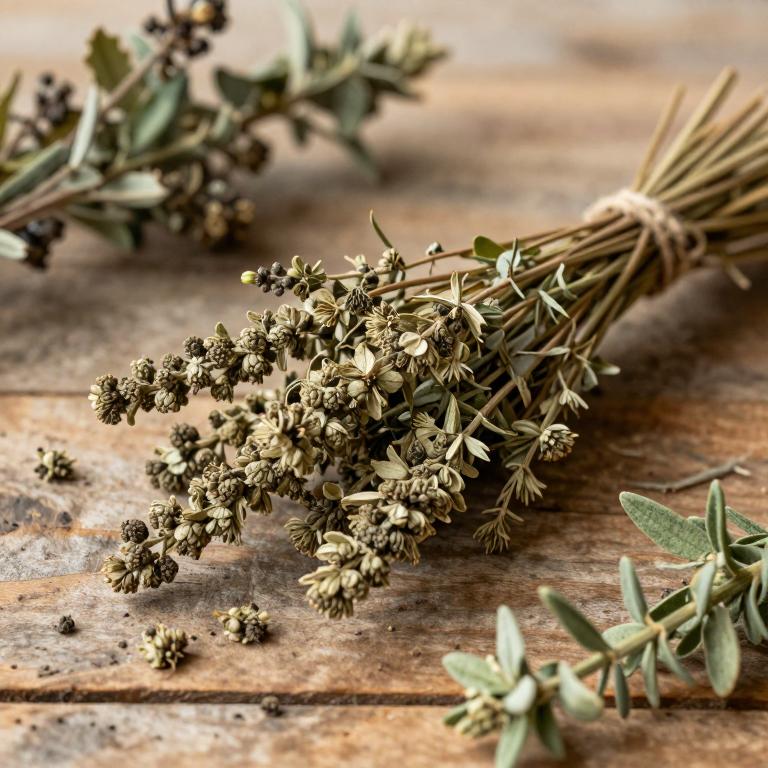
Names and Synonyms
Common Names
- pituri
- pitcheri
- pitchuri thornapple
Scientific Names
Accepted name
Duboisia hopwoodiiSynonyms
- Anthocercis hopwoodii
Sources: Wikidata, Catalogue of Life
Taxonomical Classification
This plant belongs to the kingdom Plantae and is classified under the phylum Streptophyta and the class Equisetopsida. Within the subclass Magnoliidae, it is situated in the order Solanales and the family Solanaceae. Finally, it is identified by its specific genus, Duboisia.
| Rank | Classification |
|---|---|
| Kingdom | Plantae |
| Phylum | Streptophyta |
| Class | Equisetopsida |
| Subclass | Magnoliidae |
| Order | Solanales |
| Family | Solanaceae |
| Genus | Duboisia |
Sources: The World Checklist of Vascular Plants (WCVP)
Distribution
This plant is widely distributed across several key regions of the Australian continent. It can be found growing within the state of New South Wales. Additionally, its range extends into the Northern Territory. The species is also present in the tropical and subtropical areas of Queensland. Finally, its distribution reaches as far as South Australia and Western Australia.
| Region | Area |
|---|---|
| Australia | New South Wales |
| Australia | Northern Territory |
| Australia | Queensland |
| Australia | South Australia |
| Australia | Western Australia |
Sources: The World Checklist of Vascular Plants (WCVP)
Botanical Identification
Life history
The life history of Duboisia hopwoodii is characterized by its status as a perennial plant, meaning it possesses the capacity to persist through multiple growing seasons. Throughout its developmental stages, the plant undergoes a complex biological cycle that allows it to establish a robust presence in its native environment. As a perennial species, it does not rely on the rapid, single-season completion typical of annuals, but rather invests in sustained growth and long-term survival. This lifecycle supports the gradual accumulation of biomass and the eventual reproductive phases necessary for the continuation of the species within its ecological niche.
- Lifecycle :
- perennial
Morphology
The morphology of Duboisia hopwoodii is characterized by its growth form as a woody shrub. This plant is a self-supporting, terrestrial species that does not function as a climber, epiphyte, or parasite, maintaining an independent existence in its habitat. In terms of stature, it exhibits significant variation in plant height, ranging from a minimum of 0.8 m to a maximum of 4 m, with an average height of approximately 2 m.
- Aquatic :
- terrestrial
- Climber :
- self-supporting
- Epiphyte :
- terrestrial
- Growth form :
- shrub
- Parasite :
- independent
- Plant height max:
- 4 m
- Plant height mean:
- 2 m
- Plant height min:
- 0.8 m
- Woodiness :
- woody
Physiology
The physiology of Duboisia hopwoodii is characterized by a C3 photosynthetic pathway, which dictates its carbon fixation processes and metabolic efficiency. The plant's vegetative architecture includes leaves that exhibit significant morphological variation, with lengths ranging from a minimum of 2 cm to a maximum of 12 cm. In terms of transverse dimensions, the leaf width is quite narrow, spanning from a minimum of 0.1 cm to a maximum of 1.3 cm. Furthermore, the plant does not function as a nitrogen fixer, meaning it relies on the uptake of available nitrogen from the soil rather than establishing symbiotic relationships to convert atmospheric nitrogen.
- Leaf length max:
- 12 cm
- Leaf length min:
- 2 cm
- Leaf width max:
- 1.3 cm
- Leaf width min:
- 0.1 cm
- Nitrogen fixer :
- no
- Photosynthetic pathway :
- C3
Reproduction
The reproduction of Duboisia hopwoodii is characterized by the production of fruit categorized as a berry, which remains indehiscent upon maturity. The seeds contained within these fruits are notably small, exhibiting a mean seed mass of 0.001545 g. Individual seed weights vary within a narrow range, with a minimum recorded mass of 0.00126 g and a maximum mass of 0.00183 g.
- Dehiscence :
- indehiscent
- Fruit type :
- berry
- Seed mass max:
- 0.00183 g
- Seed mass mean:
- 0.001545 g
- Seed mass min:
- 0.00126 g
Sources: Global Inventory of Floras and Traits (GIFT)
Chemicals
Duboisia hopwoodii has 1 reported phytochemicals identified across 0 scientific publications and several other databases. The most consistently reported chemicals include nicotine.
| Chemical | Supporting sources | Consensus |
|---|---|---|
| nicotine | 1 supporting sources | ★☆☆☆☆ |
nicotine
- Journal of ethnopharmacology
Activities
Duboisia hopwoodii has 2 reported activities identified across 0 scientific publications and several other databases. The most consistently reported activities include Analgesic, Stimulant.
| Activity | Supporting sources | Consensus |
|---|---|---|
| Analgesic | 1 supporting sources | ★☆☆☆☆ |
| Stimulant | 1 supporting sources | ★☆☆☆☆ |
Analgesic
- Journal of ethnopharmacology
Stimulant
- Journal of ethnopharmacology
Conditions
Duboisia hopwoodii has 1 reported investigations on conditions identified across 0 scientific publications and several other databases. The most consistently reported conditions include analgesic.
| Condition | Supporting sources | Consensus |
|---|---|---|
| Analgesic | 1 supporting sources | ★☆☆☆☆ |
Analgesic
- Journal of ethnopharmacology