dryopters
Dryopteris · Accepted scientific name
Scientific literature: Very Sparse (4 studies) · ★☆☆☆☆
Dryopteris, scientifically known as Dryopteris, is a diverse genus of ferns celebrated for its diverse medicinal properties. Often referred to as wood ferns, these plants contain bioactive compounds traditionally used to treat intestinal worms and skin ailments. They represent a fascinating intersection of botanical beauty and ancient therapeutic wisdom.
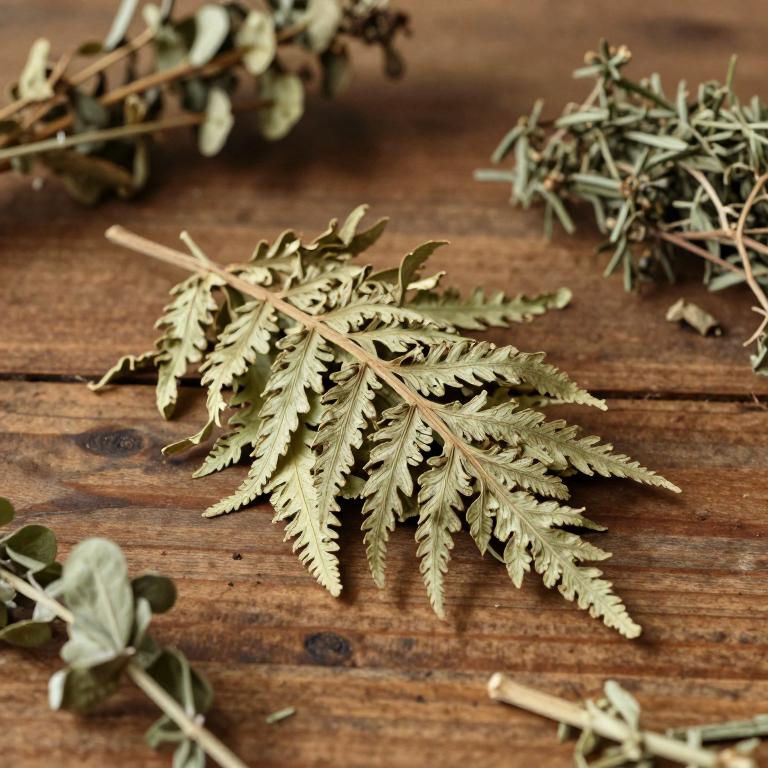
Names and Synonyms
Common Names
- shield fern
- wood fern
- Buckler-Fern
- Male and Buckler Ferns
- wood ferns
Scientific Names
Accepted name
DryopterisSynonyms
- Nothoperanema
- Lophodium
- Filix-mas
- Desmopodium
- Acrophorus
- Acrorumohra
- Diclisodon
- Dichasium
- Diacalpe
- Dryopsis
- Revwattsia
- Nephrodium
- Pycnopteris
- Peranema
Regional and Traditional Names
Spanish:
- Helechos machos
German:
- Wurmfarne
- Wurmfarn
- Wurmfarne
French:
- Dryopteris remota
- Fougère-mâle
Sources: Wikidata, Catalogue of Life
Taxonomical Classification
This plant belongs to the kingdom Plantae and is classified under the phylum Streptophyta and the class Equisetopsida. Within the subclass Polypodiinae and order Polypodiales, it is further categorized into the family Polypodiaceae. Ultimately, it is identified by the genus Dryopteris.
| Rank | Classification |
|---|---|
| Kingdom | Plantae |
| Phylum | Streptophyta |
| Class | Equisetopsida |
| Subclass | Polypodiinae |
| Order | Polypodiales |
| Family | Polypodiaceae |
| Genus | Dryopteris |
Sources: The World Checklist of Vascular Plants (WCVP)
Distribution
This plant exhibits a specific distribution pattern across several regions in Northern Europe. It can be found growing in the landscapes of Denmark and Finland. Additionally, its presence extends to the islands of Føroyaar and Iceland. The species is also documented within the territory of Great Britain. Collectively, these locations define its primary geographical range in the northern hemisphere.
| Region | Area |
|---|---|
| Northern Europe | Denmark |
| Northern Europe | Finland |
| Northern Europe | Føroyar |
| Northern Europe | Great Britain |
| Northern Europe | Iceland |
| Northern Europe | Ireland |
| Northern Europe | Norway |
| Northern Europe | Sweden |
| Middle Europe | Austria |
| Middle Europe | Belgium |
Sources: The World Checklist of Vascular Plants (WCVP)
Chemicals
Dryopteris has 3 reported phytochemicals identified across 0 scientific publications and several other databases. The most consistently reported chemicals include Bioflavonoids, Procyanidins, catechins.
| Chemical | Supporting sources | Consensus |
|---|---|---|
| Bioflavonoids | 1 supporting sources | ★☆☆☆☆ |
| Procyanidins | 1 supporting sources | ★☆☆☆☆ |
| catechins | 1 supporting sources | ★☆☆☆☆ |
Bioflavonoids
- Plants (Basel, Switzerland)
Procyanidins
- Plants (Basel, Switzerland)
catechins
- Plants (Basel, Switzerland)
Conditions
Dryopteris has 1 reported investigations on conditions identified across 0 scientific publications and several other databases. The most consistently reported conditions include neuroprotective effects.
| Condition | Supporting sources | Consensus |
|---|---|---|
| Neuroprotective effects | 1 supporting sources | ★☆☆☆☆ |
Neuroprotective effects
- Plants (Basel, Switzerland)
Preparations
Dryopteris has 1 reported preparations identified across 0 scientific publications and several other databases. The most consistently reported preparations include methanol extracts.
| Preparation | Supporting sources | Consensus |
|---|---|---|
| Methanol extracts | 1 supporting sources | ★☆☆☆☆ |
Methanol extracts
- Veterinary research