Dryopteris ramosa
Dryopteris ramosa · Accepted scientific name
Scientific literature: Very Sparse (46 studies) · ★☆☆☆☆
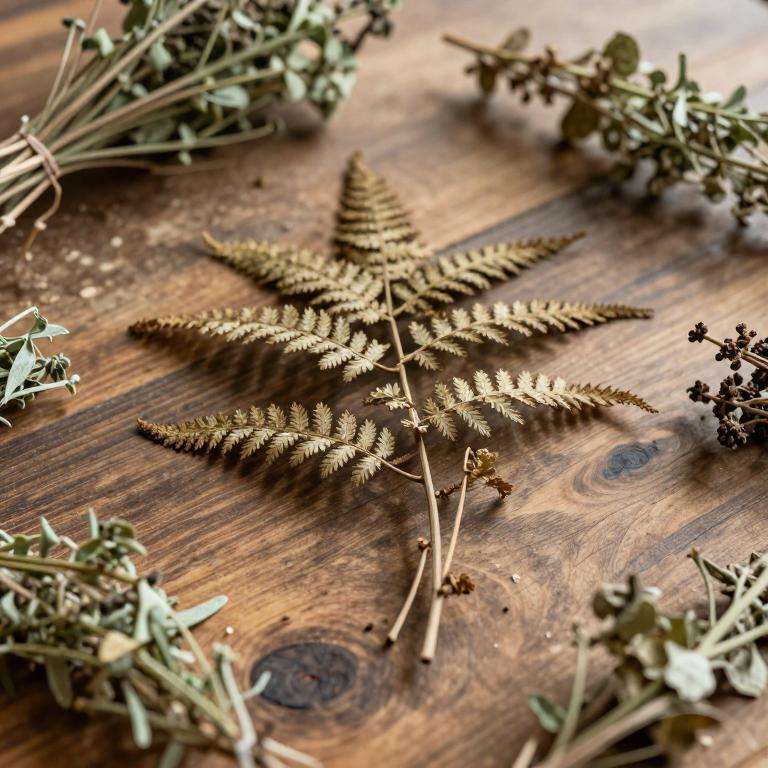
scientifically known as Dryopteris ramosa, is a distinctive fern species native to specific mountainous regions. Characterized by its branched fronds and delicate structure, it holds significant interest in ethnobotany. While primarily studied for its ecological role, its unique biological properties continue to fascinate researchers exploring natural medicinal resources.
- Family
- Polypodiaceae
- Native range
- Asia-Temperate
- Parts used
- Leaf
- Common names
- Not available
- Scientific synonyms
- Nephrodium Ramosum
Names and Synonyms
Scientific Names
Accepted name
Dryopteris ramosaSynonyms
- Nephrodium ramosum
Sources: Wikidata
Taxonomical Classification
This plant belongs to the kingdom Plantae and is classified under the phylum Streptophyta within the class Equisetopsida. It is further categorized under the subclass Polypodiinae and the order Polypodiales. Finally, it is a member of the family Polypodiaceae and falls within the genus Dryopteris.
| Rank | Classification |
|---|---|
| Kingdom | Plantae |
| Phylum | Streptophyta |
| Class | Equisetopsida |
| Subclass | Polypodiinae |
| Order | Polypodiales |
| Family | Polypodiaceae |
| Genus | Dryopteris |
Sources: The World Checklist of Vascular Plants (WCVP)
Distribution
This plant exhibits a specific geographical distribution across several key regions of Asia. In Western Asia, its presence has been documented in Afghanistan. Moving toward the Indian Subcontinent, the species can be found growing in the mountainous terrain of Nepal. It also inhabits various parts of Pakistan within the same subcontinent. Furthermore, the plant is known to be distributed throughout the West Himalaya region.
| Region | Area |
|---|---|
| Western Asia | Afghanistan |
| Indian Subcontinent | Nepal |
| Indian Subcontinent | Pakistan |
| Indian Subcontinent | West Himalaya |
Sources: The World Checklist of Vascular Plants (WCVP)
Botanical Identification
Ecology
The ecology of Dryopteris ramosa is characterized by its preference for specific montane environments where it thrives within specialized microhabitats. This species is predominantly found at high altitudes, exhibiting an elevational range that centers around a mean of 1700 m AMSL. It typically colonizes moist, shaded areas such as forest floors, rocky crevices, or damp ravines, where it can access consistent moisture levels and protection from direct solar radiation. The plant's distribution is closely tied to the availability of organic matter in the soil and the presence of temperate or montane forest canopies that regulate the local humidity and temperature. By occupying these high-elevation niches, Dryopteris ramosa plays a role in the understory structure of its ecosystem, contributing to soil stabilization and moisture retention within its native mountain habitats.
- Elevational range mean:
- 1700 m AMSL
Life history
The life history of Dryopteris ramosa is characterized by its status as a perennial plant, allowing it to persist through multiple growing seasons via established underground rhizomes. Its life cycle begins with the emergence of new fronds from these rhizomatous structures, which undergo seasonal development and senescence. The reproductive phase is marked by the production of spores within specialized structures called sori located on the underside of the fertile fronds. Once released, these spores undergo a complex alternation of generations, germinating into a small, heart-shaped gametophyte known as a prothallus. This gametophyte stage facilitates sexual reproduction through the fusion of sperm and egg, eventually giving rise to a new sporophyte, thereby ensuring the continuation of the species across the landscape.
- Lifecycle :
- annual
Morphology
The morphology of Dryopteris ramosa is characterized by its growth habit as a self-supporting clamber, meaning it possesses the structural integrity to maintain its position without relying on external hosts for physical stability. As an independent organism, it functions without any parasitic relationship, operating as a non-parasitic species that derives all necessary nutrients and water from its own physiological processes and the surrounding environment. Its structural development is defined by this autonomous nature, allowing it to establish itself firmly within its ecological niche through its own vegetative growth patterns.
- Climber :
- self-supporting
- Parasite :
- independent
Reproduction
The reproduction of Dryopteris ramosa is characterized by a specific seasonal cycle involving the production of reproductive structures. The flowering period, which in ferns refers to the emergence and maturation of fertile fronds bearing sporangia, typically commences in June. This reproductive phase continues through the summer months, reaching its conclusion in August. This seasonal window ensures that the spores are released during optimal environmental conditions to facilitate dispersal and subsequent germination.
- Flowering time :
- Jun
- Flowering time :
- Aug
Sources: Global Inventory of Floras and Traits (GIFT)
Plant Parts
Dryopteris ramosa has 1 reported plant parts identified across 1 scientific publications and several other databases that are studied for medicinal purposes. The most consistently reported plant part include leaf.
| Plant part | Supporting sources | Consensus |
|---|---|---|
| Leaf | 1 supporting sources | ★☆☆☆☆ |
Leaf
- Scientific reports
Chemicals
Dryopteris ramosa has 9 reported phytochemicals identified across 1 scientific publications and several other databases. The most consistently reported chemicals include Flavonoids, Glycosides, Saponins, Tannins, Germacrene.
| Chemical | Supporting sources | Consensus |
|---|---|---|
| Flavonoids | 2 supporting sources | ★☆☆☆☆ |
| Glycosides | 2 supporting sources | ★☆☆☆☆ |
| Saponins | 2 supporting sources | ★☆☆☆☆ |
| Tannins | 2 supporting sources | ★☆☆☆☆ |
| Germacrene | 1 supporting sources | ★☆☆☆☆ |
| Phenols | 1 supporting sources | ★☆☆☆☆ |
| Terpenoids | 1 supporting sources | ★☆☆☆☆ |
| Triterpenes | 1 supporting sources | ★☆☆☆☆ |
| triterpenoids | 1 supporting sources | ★☆☆☆☆ |
Flavonoids
- BMC complementary medicine and therapies
- Cellular and molecular biology (Noisy-le-Grand, France)
Glycosides
- BMC complementary medicine and therapies
- Cellular and molecular biology (Noisy-le-Grand, France)
Saponins
- BMC complementary medicine and therapies
- Cellular and molecular biology (Noisy-le-Grand, France)
Tannins
- BMC complementary medicine and therapies
- Cellular and molecular biology (Noisy-le-Grand, France)
Germacrene
- Current pharmaceutical design
Phenols
- Cellular and molecular biology (Noisy-le-Grand, France)
Terpenoids
- Cellular and molecular biology (Noisy-le-Grand, France)
Triterpenes
- Cellular and molecular biology (Noisy-le-Grand, France)
triterpenoids
- BMC complementary medicine and therapies
Activities
Dryopteris ramosa has 14 reported activities identified across 1 scientific publications and several other databases. The most consistently reported activities include Antioxidant, Antifungal, Analgesic, Antibacterial, Antibiotic.
| Activity | Supporting sources | Consensus |
|---|---|---|
| Antioxidant | 3 supporting sources | ★★☆☆☆ |
| Antifungal | 2 supporting sources | ★☆☆☆☆ |
| Analgesic | 1 supporting sources | ★☆☆☆☆ |
| Antibacterial | 1 supporting sources | ★☆☆☆☆ |
| Antibiotic | 1 supporting sources | ★☆☆☆☆ |
| Anticancer | 1 supporting sources | ★☆☆☆☆ |
| Antimicrobial | 1 supporting sources | ★☆☆☆☆ |
| Antiviral | 1 supporting sources | ★☆☆☆☆ |
| Aphrodisiac | 1 supporting sources | ★☆☆☆☆ |
| Astringent | 1 supporting sources | ★☆☆☆☆ |
Antioxidant
- Scientific reports
- BMC complementary medicine and therapies
- Current pharmaceutical design
Antifungal
- Scientific reports
- BMC complementary medicine and therapies
Analgesic
- Current pharmaceutical design
Antibacterial
- Current pharmaceutical design
Antibiotic
- Current pharmaceutical design
Anticancer
- Scientific reports
Antimicrobial
- BMC complementary medicine and therapies
Antiviral
- Scientific reports
Aphrodisiac
- Current pharmaceutical design
Astringent
- BMC complementary medicine and therapies
Conditions
Dryopteris ramosa has 6 reported investigations on conditions identified across 1 scientific publications and several other databases. The most consistently reported conditions include Analgesic, antibiotic, antioxidant, aphrodisiac, gastric ulcers.
| Condition | Supporting sources | Consensus |
|---|---|---|
| Analgesic | 1 supporting sources | ★☆☆☆☆ |
| Antibiotic | 1 supporting sources | ★☆☆☆☆ |
| Antioxidant | 1 supporting sources | ★☆☆☆☆ |
| Aphrodisiac | 1 supporting sources | ★☆☆☆☆ |
| Gastric ulcers | 1 supporting sources | ★☆☆☆☆ |
| Stomach ulcers | 1 supporting sources | ★☆☆☆☆ |
Analgesic
- Current pharmaceutical design
Antibiotic
- Current pharmaceutical design
Antioxidant
- Current pharmaceutical design
Aphrodisiac
- Current pharmaceutical design
Gastric ulcers
- Cellular and molecular biology (Noisy-le-Grand, France)
Stomach ulcers
- Scientific reports
Preparations
Dryopteris ramosa has 5 reported preparations identified across 1 scientific publications and several other databases. The most consistently reported preparations include aqueous leaf extract, ethyl acetate fraction, methanol fraction, methanolic crude extract, methanolic extract.
| Preparation | Supporting sources | Consensus |
|---|---|---|
| Aqueous leaf extract | 1 supporting sources | ★☆☆☆☆ |
| Ethyl acetate fraction | 1 supporting sources | ★☆☆☆☆ |
| Methanol fraction | 1 supporting sources | ★☆☆☆☆ |
| Methanolic crude extract | 1 supporting sources | ★☆☆☆☆ |
| Methanolic extract | 1 supporting sources | ★☆☆☆☆ |
Aqueous leaf extract
- Scientific reports
Ethyl acetate fraction
- BMC complementary medicine and therapies
Methanol fraction
- BMC complementary medicine and therapies
Methanolic crude extract
- Cellular and molecular biology (Noisy-le-Grand, France)
Methanolic extract
- BMC complementary medicine and therapies