autumn fern
Dryopteris erythrosora · Accepted scientific name
Scientific literature: Very Sparse (6 studies) · ★☆☆☆☆
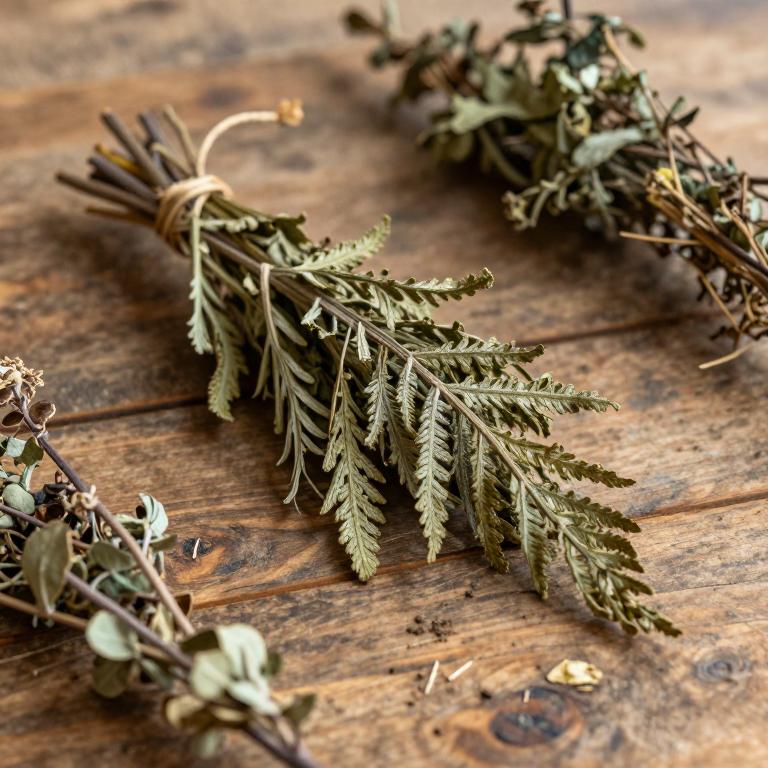
Autumn fern, scientifically known as Dryopteris erythrosorus, is a resilient deciduous fern prized for its seasonal color shifts. Characterized by graceful fronds that transition from green to vibrant copper, it thrives in shaded landscapes. Beyond its ornamental beauty, it remains a significant subject in studies of woodland ecology.
- Family
- Polypodiaceae
- Native range
- Europe
- Parts used
- Leaf · Stem
- Common names
- Japanese Shield Fern · Autumn Fern
- Scientific synonyms
- Dryopteris Oblongipinnula · Dryopteris Remotipinnula · 15 more
Names and Synonyms
Common Names
- Japanese shield fern
- autumn fern
Scientific Names
Accepted name
Dryopteris erythrosoraSynonyms
- Dryopteris oblongipinnula
- Dryopteris remotipinnula
- Dryopteris sinoerythrosora
- Dryopteris squamistipes
- Lastrea erythrosora
- Lastrea prolifica
- Nephrodium erythrosorum
- Nephrodium prolificum
- Nephrodium prolificum
- Aspidium prolificum
- Dryopteris bulligera
- Dryopteris distantipinna
- Dryopteris linyingensis
- Dryopteris erythrosora f. viridisora
- Dryopteris erythrosora var. prolifica
- Dryopteris erythrosora var. viridisora
- Aspidium erythrosorum
Regional and Traditional Names
German:
- Rotschleierfarn
Sources: Wikidata, Catalogue of Life
Taxonomical Classification
This plant belongs to the kingdom Plantae and the phylum Streptophyta. It is classified under the class Equisetopsida and the subclass Polypodiinae, falling within the order Polypodiales. Furthermore, it is a member of the family Polypodiaceae and is specifically categorized under the genus Dryopteris.
| Rank | Classification |
|---|---|
| Kingdom | Plantae |
| Phylum | Streptophyta |
| Class | Equisetopsida |
| Subclass | Polypodiinae |
| Order | Polypodiales |
| Family | Polypodiaceae |
| Genus | Dryopteris |
Sources: The World Checklist of Vascular Plants (WCVP)
Distribution
This plant exhibits a wide geographical distribution spanning across several different continents. In Northern Europe, its presence can be specifically noted within Great Britain. Moving into Middle Europe, the species is found in both Belgium and the Netherlands. Its range extends significantly eastward into the vast landscapes of China. Within this Asian region, it is established in both China South-Central and China Southeast.
| Region | Area |
|---|---|
| Northern Europe | Great Britain |
| Middle Europe | Belgium |
| Middle Europe | Netherlands |
| China | China South-Central |
| China | China Southeast |
| Eastern Asia | Japan |
| Eastern Asia | Korea |
| Eastern Asia | Nansei-shoto |
| Eastern Asia | Taiwan |
| Southeastern U.S.A. | Alabama |
Sources: The World Checklist of Vascular Plants (WCVP)
Botanical Identification
Life history
The life history of Dryopteris erythrosora is characterized by its classification as a chamaephyte, a growth form where the perennating buds are located near or just above the soil surface. This life strategy is further detailed through its dual classification as both a chamaephyte and a geophyte, indicating its reliance on underground or surface-level structures to survive unfavorable environmental conditions. As a perennial fern, its life cycle involves the development of rhizomes that remain protected near the ground, allowing for seasonal regrowth and persistence in its natural habitat. This specific life form enables the plant to navigate seasonal fluctuations by maintaining its vital organs close to the substrate, ensuring its ability to emerge and flourish when conditions become favorable.
- Life form :
- chamaephyte
Morphology
The morphology of Dryopteris erythrosora is characterized by its growth habit and structural composition, functioning primarily as a terrestrial plant rather than an epiphyte, with its life cycle being strictly terrestrial in nature. Structurally, the plant is entirely non-woody, lacking any lignified tissues or woody stems, which is typical for many members of the fern lineage. This non-woody constitution allows for a more flexible, herbaceous structure that supports its fronds and reproductive organs within its natural habitat.
- Epiphyte :
- terrestrial
- Woodiness :
- non-woody
Sources: Global Inventory of Floras and Traits (GIFT)
Plant Parts
Dryopteris erythrosora has 2 reported plant parts identified across 2 scientific publications and several other databases that are studied for medicinal purposes. The most consistently reported plant part include leaf, stem.
| Plant part | Supporting sources | Consensus |
|---|---|---|
| Leaf | 1 supporting sources | ★☆☆☆☆ |
| Stem | 1 supporting sources | ★☆☆☆☆ |
Leaf
- Food chemistry
Stem
- Food chemistry
Chemicals
Dryopteris erythrosora has 2 reported phytochemicals identified across 2 scientific publications and several other databases. The most consistently reported chemicals include Flavonoids, polyphenols.
| Chemical | Supporting sources | Consensus |
|---|---|---|
| Flavonoids | 1 supporting sources | ★☆☆☆☆ |
| polyphenols | 1 supporting sources | ★☆☆☆☆ |
Flavonoids
- International journal of molecular sciences
polyphenols
- International journal of molecular sciences
Activities
Dryopteris erythrosora has 2 reported activities identified across 2 scientific publications and several other databases. The most consistently reported activities include Antibacterial, Anticancer.
| Activity | Supporting sources | Consensus |
|---|---|---|
| Antibacterial | 1 supporting sources | ★☆☆☆☆ |
| Anticancer | 1 supporting sources | ★☆☆☆☆ |
Antibacterial
- International journal of molecular sciences
Anticancer
- International journal of molecular sciences
Preparations
Dryopteris erythrosora has 2 reported preparations identified across 2 scientific publications and several other databases. The most consistently reported preparations include crude medicine, extract.
| Preparation | Supporting sources | Consensus |
|---|---|---|
| Crude medicine | 1 supporting sources | ★☆☆☆☆ |
| Extract | 1 supporting sources | ★☆☆☆☆ |
Crude medicine
- Food chemistry
Extract
- International journal of molecular sciences