Hay-Scented Buckler-Fern
Dryopteris aemula · Accepted scientific name
Scientific literature: Very Sparse (7 studies) · ★☆☆☆☆
Hay-Scented Buckler-Fern, scientifically known as Dryopteris aeulis, is a resilient fern species native to the moist, shaded forests of South Asia. Renowned for its unique aromatic fragrance, this plant holds significant ethnobotanical value, often utilized in traditional medicine for its diverse therapeutic properties and its role in herbal healing.
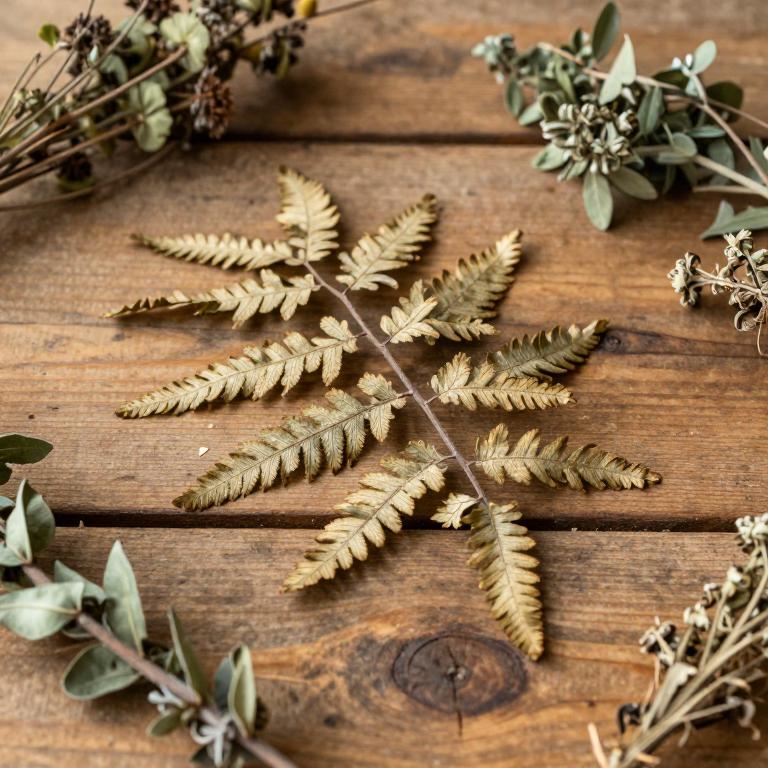
Names and Synonyms
Common Names
- Hay-Scented Buckler-Fern
- hay-scent buckler fern
- hay-scent wood fern
Scientific Names
Accepted name
Dryopteris aemulaSynonyms
- Dryopteris aemula subsp. liliana
- Aspidium aemulum
- Aspidium recurvum
- Lastrea aemula
- Lastrea recurva
- Nephrodium aemulum
- Nephrodium foenisecii
- Polystichum aemulum
- Polystichum recurvum
- Dryopteris liliana
- Nephrodium foenisecii var. tripinnatum
- Allantodia aemula
- Lophodium recurvum
- Lastrea dilatata var. recurva
- Polystichum spinulosum subsp. aemulum
- Polystichum foenisecii
- Lastrea foenisecii
- Lophodium foenisecii
- Polystichum aemulum var. tripinnatum
- Aspidium distans var. recurvum
- Polypodium aemulum
Regional and Traditional Names
French:
- Fougère-mâle atlantique
Sources: Wikidata, Catalogue of Life
Taxonomical Classification
This plant belongs to the kingdom Plantae and is classified under the phylum Streptophyta within the class Equisetopsida. It falls under the subclass Polypodiinae and the order Polypodiales, specifically within the family Polypodiaceae. Finally, its taxonomic designation is completed by the genus Dryopteris.
| Rank | Classification |
|---|---|
| Kingdom | Plantae |
| Phylum | Streptophyta |
| Class | Equisetopsida |
| Subclass | Polypodiinae |
| Order | Polypodiales |
| Family | Polypodiaceae |
| Genus | Dryopteris |
Sources: The World Checklist of Vascular Plants (WCVP)
Distribution
This plant exhibits a broad distribution across several distinct regions of Europe. In Northern Europe, its presence can be found throughout Great Britain and Ireland. Moving toward the southern part of the continent, it is also widely distributed across Southwestern Europe, specifically in France and Spain. Furthermore, its range extends westward into the Atlantic towards Macaronesia, where it inhabits the Azores. Together, these locations highlight the plant's ability to thrive in diverse European environments.
| Region | Area |
|---|---|
| Northern Europe | Great Britain |
| Northern Europe | Ireland |
| Southwestern Europe | France |
| Southwestern Europe | Spain |
| Macaronesia | Azores |
| Macaronesia | Canary Is. |
| Macaronesia | Madeira |
| Caucasus | Transcaucasus |
| Western Asia | Türkiye |
Sources: The World Checklist of Vascular Plants (WCVP)
Botanical Identification
Ecology
The ecology of Dryopteris aemula is characterized by its ability to thrive across a broad altitudinal gradient, ranging from sea level up to a maximum elevation of 900 m AMSL. This wide elevational range suggests an adaptable nature, allowing it to inhabit diverse topographical settings within its natural environment. It typically populates moist, shaded habitats where moisture levels are consistent, often found in the understory of forests or along damp embankments. Its distribution within the 0 to 900 m AMSL range indicates a preference for lowland to sub-montane ecosystems, where it benefits from specific microclimatic conditions such as high humidity and filtered sunlight.
- Elevational range max:
- 900 m AMSL
- Elevational range min:
- 0 m AMSL
Morphology
The morphology of Dryopteris aeemula is characterized by its herbaceous structure, specifically exhibiting a non-woody texture throughout its growth. The shoots of this plant typically range in length from a minimum of 25 cm to a maximum of 50 cm, providing the primary structural framework for its fronds.
- Shoot length max:
- 50 cm
- Shoot length min:
- 25 cm
- Woodiness :
- non-woody
Physiology
The physiological structure of Dryopteris aeulmula is characterized by its specialized vegetative morphology, most notably through its distinct leaf development. The plant exhibits an elliptic leaf form, a structural adaptation that facilitates efficient light interception and gas exchange within its natural habitat. The expansion of these fronds is significant, with the leaf width reaching a maximum of 30 cm, providing a substantial surface area for photosynthetic activity. This expansive leaf architecture supports the plant's metabolic requirements and contributes to its overall vigor and nutrient assimilation processes.
- Leaf form :
- elliptic
- Leaf width max:
- 30 cm
Reproduction
The reproduction of Dryopteris aeumula is characterized by a highly flexible reproductive cycle that allows for a broad window of activity throughout the year. Rather than adhering to a strict seasonal constraint, the plant exhibits a variable flowering and sporulation period, spanning from its earliest potential onset in January through to its conclusion in December. This extensive temporal range indicates that the reproductive processes are not limited to a single month but can occur at any time during the annual cycle depending on environmental conditions. Consequently, the reproductive availability is distributed across all months, including Jan, Feb, Mar, Apr, May, Jun, Jul, Aug, Sep, Oct, Nov, and Dec, ensuring a continuous potential for propagation.
- Flowering time :
- Mar
- Flowering time :
- Dec
Sources: Global Inventory of Floras and Traits (GIFT)
Chemicals
Dryopteris aemula has 7 reported phytochemicals identified across 0 scientific publications and several other databases. The most consistently reported chemicals include 3-Hydroxybenzoic acid, Coumaric Acid, caffeic acid, kaempferol, luteolin.
| Chemical | Supporting sources | Consensus |
|---|---|---|
| 3-Hydroxybenzoic acid | 1 supporting sources | ★☆☆☆☆ |
| Coumaric Acid | 1 supporting sources | ★☆☆☆☆ |
| caffeic acid | 1 supporting sources | ★☆☆☆☆ |
| kaempferol | 1 supporting sources | ★☆☆☆☆ |
| luteolin | 1 supporting sources | ★☆☆☆☆ |
| protocatechuic acid | 1 supporting sources | ★☆☆☆☆ |
| quercetin | 1 supporting sources | ★☆☆☆☆ |
3-Hydroxybenzoic acid
- Veterinary research
Coumaric Acid
- Veterinary research
caffeic acid
- Veterinary research
kaempferol
- Veterinary research
luteolin
- Veterinary research
protocatechuic acid
- Veterinary research
quercetin
- Veterinary research