Indian-squill
Drimia indica · Accepted scientific name
Scientific literature: Sparse (61 studies) · ★★☆☆☆
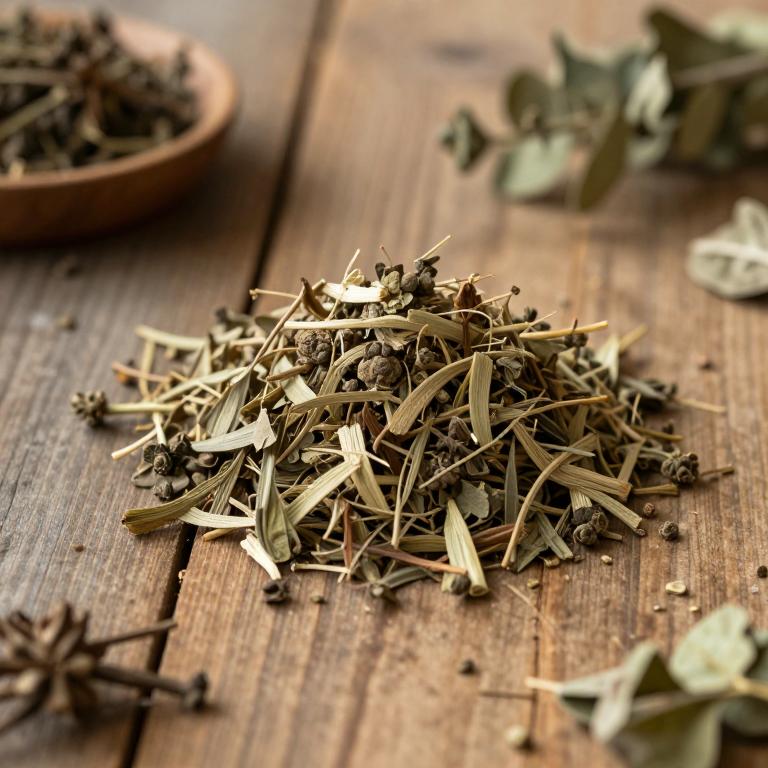
Indian-squill, scientifically known as Drimia indica, is a perennial bulbous herb native to various tropical regions. Renowned in traditional medicine, it contains bioactive compounds used to treat respiratory ailments and skin conditions. This plant serves as a vital botanical resource, offering significant therapeutic potential in ethnopharmacological studies worldwide.
Names and Synonyms
Common Names
- Indian-squill
- white-squill
- Secret Lily
- Secret Night Squill
Scientific Names
Accepted name
Drimia indicaSynonyms
- Indurgia indica
- Thuranthos indicus
- Thuranthos wightianus
- Ledebouria maculata
- Melanthium hyacinthoides
- Aletris littoralis
- Urginea wightiana
- Erythronium hyacinthoides
- Indurgia wightiana
- Urginea indica
- Anthericum hyacinthoides
Sources: Wikidata, Catalogue of Life
Taxonomical Classification
This plant, known scientifically as Drimia indica, belongs to the kingdom Plantae and the phylum Streptophyta. It is classified under the class Equisetopsida and the subclass Magnoliidae, falling within the order Asparagales. Finally, it is a member of the family Asparagaceae within the genus Drimia.
| Rank | Classification |
|---|---|
| Kingdom | Plantae |
| Phylum | Streptophyta |
| Class | Equisetopsida |
| Subclass | Magnoliidae |
| Order | Asparagales |
| Family | Asparagaceae |
| Genus | Drimia |
Sources: The World Checklist of Vascular Plants (WCVP)
Distribution
This plant is widely distributed across several regions within the Indian Subcontinent. It can be found growing in the diverse landscapes of India and its neighboring countries. Specifically, its range extends through the mountainous terrains of the East Himalaya and the country of Nepal. Furthermore, the species is also documented to inhabit the territory of Bangladesh. Finally, its geographical presence reaches as far as Pakistan, showcasing its broad regional spread.
| Region | Area |
|---|---|
| Indian Subcontinent | Bangladesh |
| Indian Subcontinent | East Himalaya |
| Indian Subcontinent | India |
| Indian Subcontinent | Nepal |
| Indian Subcontinent | Pakistan |
| Indian Subcontinent | Sri Lanka |
| Indian Subcontinent | West Himalaya |
| Indo-China | Myanmar |
| Indo-China | Thailand |
| Indo-China | Vietnam |
Sources: The World Checklist of Vascular Plants (WCVP)
Botanical Identification
Life history
The life history of Drimia indica is characterized by a perennial lifecycle, allowing the plant to persist through multiple growing seasons. It functions as a cryptophyte, specifically categorized as a geophyte, which means its essential regenerative organs are located underground to protect them from adverse environmental conditions. This life form enables the plant to endure seasonal shifts by relying on its subterranean structures to re-emerge during favorable periods.
- Life form :
- geophyte
- Life form :
- cryptophyte
- Lifecycle :
- perennial
Morphology
The morphology of Drimia indica is characterized by a non-woody, herbaceous growth form, manifesting as both a herb and a forb. This plant is strictly terrestrial in its habitat, neither aquatic nor epiphytic, and functions as an independent organism without parasitic tendencies. In terms of structural habit, it is a self-supporting species rather than a climber, vine, or liana. The plant maintains a relatively low stature, with a mean height of approximately 0.4 m and a maximum height reaching up to 0.5 m.
- Aquatic :
- terrestrial
- Climber :
- self-supporting
- Epiphyte :
- terrestrial
- Growth form :
- herb
- Parasite :
- independent
- Plant height max:
- 0.5 m
- Plant height mean:
- 0.4 m
- Woodiness :
- non-woody
Physiology
The physiology of Drimia indica is characterized by specialized metabolic processes adapted to its specific ecological niche, particularly regarding its nutrient acquisition strategies. In terms of its nitrogen metabolism, the plant does not function as a nitrogen fixer; it lacks the symbiotic relationship with nitrogen-fixing bacteria, such as Rhizobium, typically found in leguminous species, meaning it cannot convert atmospheric nitrogen into ammonia. Instead, it relies on the uptake of inorganic nitrogen sources, such as nitrates and ammonium, from the soil through its root system to support its growth and cellular functions. Its physiological framework is oriented toward efficient resource utilization within its environment, managing water potential and nutrient transport to maintain homeostasis and facilitate essential biochemical pathways.
- Nitrogen fixer :
- no
Sources: Global Inventory of Floras and Traits (GIFT)
Plant Parts
Drimia indica has 2 reported plant parts identified across 3 scientific publications and several other databases that are studied for medicinal purposes. The most consistently reported plant part include leaf, root.
| Plant part | Supporting sources | Consensus |
|---|---|---|
| Leaf | 2 supporting sources | ★☆☆☆☆ |
| Root | 1 supporting sources | ★☆☆☆☆ |
Leaf
- Current pharmaceutical biotechnology
- Microscopy research and technique
Root
- Current pharmaceutical biotechnology
Chemicals
Drimia indica has 11 reported phytochemicals identified across 3 scientific publications and several other databases. The most consistently reported chemicals include Phytosterols, Coumarins, Flavonoids, Glycosides, Scillarenin.
| Chemical | Supporting sources | Consensus |
|---|---|---|
| Phytosterols | 2 supporting sources | ★☆☆☆☆ |
| Coumarins | 1 supporting sources | ★☆☆☆☆ |
| Flavonoids | 1 supporting sources | ★☆☆☆☆ |
| Glycosides | 1 supporting sources | ★☆☆☆☆ |
| Scillarenin | 1 supporting sources | ★☆☆☆☆ |
| Scilliglaucoside | 1 supporting sources | ★☆☆☆☆ |
| Steroids | 1 supporting sources | ★☆☆☆☆ |
| Tannins | 1 supporting sources | ★☆☆☆☆ |
| glucose | 1 supporting sources | ★☆☆☆☆ |
| mannose | 1 supporting sources | ★☆☆☆☆ |
Phytosterols
- Dr. Duke
- Medicina (Kaunas, Lithuania)
Coumarins
- Phytotherapy research : PTR
Flavonoids
- Medicina (Kaunas, Lithuania)
Glycosides
- Dr. Duke
Scillarenin
- Dr. Duke
Scilliglaucoside
- Dr. Duke
Steroids
- Medicina (Kaunas, Lithuania)
Tannins
- Phytotherapy research : PTR
glucose
- Dr. Duke
mannose
- Dr. Duke
Activities
Drimia indica has 30 reported activities identified across 3 scientific publications and several other databases. The most consistently reported activities include Anticancer, Antidiabetic, Antimicrobial, Acetylcholinergic, Anthelmintic.
| Activity | Supporting sources | Consensus |
|---|---|---|
| Anticancer | 2 supporting sources | ★☆☆☆☆ |
| Antidiabetic | 2 supporting sources | ★☆☆☆☆ |
| Antimicrobial | 2 supporting sources | ★☆☆☆☆ |
| Acetylcholinergic | 1 supporting sources | ★☆☆☆☆ |
| Anthelmintic | 1 supporting sources | ★☆☆☆☆ |
| AntiUTI | 1 supporting sources | ★☆☆☆☆ |
| Antiadhesive | 1 supporting sources | ★☆☆☆☆ |
| Antiangiogenic | 1 supporting sources | ★☆☆☆☆ |
| Anticarcinomic | 1 supporting sources | ★☆☆☆☆ |
| Anticystitic | 1 supporting sources | ★☆☆☆☆ |
Anticancer
- Medicina (Kaunas, Lithuania)
- Microscopy research and technique
Antidiabetic
- Dr. Duke
- Medicina (Kaunas, Lithuania)
Antimicrobial
- Medicina (Kaunas, Lithuania)
- Microscopy research and technique
Acetylcholinergic
- Dr. Duke
Anthelmintic
- Medicina (Kaunas, Lithuania)
AntiUTI
- Dr. Duke
Antiadhesive
- Dr. Duke
Antiangiogenic
- Biochimie
Anticarcinomic
- Dr. Duke
Anticystitic
- Dr. Duke
Conditions
Drimia indica has 10 reported investigations on conditions identified across 3 scientific publications and several other databases. The most consistently reported conditions include anthelmintic, antidiabetic, antioxidant, asthma, cardiac diseases.
| Condition | Supporting sources | Consensus |
|---|---|---|
| Anthelmintic | 1 supporting sources | ★☆☆☆☆ |
| Antidiabetic | 1 supporting sources | ★☆☆☆☆ |
| Antioxidant | 1 supporting sources | ★☆☆☆☆ |
| Asthma | 1 supporting sources | ★☆☆☆☆ |
| Cardiac diseases | 1 supporting sources | ★☆☆☆☆ |
| Dropsy | 1 supporting sources | ★☆☆☆☆ |
| Indigestion | 1 supporting sources | ★☆☆☆☆ |
| Leprosy | 1 supporting sources | ★☆☆☆☆ |
| Rheumatism | 1 supporting sources | ★☆☆☆☆ |
| Wound healing | 1 supporting sources | ★☆☆☆☆ |
Anthelmintic
- Medicina (Kaunas, Lithuania)
Antidiabetic
- Medicina (Kaunas, Lithuania)
Antioxidant
- Medicina (Kaunas, Lithuania)
Asthma
- Medicina (Kaunas, Lithuania)
Cardiac diseases
- Medicina (Kaunas, Lithuania)
Dropsy
- Medicina (Kaunas, Lithuania)
Indigestion
- Medicina (Kaunas, Lithuania)
Leprosy
- Medicina (Kaunas, Lithuania)
Rheumatism
- Medicina (Kaunas, Lithuania)
Wound healing
- Medicina (Kaunas, Lithuania)