Khoho Squill
Drimia calcarata · Accepted scientific name
Scientific literature: Very Sparse (6 studies) · ★☆☆☆☆
Khoho Squill, scientifically known as Drimia calcarata, is a medicinal plant valued for its potent pharmacological properties. Often utilized in traditional healing practices, it contains bioactive compounds primarily used to treat respiratory ailments and cardiac issues. Understanding its chemical profile is essential for exploring its therapeutic potential in modern medicine.
- Family
- Asparagaceae
- Native range
- Africa
- Parts used
- Not available
- Common names
- Khoho Squill
- Scientific synonyms
- Urginea Calcarata · Ornithogalum Calcaratum · 1 more
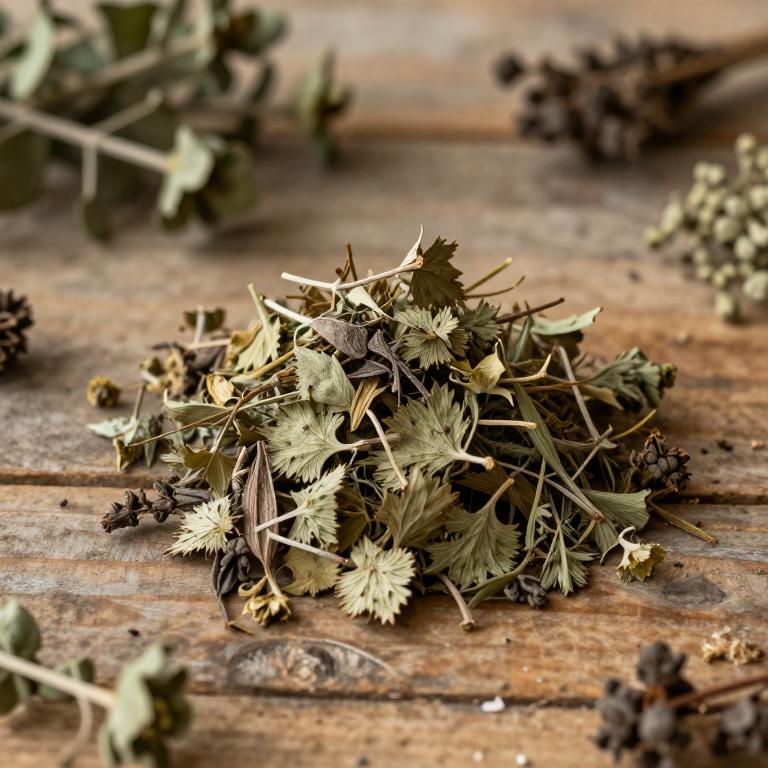
Names and Synonyms
Common Names
- Khoho Squill
Scientific Names
Accepted name
Drimia calcarataSynonyms
- Urginea calcarata
- Ornithogalum calcaratum
- Geschollia calcarata
Sources: Wikidata, Catalogue of Life
Taxonomical Classification
This plant, Drimia calcarata, belongs to the kingdom Plantae within the phylum Streptophyta and the class Equisetopsida. It is further classified under the subclass Magnoliidae and the order Asparagales. Finally, it is a member of the family Asparagaceae and falls under the genus Drimia.
| Rank | Classification |
|---|---|
| Kingdom | Plantae |
| Phylum | Streptophyta |
| Class | Equisetopsida |
| Subclass | Magnoliidae |
| Order | Asparagales |
| Family | Asparagaceae |
| Genus | Drimia |
Sources: The World Checklist of Vascular Plants (WCVP)
Distribution
This plant is native to the southern regions of the African continent. Its primary distribution can be found throughout the Cape Provinces of Southern Africa. Additionally, it grows within the specific environmental conditions of KwaZulu-Natal. These two distinct areas represent the core geographical range for the species. Consequently, its presence is closely tied to the diverse climates of these southern provinces.
| Region | Area |
|---|---|
| Southern Africa | Cape Provinces |
| Southern Africa | KwaZulu-Natal |
Sources: The World Checklist of Vascular Plants (WCVP)
Botanical Identification
Ecology
The ecology of Drimia calcarrata is characterized by a broad altitudinal distribution, allowing it to inhabit diverse montane and submontane environments. This species thrives across a significant vertical gradient, spanning an elevational range that begins at a minimum of 160 m AMSL and extends to a maximum of 2713 m AMSL. This wide ecological amplitude suggests an adaptability to varying temperature regimes, atmospheric pressures, and moisture levels associated with different topographical layers. By occupying such a vast range, the plant is able to persist in diverse microclimates, from lower-altitude warmer zones to high-altitude environments nearing the limits of its physiological tolerance.
- Elevational range max:
- 2713 m AMSL
- Elevational range min:
- 160 m AMSL
Life history
The life history of Drimia calcarea is characterized by a perennial lifecycle, allowing the plant to persist through multiple growing seasons. As a specialized survivor in its ecosystem, it adopts a life form classified as a geophyte, relying on underground storage organs to endure unfavorable environmental conditions. This classification is further supported by its status as a cryptophyte, indicating that its vital regenerative buds are protected below the soil surface, ensuring its long-term survival and ability to re-emerge seasonally.
- Life form :
- geophyte
- Life form :
- cryptophyte
- Lifecycle :
- perennial
Morphology
The morphology of Drimia calcarrata is characterized by a herbaceous growth form, functioning as a non-woody plant that lacks any woody tissue. This species is non-climbing and maintains a self-supporting structure rather than acting as an obligatory or facultative climber. It is an independent organism that does not exhibit parasitic behavior, and it thrives in terrestrial environments rather than as an epiphyte or aquatic species. In terms of physical dimensions, the plant is relatively small, with a stature that typically ranges from a minimum height of 0.07 m to a maximum height of 0.44 m.
- Aquatic :
- terrestrial
- Climber :
- self-supporting
- Epiphyte :
- terrestrial
- Growth form :
- herb
- Parasite :
- independent
- Plant height max:
- 0.44 m
- Plant height min:
- 0.07 m
- Woodiness :
- non-woody
Sources: Global Inventory of Floras and Traits (GIFT)
Chemicals
Drimia calcarata has 2 reported phytochemicals identified across 0 scientific publications and several other databases. The most consistently reported chemicals include Flavonoid, Tannin.
| Chemical | Supporting sources | Consensus |
|---|---|---|
| Flavonoid | 1 supporting sources | ★☆☆☆☆ |
| Tannin | 1 supporting sources | ★☆☆☆☆ |
Flavonoid
- Toxicology reports
Tannin
- Toxicology reports
Conditions
Drimia calcarata has 2 reported investigations on conditions identified across 0 scientific publications and several other databases. The most consistently reported conditions include Lung Cancer, colorectal cancer.
| Condition | Supporting sources | Consensus |
|---|---|---|
| Lung cancer | 1 supporting sources | ★☆☆☆☆ |
| Colorectal cancer | 1 supporting sources | ★☆☆☆☆ |
Lung cancer
- Frontiers in molecular biosciences
Colorectal cancer
- Toxicology reports
Preparations
Drimia calcarata has 3 reported preparations identified across 0 scientific publications and several other databases. The most consistently reported preparations include Water extract (WE), methanol and water extracts, methanol extract (ME).
| Preparation | Supporting sources | Consensus |
|---|---|---|
| Water extract (we) | 1 supporting sources | ★☆☆☆☆ |
| Methanol and water extracts | 1 supporting sources | ★☆☆☆☆ |
| Methanol extract (me) | 1 supporting sources | ★☆☆☆☆ |
Water extract (we)
- Toxicology reports
Methanol and water extracts
- Frontiers in molecular biosciences
Methanol extract (me)
- Toxicology reports